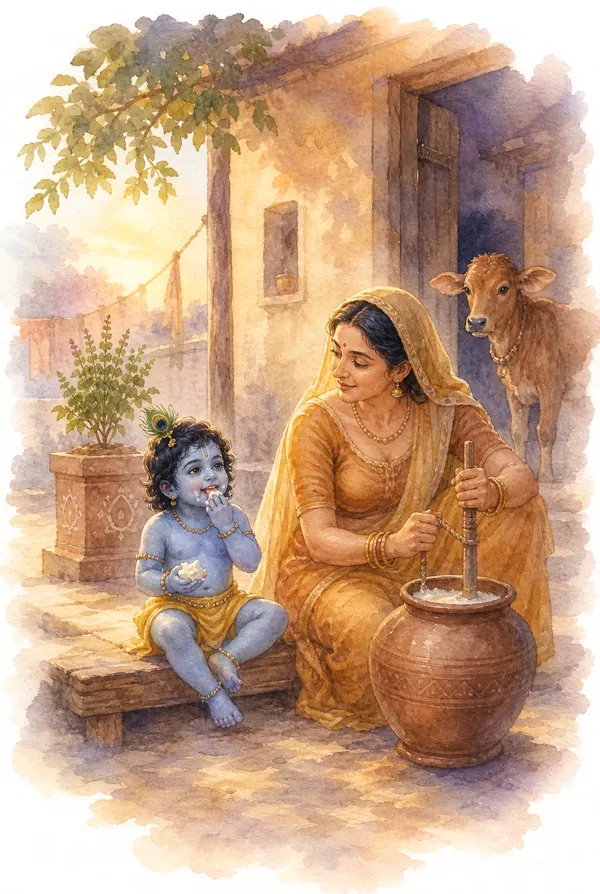
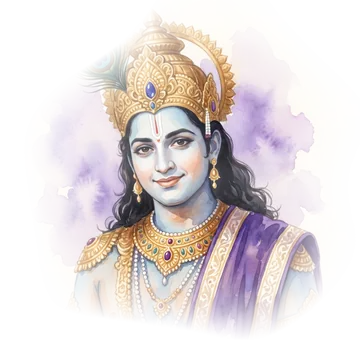
Krishna's teachings, from Book Three of the Mahabharata
18 Teachings from the Bhagavad Gita for Kids
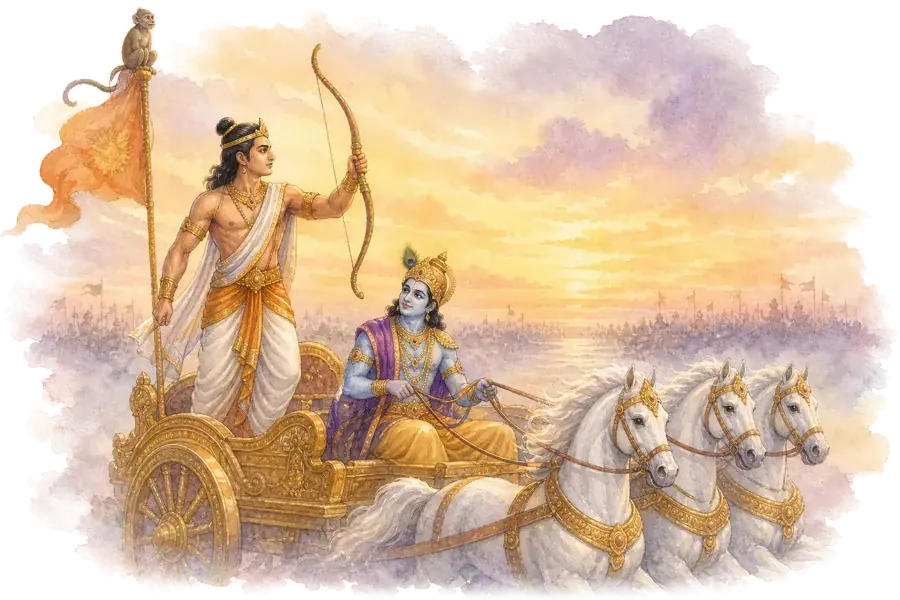
The Bhagavad Gita is the part of the Mahabharata where Krishna talks to Arjuna in his chariot before the battle of Kurukshetra. Its 700 verses hold teachings that people still live by, like doing your best and letting go of the prize. Eighteen of the best known follow, in plain words for readers aged 10 to 16, each with a painting and the Sanskrit verse it comes from.
- The name
- Bhagavad Gita (BHA-ga-vad GEE-taa, भगवद्गीता) means "The Song of the Lord."
- The size
- 18 chapters and 700 verses, spoken by Krishna, with Arjuna's questions.
- The story
- Why Arjuna laid down his bow, and how he picked it up again: the Bhagavad Gita for kids.
- In the books
- Book Three, The War, chapter 1, The Bhagavad Gita
Teaching 1 · Gita 1.29–30, 2.7
Even the bravest can be afraid
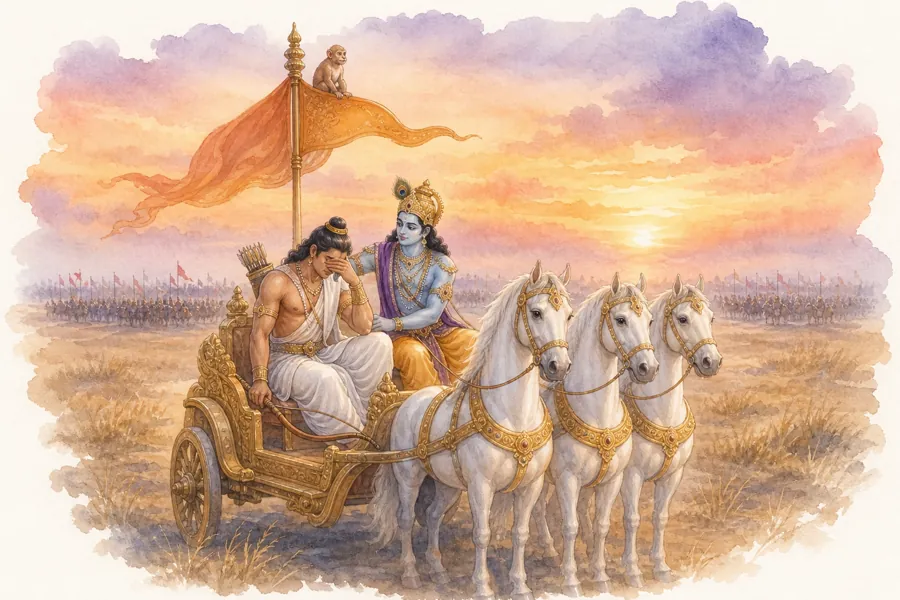
Arjuna was the finest archer alive. On the morning of the battle his legs shook, his mouth went dry, and his bow slipped out of his hand. He didn't hide any of it. He told Krishna exactly how he felt, and then he asked for help.
"I don't know what's right anymore," he says in Book Three. "You tell me. I'm asking you the way a student asks his teacher." The whole Gita is Krishna's answer to that question.
Read the versesGita 1.29–30, 2.7
Gita 1.29, Arjuna says
सीदन्ति मम गात्राणि मुखं च परिशुष्यति
वेपथुश्च शरीरे मे रोमहर्षश्च जायते
sīdanti mama gātrāṇi mukhaṁ ca pariśuṣyati
vepathuś ca śarīre me romaharṣaś ca jāyate
My arms and legs give way and my mouth is dry. My body shakes and my hair stands on end.
Gita 1.30, Arjuna says
गाण्डीवं स्रंसते हस्तात्त्वक्चैव परिदह्यते
न च शक्नोम्यवस्थातुं भ्रमतीव च मे मनः
gāṇḍīvaṁ sraṁsate hastāt tvak caiva paridahyate
na ca śaknomy avasthātuṁ bhramatīva ca me manaḥ
The Gandiva is slipping from my hand, and my skin is burning. I can't stand still, and my mind seems to spin.
Gita 2.7, Arjuna says
कार्पण्यदोषोपहतस्वभावः
पृच्छामि त्वां धर्मसंमूढचेताः
यच्छ्रेयः स्यान्निश्चितं ब्रूहि तन्मे
शिष्यस्तेऽहं शाधि मां त्वां प्रपन्नम्
kārpaṇyadoṣopahatasvabhāvaḥ
pṛcchāmi tvāṁ dharmasaṁmūḍhacetāḥ
yac chreyaḥ syān niścitaṁ brūhi tan me
śiṣyas te ’haṁ śādhi māṁ tvāṁ prapannam
Pity has weakened me, and I'm confused about what is right. So I ask you: tell me for certain what is best for me. I am your student. Teach me. I have come to you.

Teaching 2 · Gita 2.22–23
What lives in you never dies
Krishna told Arjuna that each of us is more than a body. A body is a child, then young, then old, and one day it wears out. What lives inside it puts it down and takes up another, "the way a man takes off old clothes and puts on new ones."
That self can't be hurt by anything in the world. Swords can't cut it. Fire can't burn it, water can't wet it, and the wind can't dry it out.
Read the versesGita 2.22–23
Gita 2.22, Krishna says
वासांसि जीर्णानि यथा विहाय
नवानि गृह्णाति नरोऽपराणि
तथा शरीराणि विहाय जीर्णा-
न्यन्यानि संयाति नवानि देही
vāsāṁsi jīrṇāni yathā vihāya
navāni gṛhṇāti naro ’parāṇi
tathā śarīrāṇi vihāya jīrṇāny
anyāni saṁyāti navāni dehī
As a person throws away worn-out clothes and puts on new ones, the one who lives in the body throws away worn-out bodies and enters new ones.
Gita 2.23, Krishna says
नैनं छिन्दन्ति शस्त्राणि नैनं दहति पावकः
न चैनं क्लेदयन्त्यापो न शोषयति मारुतः
nainaṁ chindanti śastrāṇi nainaṁ dahati pāvakaḥ
na cainaṁ kledayanty āpo na śoṣayati mārutaḥ
Weapons can't cut it. Fire can't burn it. Water can't wet it, and the wind can't dry it.
Teaching 3 · Gita 2.47–48
Do your best and let go of the prize
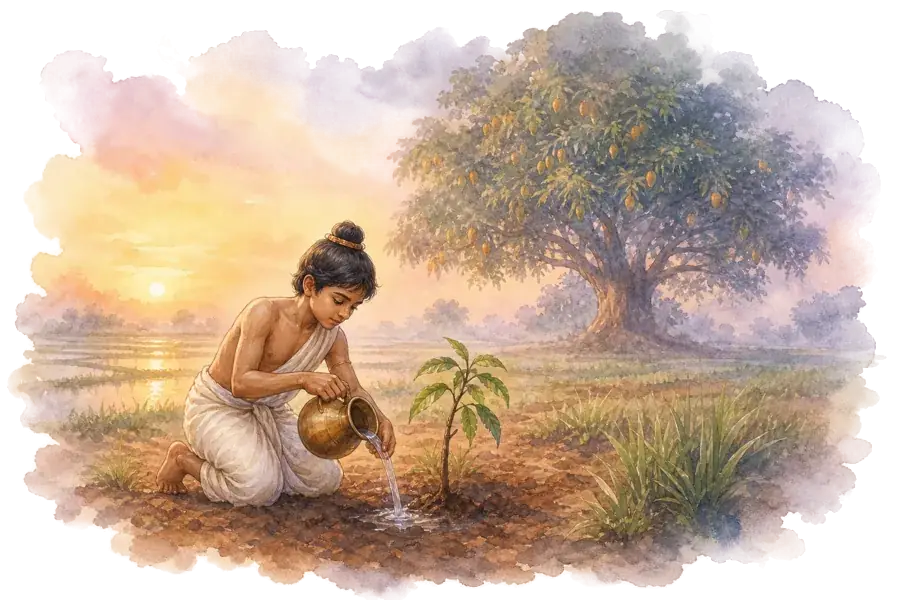
This is the Gita's most famous teaching. "The work is yours," Krishna says in Book Three. "What comes of it isn't."
You can practice every day for a match or plant a seed and water it each morning. Whether you win, or whether the tree bears fruit, depends on many things besides you. So give the work your whole heart, don't sit back and do nothing, and stay the same inside whether you win or lose.
Read the versesGita 2.47–48
Gita 2.47, Krishna says
कर्मण्येवाधिकारस्ते मा फलेषु कदाचन
मा कर्मफलहेतुर्भूर्मा ते सङ्गोऽस्त्वकर्मणि
karmaṇy evādhikāras te mā phaleṣu kadācana
mā karmaphalahetur bhūr mā te saṅgo ’stv akarmaṇi
Your right is to the work alone, never to what it brings. Don't let the reward be your reason for acting, and don't hold on to doing nothing.
Gita 2.48, Krishna says
योगस्थः कुरु कर्माणि सङ्गं त्यक्त्वा धनञ्जय
सिद्ध्यसिद्ध्योः समो भूत्वा समत्वं योग उच्यते
yogasthaḥ kuru karmāṇi saṅgaṁ tyaktvā dhanañjaya
siddhyasiddhyoḥ samo bhūtvā samatvaṁ yoga ucyate
Do your work, Arjuna, with your mind fixed in yoga, letting go of clinging. Stay the same in success and failure. That evenness is called yoga.
Teaching 4 · Gita 2.62–63
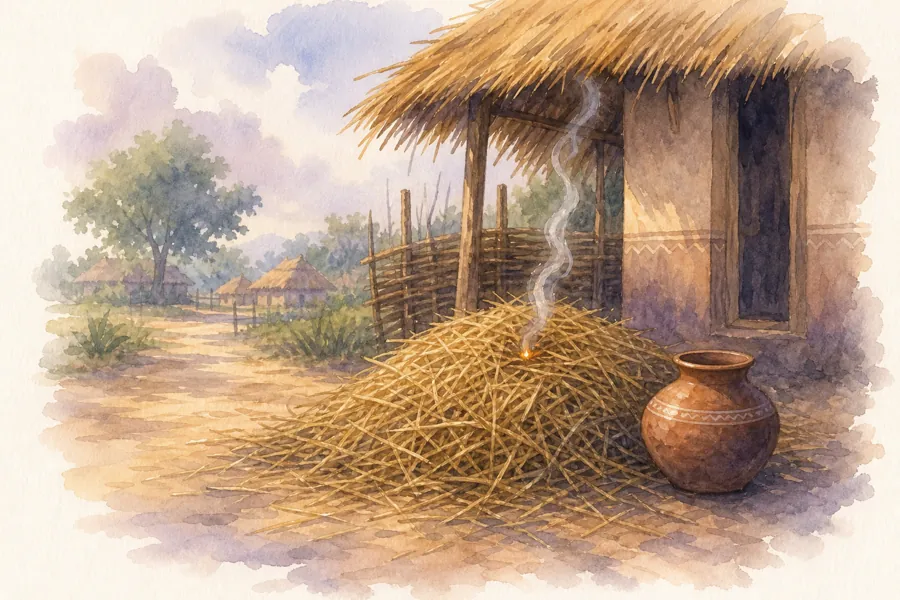
Anger starts small
Krishna showed Arjuna how anger grows, one step at a time. You keep thinking about something you want. Soon you want it badly. When you can't have it, anger flares up, and anger muddles your head until you forget what you know is right.
Like a spark in dry straw, it is easiest to put out while it is still tiny.
Read the versesGita 2.62–63
Gita 2.62, Krishna says
ध्यायतो विषयान्पुंसः सङ्गस्तेषूपजायते
सङ्गात्संजायते कामः कामात्क्रोधोऽभिजायते
dhyāyato viṣayān puṁsaḥ saṅgas teṣūpajāyate
saṅgāt saṁjāyate kāmaḥ kāmāt krodho ’bhijāyate
When a person keeps thinking about the things the senses enjoy, he grows attached to them. Attachment gives birth to desire, and desire gives birth to anger.
Gita 2.63, Krishna says
क्रोधाद्भवति संमोहः संमोहात्स्मृतिविभ्रमः
स्मृतिभ्रंशाद्बुद्धिनाशो बुद्धिनाशात्प्रणश्यति
krodhād bhavati saṁmohaḥ saṁmohāt smṛtivibhramaḥ
smṛtibhraṁśād buddhināśo buddhināśāt praṇaśyati
Anger brings confusion, and confusion makes the memory wander. When memory is lost, good sense is destroyed, and when good sense is destroyed, a person is lost.
Teaching 5 · Gita 3.21
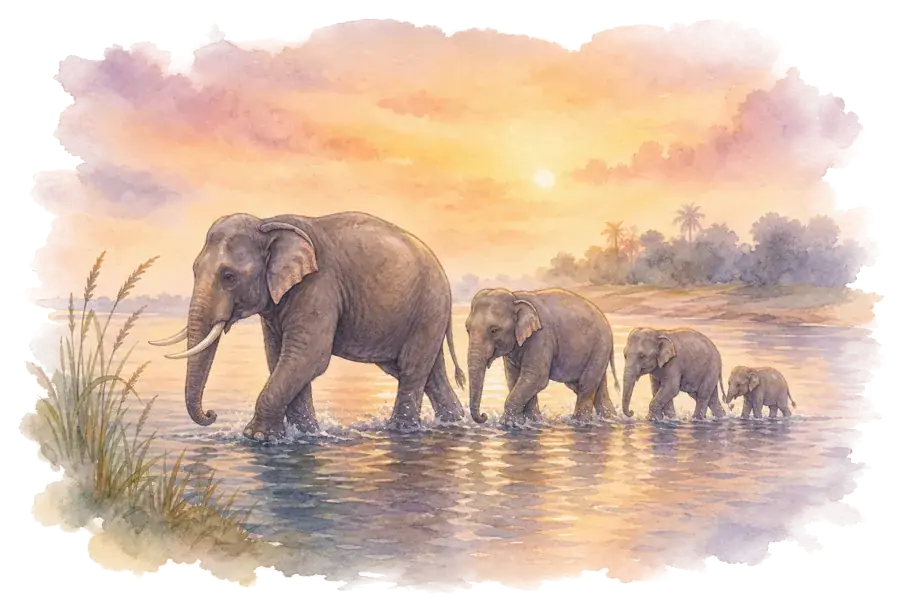
Others do what you do
People copy what they see more than what they're told. Krishna said that whatever a great person does, everyone else does too.
If you are an older brother or sister, or the captain of a team, younger ones are watching where you step. Krishna said he kept working for this reason, even though there was nothing in the world he needed.
Read the verseGita 3.21
Gita 3.21, Krishna says
यद्यदाचरति श्रेष्ठस्तत्तदेवेतरो जनः
स यत्प्रमाणं कुरुते लोकस्तदनुवर्तते
yad yad ācarati śreṣṭhas tat tad evetaro janaḥ
sa yat pramāṇaṁ kurute lokas tad anuvartate
Whatever a great person does, other people do too. Whatever example he sets, the world follows.
Teaching 6 · Gita 3.35
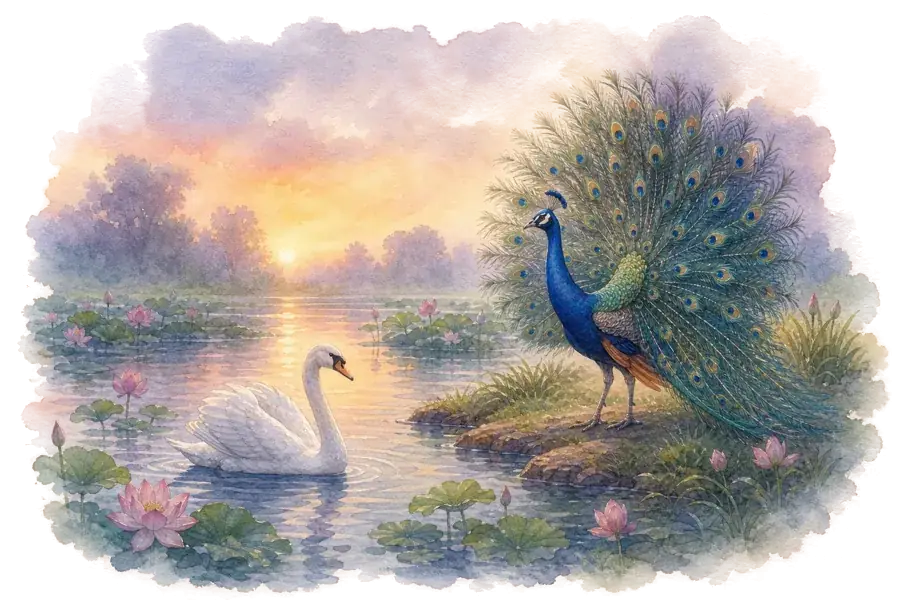
Walk your own path
"Better to do your own work badly than another man's well," Krishna tells Arjuna in Book Three.
A swan was never meant to dance like a peacock, and a peacock would sink on the lake. Your own path may look harder than someone else's. It is still the one that fits you.
Read the verseGita 3.35
Gita 3.35, Krishna says
श्रेयान्स्वधर्मो विगुणः परधर्मात्स्वनुष्ठितात्
स्वधर्मे निधनं श्रेयः परधर्मो भयावहः
śreyān svadharmo viguṇaḥ paradharmāt svanuṣṭhitāt
svadharme nidhanaṁ śreyaḥ paradharmo bhayāvahaḥ
Better your own duty, even done imperfectly, than another's duty done well. Better to die doing your own duty. Another's duty is full of danger.

Teaching 7 · Gita 4.7–8
Goodness always comes back
Krishna told Arjuna who he was. Whenever goodness grows weak and wrong rises up, he said, he comes into the world again to protect the good.
Hindus see this promise kept in Rama, in Krishna himself and in his other births. Even after the darkest night, morning comes.
Read the versesGita 4.7–8
Gita 4.7, Krishna says
यदा यदा हि धर्मस्य ग्लानिर्भवति भारत
अभ्युत्थानमधर्मस्य तदात्मानं सृजाम्यहम्
yadā yadā hi dharmasya glānir bhavati bhārata
abhyutthānam adharmasya tadātmānaṁ sṛjāmy aham
Whenever dharma, the right way, grows weak, Arjuna, and wrong rises up, then I bring myself into the world.
Gita 4.8, Krishna says
परित्राणाय साधूनां विनाशाय च दुष्कृताम्
धर्मसंस्थापनार्थाय संभवामि युगे युगे
paritrāṇāya sādhūnāṁ vināśāya ca duṣkṛtām
dharmasaṁsthāpanārthāya saṁbhavāmi yuge yuge
To protect the good, to destroy those who do evil and to set dharma firmly in place again, I am born age after age.
Teaching 8 · Gita 4.34, 4.38
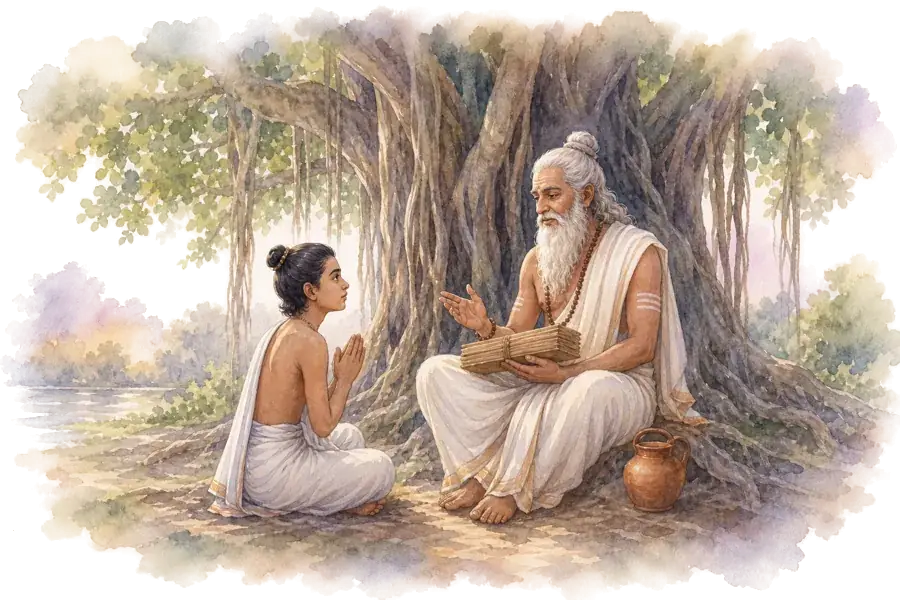
Learn by asking
Arjuna asked Krishna question after question, and Krishna answered every one. That is how the Gita goes.
Krishna told him the way to learn from a wise teacher. Come with respect, ask your questions and be willing to help. He also said there is nothing in the world as pure as knowing.
Read the versesGita 4.34, 4.38
Gita 4.34, Krishna says
तद्विद्धि प्रणिपातेन परिप्रश्नेन सेवया
उपदेक्ष्यन्ति ते ज्ञानं ज्ञानिनस्तत्त्वदर्शिनः
tad viddhi praṇipātena paripraśnena sevayā
upadekṣyanti te jñānaṁ jñāninas tattvadarśinaḥ
Learn it by bowing down, by asking questions and by serving. The wise, who have seen the truth, will teach you.
Gita 4.38, Krishna says
न हि ज्ञानेन सदृशं पवित्रमिह विद्यते
तत्स्वयं योगसंसिद्धः कालेनात्मनि विन्दति
na hi jñānena sadṛśaṁ pavitram iha vidyate
tat svayaṁ yogasaṁsiddhaḥ kālenātmani vindati
Nothing in this world makes a person as pure as knowledge. One who grows perfect in yoga finds it within himself, in time.
Teaching 9 · Gita 5.10
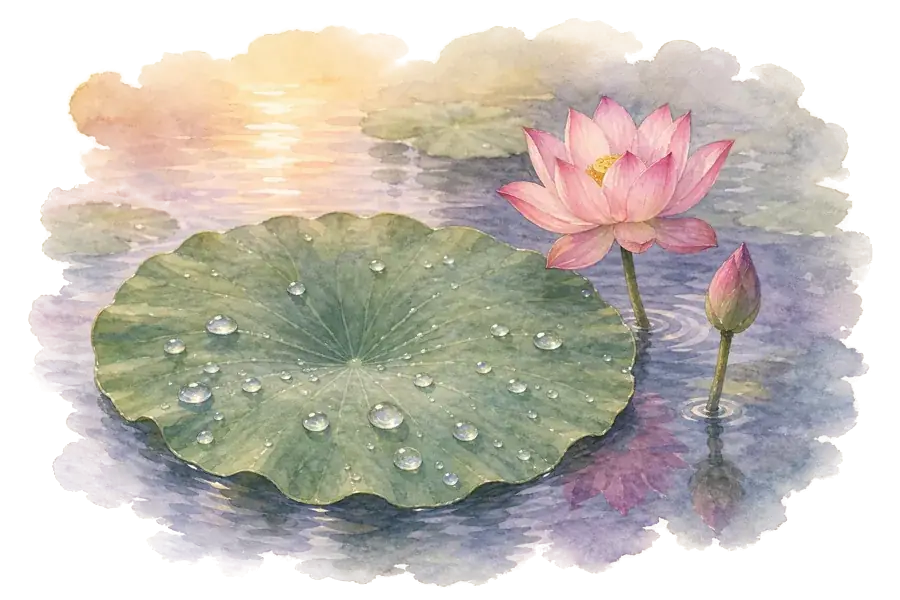
Like a lotus leaf on water
"Look at a lotus leaf on a pond," Krishna says in Book Three. "Water runs all over it and rolls off, and the leaf is never wet."
A person can live in the busy world and do all their work without being stained by greed or wrongdoing. The secret, Krishna said, is to do the work as an offering and want nothing back for yourself.
Read the verseGita 5.10
Gita 5.10, Krishna says
ब्रह्मण्याधाय कर्माणि सङ्गं त्यक्त्वा करोति यः
लिप्यते न स पापेन पद्मपत्रमिवाम्भसा
brahmaṇy ādhāya karmāṇi saṅgaṁ tyaktvā karoti yaḥ
lipyate na sa pāpena padmapatram ivāmbhasā
One who offers all his work to God and acts without clinging is not touched by wrong, as a lotus leaf is not touched by water.
Teaching 10 · Gita 5.18
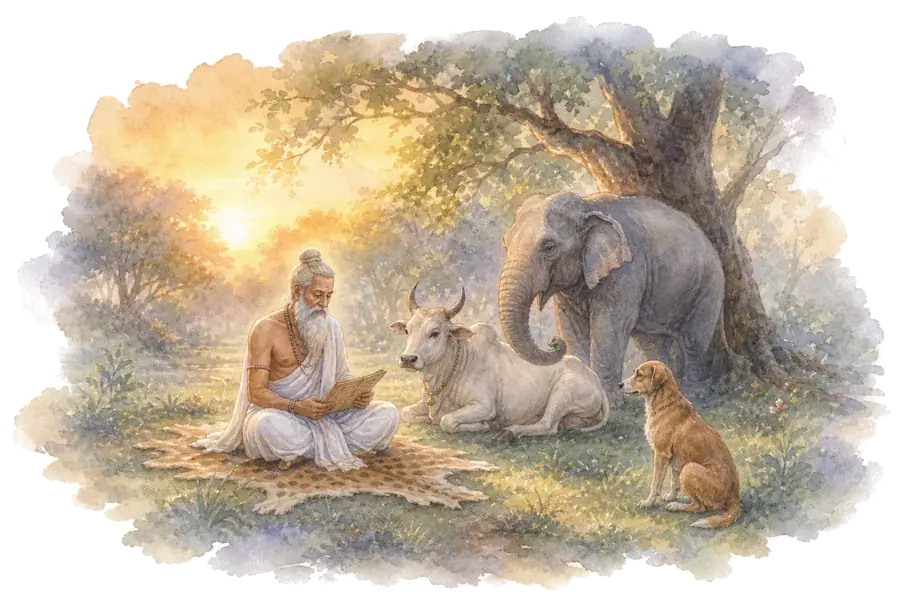
The same light in everyone
Krishna said a wise person looks at a learned scholar, a cow, an elephant, a dog and a man everyone else shuns, and sees the same spirit in each one.
In Krishna's time some people were treated as lower than others. The Gita says the wise see past all of that.
Read the verseGita 5.18
Gita 5.18, Krishna says
विद्याविनयसंपन्ने ब्राह्मणे गवि हस्तिनि
शुनि चैव श्वपाके च पण्डिताः समदर्शिनः
vidyāvinayasaṁpanne brāhmaṇe gavi hastini
śuni caiva śvapāke ca paṇḍitāḥ samadarśinaḥ
The wise see with an equal eye a learned and humble brahmin, a cow, an elephant, a dog and an outcast who eats dogs.
Teaching 11 · Gita 6.5–6
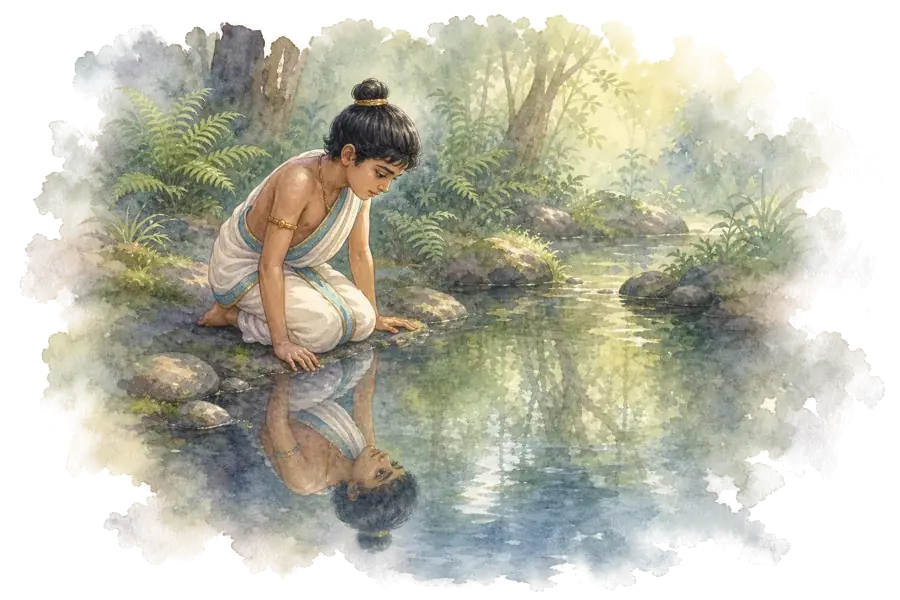
You can be your own best friend
Krishna said you should lift yourself up by your own effort and never push yourself down. Your own mind can be your best friend or your worst enemy, depending on who is in charge.
When you make a mistake, talk to yourself the way a good friend would.
Read the versesGita 6.5–6
Gita 6.5, Krishna says
उद्धरेदात्मनात्मानं नात्मानमवसादयेत्
आत्मैव ह्यात्मनो बन्धुरात्मैव रिपुरात्मनः
uddhared ātmanātmānaṁ nātmānam avasādayet
ātmaiva hy ātmano bandhur ātmaiva ripur ātmanaḥ
Lift yourself up by your own self, and never let yourself sink. You alone are your own friend, and you alone are your own enemy.
Gita 6.6, Krishna says
बन्धुरात्मात्मनस्तस्य येनात्मैवात्मना जितः
अनात्मनस्तु शत्रुत्वे वर्तेतात्मैव शत्रुवत्
bandhur ātmātmanas tasya yenātmaivātmanā jitaḥ
anātmanas tu śatrutve vartetātmaiva śatruvat
For one who has mastered himself, his self is a friend. For one who hasn't, his own self acts like an enemy.
Teaching 12 · Gita 6.34–35
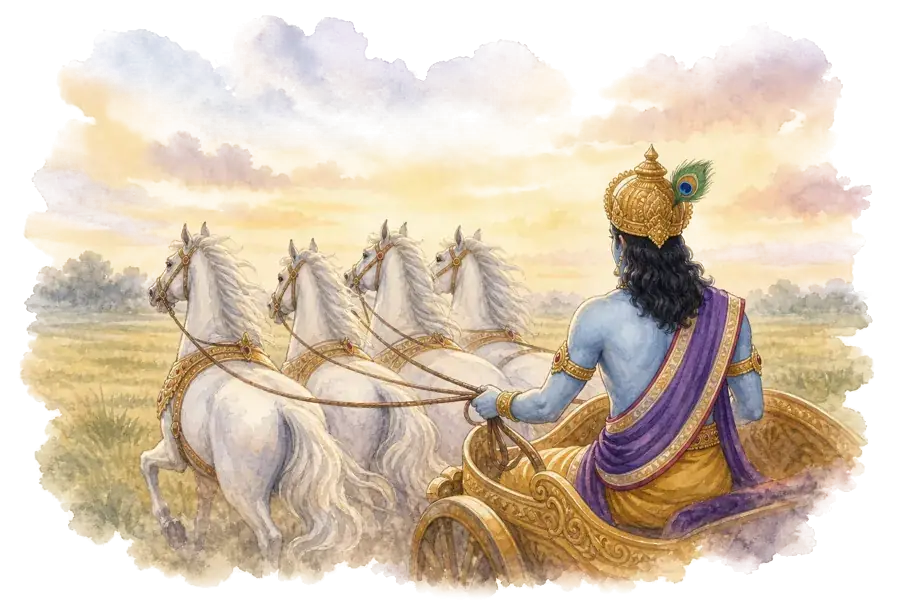
A restless mind can be trained
Arjuna said the mind is as hard to hold as the wind. Krishna didn't argue with him. "It is hard," he says in Book Three. "But with practice it can be held."
Krishna knew about holding things in check. All the while they talked, he had the reins of four eager horses in his hands.
Read the versesGita 6.34–35
Gita 6.34, Arjuna says
चञ्चलं हि मनः कृष्ण प्रमाथि बलवद्दृढम्
तस्याहं निग्रहं मन्ये वायोरिव सुदुष्करम्
cañcalaṁ hi manaḥ kṛṣṇa pramāthi balavad dṛḍham
tasyāhaṁ nigrahaṁ manye vāyor iva suduṣkaram
The mind is restless, Krishna. It is stormy, strong and stubborn. Holding it still seems to me as hard as holding the wind.
Gita 6.35, Krishna says
असंशयं महाबाहो मनो दुर्निग्रहं चलम्
अभ्यासेन तु कौन्तेय वैराग्येण च गृह्यते
asaṁśayaṁ mahābāho mano durnigrahaṁ calam
abhyāsena tu kaunteya vairāgyeṇa ca gṛhyate
Without doubt, mighty Arjuna, the mind is restless and hard to hold. But by practice, son of Kunti, and by letting go, it can be held.

Teaching 13 · Gita 14.17
Three moods pull at everyone
Krishna described three qualities that are mixed into everything, called the gunas. Sattva (SUT-tva) is clear and calm, like a still lake. Rajas (RUH-jus) is restless and always wants more, like a waterfall in the wind. Tamas (TUH-mus) is heavy and dull, like fog over a marsh.
Everyone has all three. Noticing which one is in charge right now is the first step to choosing well.
Read the verseGita 14.17
Gita 14.17, Krishna says
सत्त्वात्सञ्जायते ज्ञानं रजसो लोभ एव च
प्रमादमोहौ तमसो भवतोऽज्ञानमेव च
sattvāt sañjāyate jñānaṁ rajaso lobha eva ca
pramādamohau tamaso bhavato ’jñānam eva ca
From sattva comes knowing, and from rajas comes greed. From tamas come carelessness, confusion and not knowing.
Teaching 14 · Gita 9.26
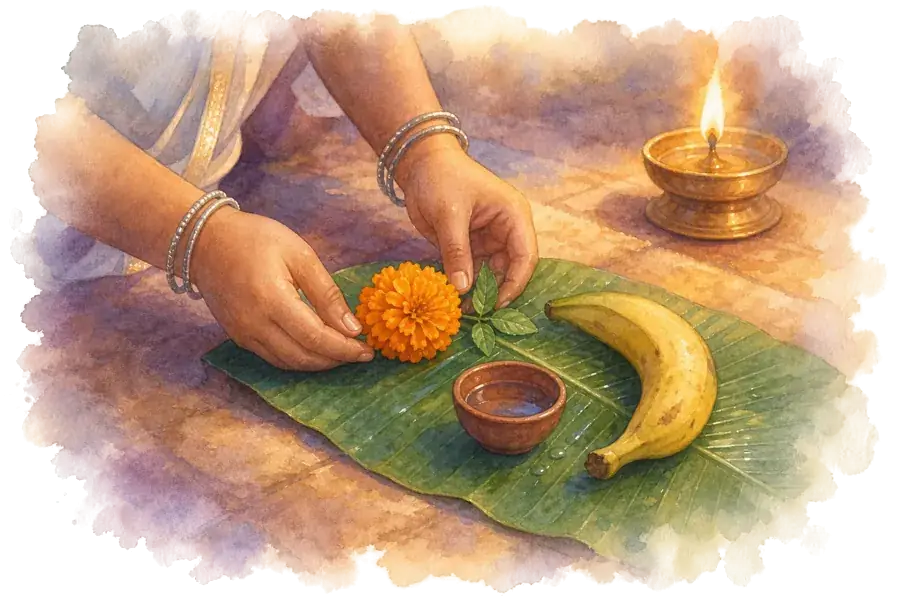
A leaf, a flower, a fruit, some water
Krishna said that if anyone offers him even a single leaf or flower, a piece of fruit or a little water, with love, he accepts it.
A leaf costs nothing at all. Given with love, Krishna counts it as much as a feast.
Read the verseGita 9.26
Gita 9.26, Krishna says
पत्रं पुष्पं फलं तोयं यो मे भक्त्या प्रयच्छति
तदहं भक्त्युपहृतमश्नामि प्रयतात्मनः
patraṁ puṣpaṁ phalaṁ toyaṁ yo me bhaktyā prayacchati
tad ahaṁ bhaktyupahṛtam aśnāmi prayatātmanaḥ
Whoever offers me a leaf, a flower, a fruit or water with love, that gift of love from a pure heart I accept.
Teaching 15 · Gita 12.13, 12.15
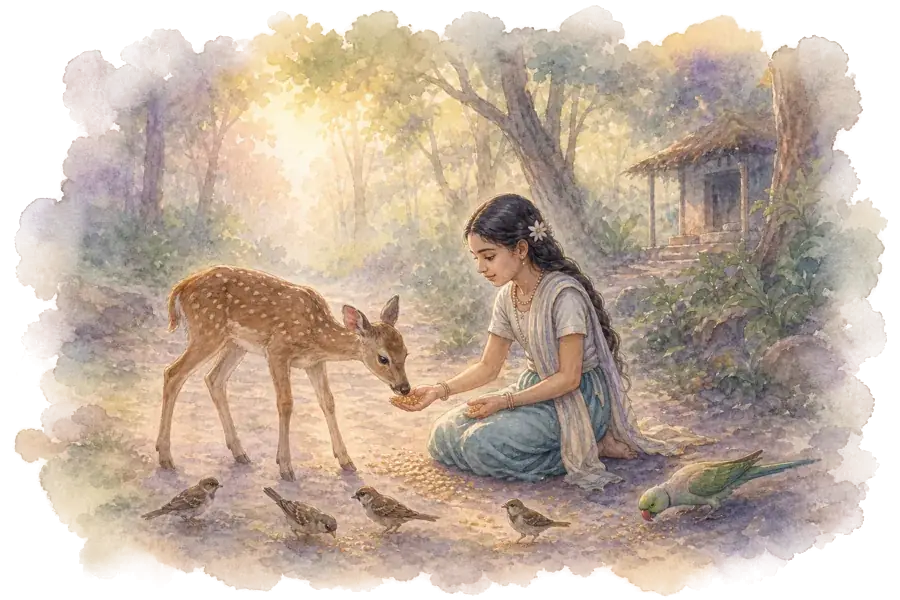
A friend to every living thing
Arjuna asked Krishna what kind of person he holds dear. Krishna described someone who hates no living creature, who is friendly and kind, who forgives easily and stays calm in good times and bad.
Such a person doesn't upset the world, Krishna said, and the world doesn't upset them.
Read the versesGita 12.13, 12.15
Gita 12.13, Krishna says
अद्वेष्टा सर्वभूतानां मैत्रः करुण एव च
निर्ममो निरहङ्कारः समदुःखसुखः क्षमी
adveṣṭā sarvabhūtānāṁ maitraḥ karuṇa eva ca
nirmamo nirahaṅkāraḥ samaduḥkhasukhaḥ kṣamī
One who hates no creature, who is friendly and kind, free of pride and of "mine," the same in sorrow and in joy, and forgiving… (Krishna goes on to say that such a person is dear to me.)
Gita 12.15, Krishna says
यस्मान्नोद्विजते लोको लोकान्नोद्विजते च यः
हर्षामर्षभयोद्वेगैर्मुक्तो यः स च मे प्रियः
yasmān nodvijate loko lokān nodvijate ca yaḥ
harṣāmarṣabhayodvegair mukto yaḥ sa ca me priyaḥ
One who doesn't trouble the world, and whom the world doesn't trouble, who is free of overexcitement, envy, fear and worry, is dear to me.
Teaching 16 · Gita 16.21
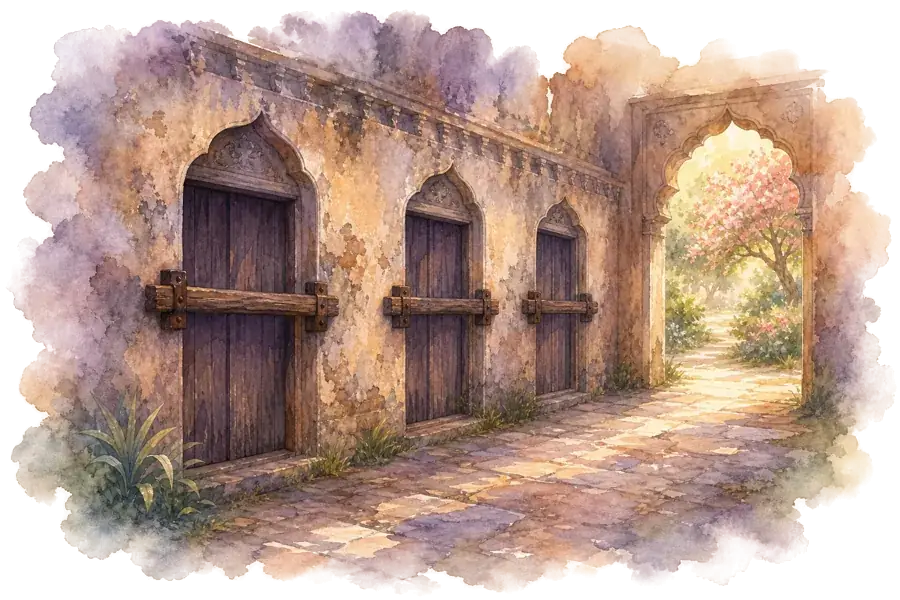
Three doors to keep shut
Krishna named three doors that lead a person to ruin. The first is kama (KAA-ma), wanting more and more. The second is krodha (KRO-dha), anger. The third is lobha (LO-bha), greed.
Each of them opens a little at a time. Krishna told Arjuna to shut all three.
Read the verseGita 16.21
Gita 16.21, Krishna says
त्रिविधं नरकस्येदं द्वारं नाशनमात्मनः
कामः क्रोधस्तथा लोभस्तस्मादेतत्त्रयं त्यजेत्
trividhaṁ narakasyedaṁ dvāraṁ nāśanam ātmanaḥ
kāmaḥ krodhas tathā lobhas tasmād etat trayaṁ tyajet
Desire, anger and greed are the three gates of naraka, the world of suffering, and they destroy the self. So give up all three.
Teaching 17 · Gita 17.15
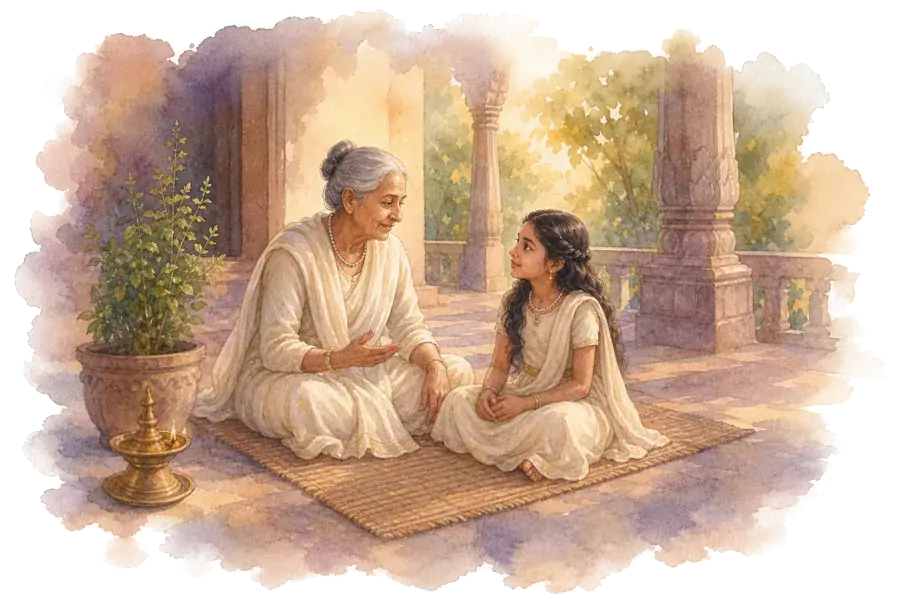
Words that are true and kind
Krishna said that good speech takes practice, like any discipline. Words should be true, pleasant and helpful, and they shouldn't upset anyone for no reason.
Before you speak, you can ask yourself whether it is true, whether it is kind, and whether it will help.
Read the verseGita 17.15
Gita 17.15, Krishna says
अनुद्वेगकरं वाक्यं सत्यं प्रियहितं च यत्
स्वाध्यायाभ्यसनं चैव वाङ्मयं तप उच्यते
anudvegakaraṁ vākyaṁ satyaṁ priyahitaṁ ca yat
svādhyāyābhyasanaṁ caiva vāṅmayaṁ tapa ucyate
Words that cause no distress, that are true, pleasant and helpful, and the regular reading of holy books, are called the discipline of speech.
Teaching 18 · Gita 18.63, 18.73
Think it through, then choose
After all his teaching, Krishna left the choice to Arjuna. "Think over everything I've told you," he says in Book Three. "Then do as you choose."
Arjuna thought, and chose. "My doubts are gone," he said. "I remember who I am." And he picked up his bow.
Read the versesGita 18.63, 18.73
Gita 18.63, Krishna says
इति ते ज्ञानमाख्यातं गुह्याद्गुह्यतरं मया
विमृश्यैतदशेषेण यथेच्छसि तथा कुरु
iti te jñānam ākhyātaṁ guhyād guhyataraṁ mayā
vimṛśyaitad aśeṣeṇa yathecchasi tathā kuru
I have told you this wisdom, the most secret of all secrets. Think it over fully, then do as you wish.
Gita 18.73, Arjuna says
नष्टो मोहः स्मृतिर्लब्धा त्वत्प्रसादान्मयाच्युत
स्थितोऽस्मि गतसन्देहः करिष्ये वचनं तव
naṣṭo mohaḥ smṛtir labdhā tvatprasādān mayācyuta
sthito ’smi gatasandehaḥ kariṣye vacanaṁ tava
My confusion is gone, and by your grace, Krishna, I remember who I am. I stand firm, my doubts are gone. I will do as you say.
Questions about the Gita's teachings
What is the main teaching of the Bhagavad Gita?
Krishna's best-known teaching is to do your work with your whole heart and let go of the reward. "Your right is to the work alone, never to what it brings," he tells Arjuna (Gita 2.47). He also teaches that the self in every body never dies, and that the same spirit lives in every creature.
How many chapters and verses are in the Bhagavad Gita?
The Gita has 18 chapters and 700 verses. It is told in the Bhishma Parva of the Mahabharata, on the first morning of the war at Kurukshetra.
What is the most famous verse of the Bhagavad Gita?
Probably Gita 2.47, karmaṇy evādhikāras te mā phaleṣu kadācana, which means that your right is to the work alone, never to what it brings. Another favorite is 4.7 and 4.8, where Krishna says he is born age after age to protect the good.
How can kids use the teachings of the Gita?
Many of them fit a school day. Practice hard and stay the same whether you win or lose (2.47 and 2.48). Catch anger while it is small (2.62 and 2.63). Speak words that are true, kind and helpful (17.15). Be your own friend when you make a mistake (6.5).
Where this comes from: the Bhagavad Gita, Bhishma Parva §25–42 in the Ganguli translation of the Mahabharata (Gita chapter 1 is §25, chapter 18 is §42). Verse numbers and the Sanskrit follow the common Gita Press numbering; the transliteration is IAST. The English of each verse is a plain translation for young readers, and the lines quoted from Book Three are the book's own retelling. The paintings were made for this page in the books' watercolor style. Sources for The War, chapter by chapter.