From Book Two of the Mahabharata
The Mahabharata Dice Game and Draupadi's Question
In the Mahabharata's dice game, Yudhishthira, the eldest of the five Pandava brothers, plays against Shakuni, who throws the dice for his nephew Duryodhana and wins every throw. Yudhishthira loses his wealth, his kingdom, his brothers and himself, and last of all he stakes his wife, Draupadi, and loses her too. Draupadi then asks the hall a question none of the kings will answer. Book Two of the series, The Dice, tells it in chapters 1 to 3.
- Where
- The blind King Dhritarashtra's new hall in Hastinapura, with crystal arches, a thousand pillars and a hundred doors.
- Who played
- Yudhishthira, the eldest Pandava, against Shakuni, who threw the dice for his nephew Duryodhana.
- What was lost
- In the first game, everything the Pandavas owned, then the four brothers, Yudhishthira himself and Draupadi. In the second game, twelve years in the forest and a thirteenth year in hiding.
- In the books
- Book Two, The Dice: chapter 1, Shakuni's Dice; chapter 2, Draupadi's Question; chapter 3, The Second Game
- Yudhishthirayu-DHISH-ti-raयुधिष्ठिर
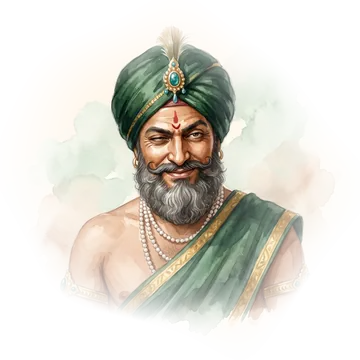
- ShakuniSHA-ku-niशकुनि
- Duryodhanadur-YO-dha-naदुर्योधन
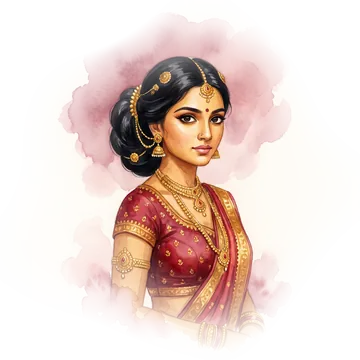
- DraupadiDRAU-pa-deeद्रौपदी
- Duhshasanaduh-SHAA-sa-naदुःशासनalso Dushasana, Dushasan
- Vikarnavi-KAR-naविकर्ण
- ViduraVI-du-raविदुरalso Vidur
- Dhritarashtradhri-ta-RAASH-traधृतराष्ट्रalso Dhritarashtr
Why Yudhishthira sat down to play
At the end of Book One, Yudhishthira was crowned emperor at Indraprastha, and his cousin Duryodhana went home sick with envy. Duryodhana's uncle Shakuni knew Yudhishthira's weakness. "He loves to play dice, and he plays badly," he said. "If someone challenges him, he can't say no." So the blind King Dhritarashtra built a new hall and invited the Pandavas to Hastinapura for a friendly game of dice.
On the road, Yudhishthira seemed to know where he was going. "Fate takes away a man's sense," he told his uncle Vidura. "It's like a bright light flashing in front of your eyes."
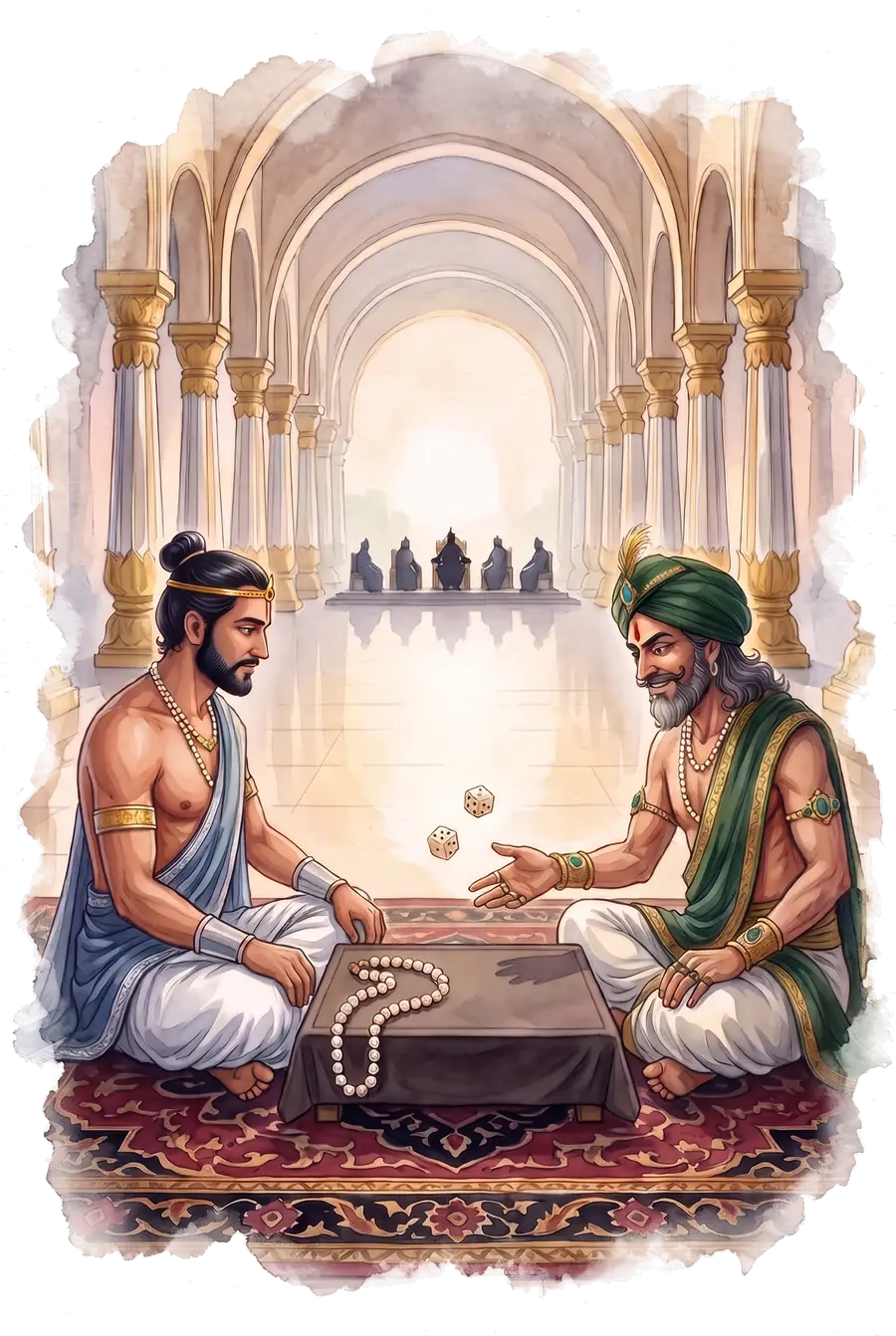
Yudhishthira sat down across the board from Shakuni. "Cheating at dice is a sin," he said. "Beat us fairly, Shakuni. Don't beat us like a thief." Shakuni shrugged. "But if you're afraid, don't play."
"I was challenged," said Yudhishthira. "I don't walk away. That is my vow." Shakuni threw the dice for Duryodhana, which was against the rules, and Yudhishthira played anyway.
The first game
Yudhishthira's first stake was a necklace of ocean pearls set in gold. Shakuni threw. "I have won," he said, and he said it after every throw that followed. Yudhishthira lost his treasure, his chariot, his elephants and his soldiers.
"Men who climb cliffs for wild honey look only at the honey," Vidura warned the blind king. "They never see the drop below them. Your son is on that cliff now." Dhritarashtra said nothing. He was listening to the dice.
The herds went, and the city, and the country. Then Yudhishthira staked his brothers, Nakula, Sahadeva, Arjuna and Bhima. Of each of the last three he said the same words. "He should never be staked. I stake him." He lost them one by one, and then he staked himself and lost. "There is still one stake you love," said Shakuni. "Stake Draupadi, the princess of Panchala. Win yourself back with her."
Yudhishthira staked her, and the old men of the court cried shame. Bhishma, Drona and Kripa were sweating. Vidura sat with his head in his hands. Only the blind king leaned forward. "Has it been won?" he kept asking. Shakuni threw. "I have won," he said, and he picked up the dice.
Why did Shakuni never lose? Book Two answers with a later popular telling, A Handful of Rice, in which his dying father blesses his hand in a Kuru prison. "From this day on, whatever you throw will fall the way you need it to."
Draupadi's question
When an usher came to fetch Draupadi to the hall as a serving woman, she sent him back with a question. "Go back to the hall," she said, "and ask the gambler this. Whom did he lose first, himself or me?"
Yudhishthira did not say a word. Then Duryodhana's brother Duhshasana came for her, and he dragged her by her hair into the hall in front of all the kings. "How can the elders of this house sit there and watch, and say nothing?" she asked. Bhishma answered without lifting his eyes. "What is right is a subtle thing, child," he said. "I can't decide it." Yudhishthira had been called to play against men who knew every trick there is, Draupadi answered. "How was that his own free choice?"
Only Vikarna, one of Duryodhana's own brothers, stood up for her. Yudhishthira had already lost himself, he said, and Draupadi was the wife of all five brothers. "I say Draupadi was never won." The hall cheered him.
The cloth that did not end
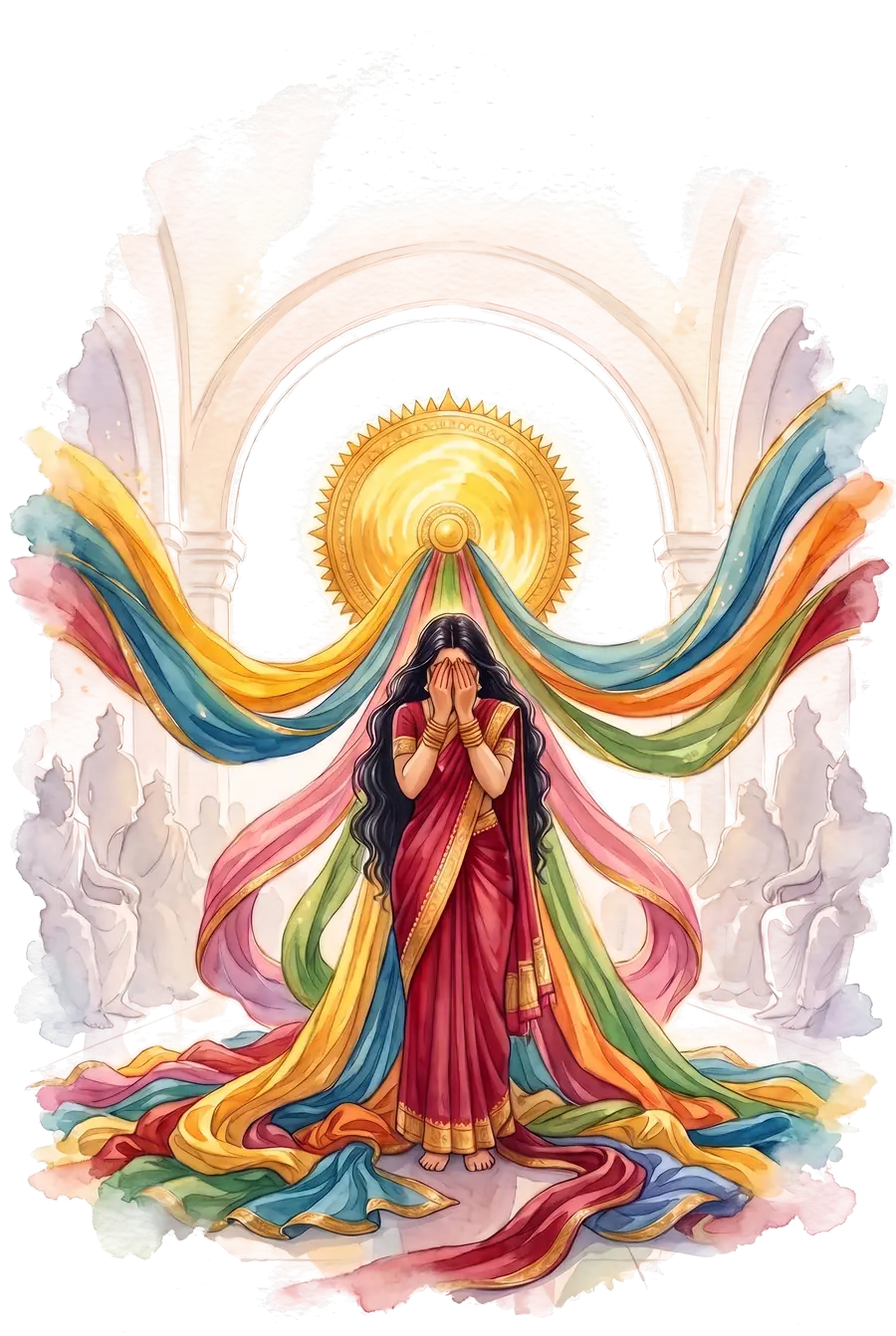
Karna told Duhshasana to take Draupadi's cloth. Duhshasana took hold of its end and began to pull. Many families know this moment as the vastraharan, or Draupadi's cheer haran.
"Draupadi covered her face with her hands. There was nobody left in that hall to call on. So she called on Krishna."
Krishna heard her. Duhshasana pulled and pulled, and "the cloth piled up around him like a river in flood, hundreds of lengths in every color the dyers knew, and still she stood covered." At last he let go and sat down, and the kings who had sat silent all day were on their feet, praising Draupadi. Once, when Krishna's discus cut his finger, she had torn a strip from her own cloth to bind it. He had not forgotten.
The kings who said nothing
Bhima swore before the kings that he would kill Duhshasana in battle. "A man who knows what is right and keeps it to himself carries half the sin of a lie," Vidura told the kings. Not one of them spoke.
Draupadi bowed to the elders and asked again. "I am the wife of King Yudhishthira," she said, "the sister of Dhrishtadyumna, the friend of Krishna. Tell me, am I a slave or not? Whatever you say, I'll accept it." Bhishma said Yudhishthira must answer that, and Yudhishthira sat like a man made of stone. When Duryodhana bared his thigh at Draupadi, Bhima made a second vow, to break that thigh in the great battle.
Two wishes, and a third refused
Deep in the palace a jackal howled. Frightened by the omens, Dhritarashtra offered Draupadi a gift. "Then free Yudhishthira," she said. "I won't have children calling my son a slave's son." For her second gift she asked for his four brothers, with their chariots and their bows. She would not take a third. "Greed eats away at what is right. I won't ask for a third. My husbands are free now. They can win back the rest by their own deeds."
Even Karna was amazed. "The sons of Pandu were drowning, and their wife carried them to shore like a boat." The blind king gave the Pandavas back everything they had lost, and they drove home toward Indraprastha. Draupadi's hair hung loose down her back, the way Duhshasana had left it.
The second game and the exile
Duryodhana went straight to his father. "Let them play us once more. One stake, and the losers go to the forest." Queen Gandhari begged her husband to give up their son. "Who mends a dam and then breaks it open again?" The elders all asked for peace. "If the end of our family has come," said the king at last, "let it come. I can't stop it."
The king's messenger caught up with Yudhishthira on the road. "I know this will destroy me," said Yudhishthira. "But it's a call to dice, and it comes from the old king. I can't refuse."
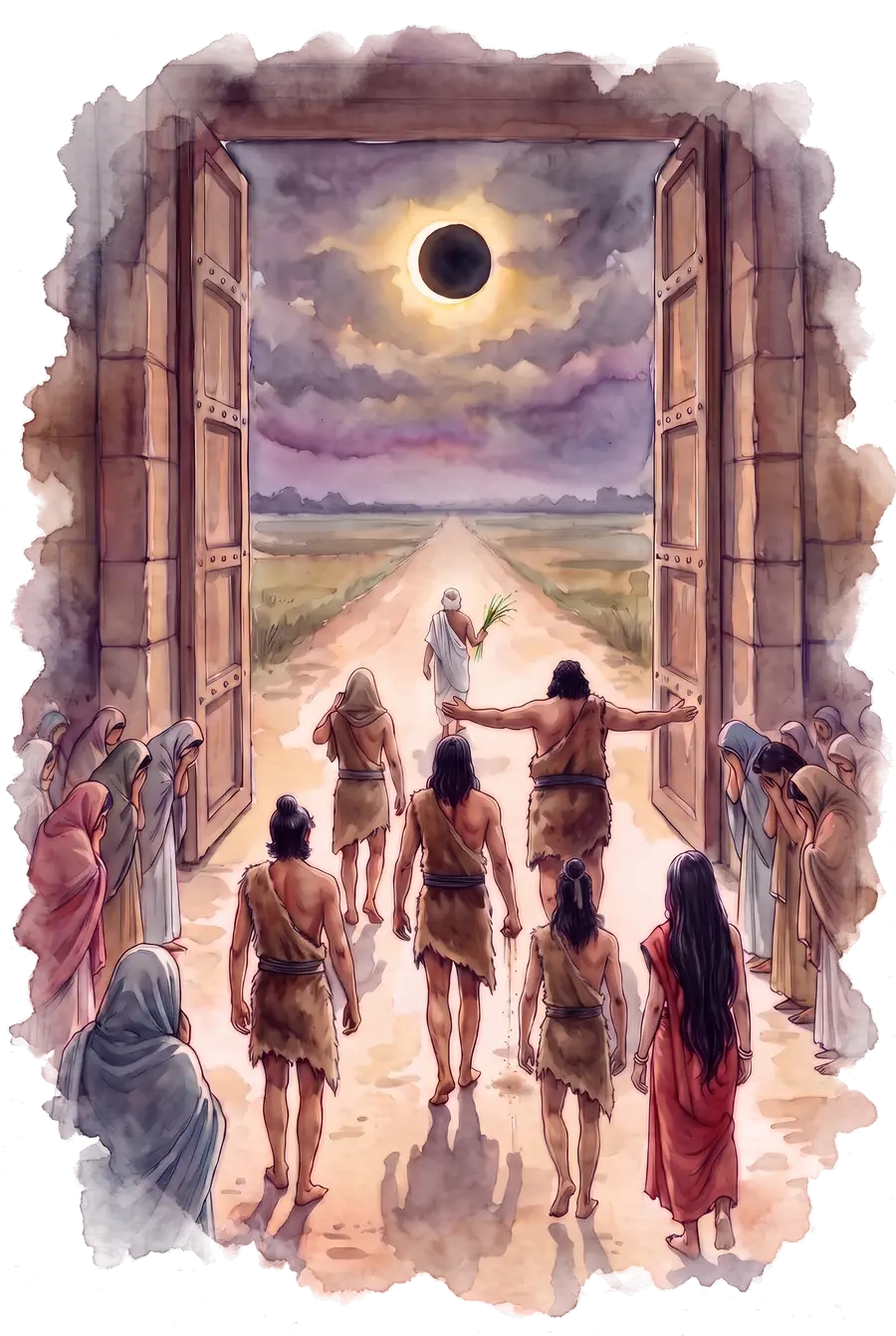
The stake was twelve years in the forest, in deerskins, and a thirteenth year among people with no one knowing who they were. If anyone recognized them, it was twelve years more. "How can a king refuse when he's called to play?" said Yudhishthira. Shakuni threw, and he hardly looked at the dice. "I have won," he said.
Bhima swore to kill Duryodhana, Arjuna to kill Karna, and Sahadeva to kill Shakuni. Kunti stayed behind in Vidura's house. At the gate, Draupadi turned back toward the hall. "I will leave my hair the way Duhshasana left it," she said, and she swore not to tie it up again until he had paid. As they went, something black began to eat the sun, and the sage Narada stood in the air before the court. "In the fourteenth year from today," he said, "because of Duryodhana's wrong, the Kauravas will be destroyed by the strength of Bhima and Arjuna."
What happened next
Near the end of the twelve years in the forest, Yudhishthira answers the yaksha's questions to bring his brothers back to life. When the thirteenth year is over, Duryodhana will not give back their kingdom, and the war comes, where Bhima keeps both of his vows. The whole story, short, is in the Mahabharata in five minutes.
Questions about the dice game
Who won the dice game in the Mahabharata?
Shakuni won every throw, playing for his nephew Duryodhana. In the first game he won Yudhishthira's wealth, his kingdom, his four brothers, Yudhishthira himself and Draupadi, and after each throw he said, "I have won." In the second game he won with one throw, and the Pandavas went into the forest for twelve years, with a thirteenth year in hiding.
Why did Yudhishthira agree to play dice?
He had sworn never to refuse a challenge. "I was challenged," he tells Shakuni. "I don't walk away. That is my vow." The invitation came from the blind king, who was like a father to him, and he loved the game. Once he began to lose, every new stake felt like a way to win back what he had already lost.
What question did Draupadi ask in the dice hall?
She asked whom her husband had lost first, himself or her. If Yudhishthira had already lost himself, he owned nothing, so how could he stake her? Bhishma said he could not decide it, and the kings said nothing. Only Vikarna, one of Duryodhana's own brothers, answered her. "I say Draupadi was never won."
What is the vastraharan?
Vastraharan, also called cheer haran, is the name many families use for the moment in the dice hall when Duhshasana tries to pull away Draupadi's cloth. She covers her face and calls on Krishna, and her cloth does not end. In Book Two the lengths of cloth pile up around Duhshasana like a river in flood, and she stands covered until he gives up.
Is the dice game too upsetting for children?
Book Two tells it for readers aged 10 to 16, with no physical detail. It stays on Draupadi's face, her question and the kings who say nothing, and Krishna answers her call. The age guide lists every hard moment in the three books and how each one is told.
Where this comes from: Sabha Parva §57–79 in the Ganguli translation of the Mahabharata (§57–65 the first game, §66–72 Draupadi in the hall, §73–79 the second game). Ganguli says only that Shakuni wins every throw by unfair means; the tale of the handful of rice comes from a later popular telling. In Ganguli the god Dharma, unseen, covers Draupadi with robe after robe; in the book, as in popular retellings, Krishna sends the cloth. Draupadi's spoken vow about her hair also comes from popular retellings; in Ganguli, Vidura tells the king what her loose hair means. Sources for The Dice, chapter by chapter.