Mock trial · Book One
Mock Trial Cases from The Vow
Four ready cases for a classroom mock trial, from The Vow, Book One of an illustrated Mahabharata for readers 10 to 16: Bhishma's vow, Kunti and the basket, Duryodhana and the house of lac, and the laugh in the palace. Each has the charge, the evidence with chapter numbers, witnesses and questions for both teams. The roles, the plan and the rubric are in the mock trial kit.
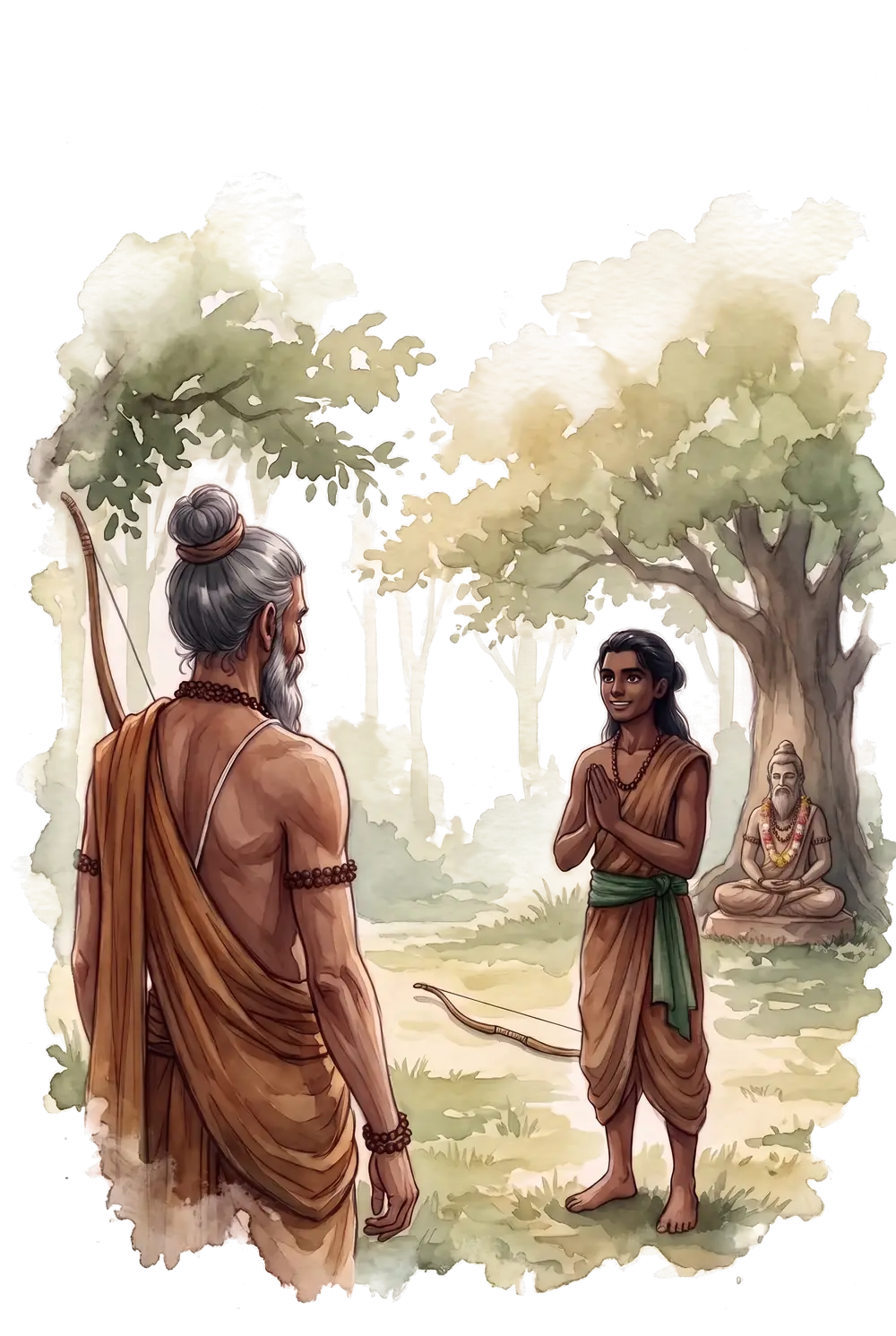
A fifth case from The Vow, Drona and Ekalavya's thumb, is the worked case in the kit. Chapter numbers are the book's own.
The cases
Case 1: Bhishma's terrible vow
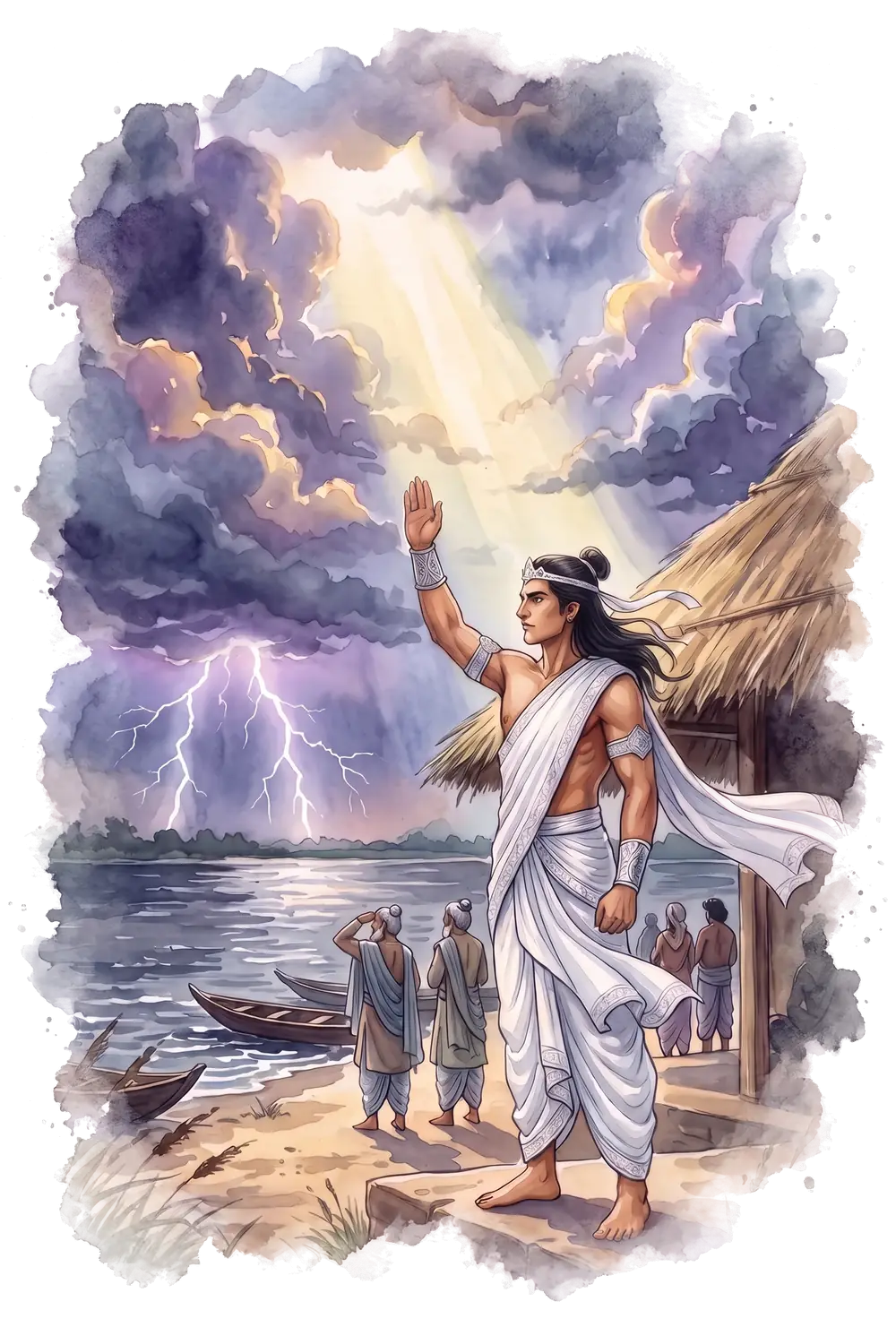
The charge. Bhishma, born Devavrata, is charged with making a promise that wasn't his alone to make. By swearing never to marry or have a child, he tied the hands of his whole family, and others paid for it.
Evidence from the book
- King Shantanu stopped eating after he met Satyavati. He told his son he didn't want another wife, "though nobody had asked." (Chapter 2)
- Satyavati's father, the fisher chief, would give her in marriage only if her son became king. Devavrata gave up the throne on the spot. (Chapter 2)
- The chief then asked who would make Devavrata's future sons keep that promise. Devavrata swore never to marry and never to have a child. (Chapter 2)
- He didn't ask his father or the old chiefs who had ridden with him. Flowers fell from the sky, and his father blessed him to choose the time of his own death. (Chapter 2)
- Bhishma carried off Amba and her sisters as brides for his brother. When she said she had already chosen another king, he let her go. That king refused her, and her champion Parashurama ordered Bhishma to take her back. "I have sworn never to marry," Bhishma said. "I won't break my word out of fear." (Chapter 3)
- When his brother died with no sons, Satyavati begged Bhishma to take the throne and marry. He refused again. (Chapter 4)
Witnesses
King Shantanu, the father the vow was for. The fisher chief, who asked the hard question. Satyavati, who heard the vow and later begged him to break it. Amba, the princess the vow left with no one to turn to.
Questions for the prosecution
- Who paid for this vow besides Bhishma himself? Think about Amba, and about the kingdom in Chapter 4.
- He made a promise for the rest of his life in one afternoon, without asking anyone. Was that brave or careless?
- When Satyavati herself asked him to break it, why didn't he?
Questions for the defense
- He did it to make his father happy, and nobody forced him. Isn't a promise about your own life yours to make?
- The fisher chief asked for exactly this. Was there any other way to settle his worry?
- If Bhishma had broken his vow, why would anyone trust his word again?
Case 2: Kunti and the basket on the river
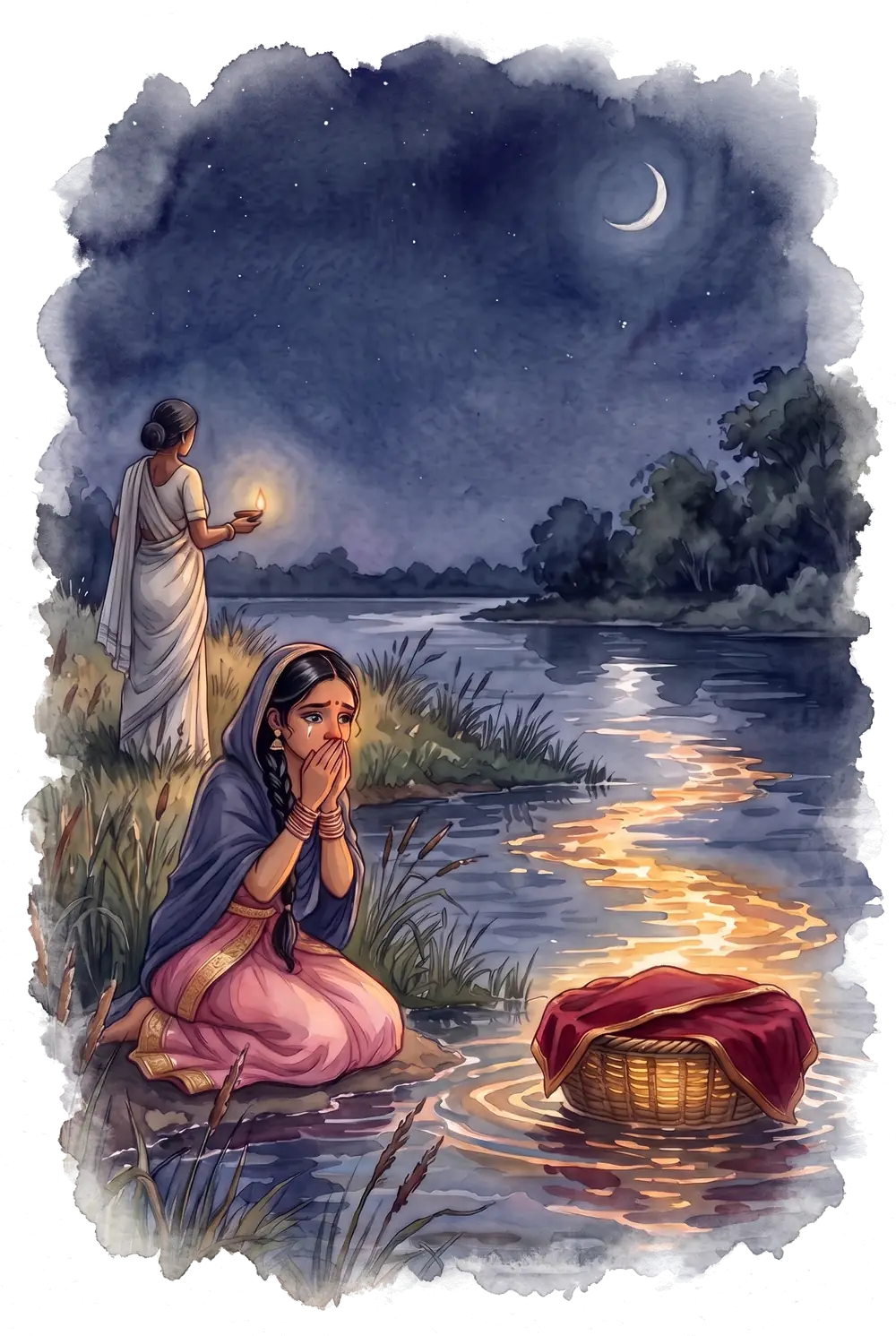
The charge. Kunti, a young unmarried princess, is charged with abandoning her newborn son on the river and keeping him a secret.
Evidence from the book
- A famously bad-tempered sage, Durvasa, taught her sacred words that would call any god to give her a son. He told her to keep them for the day she needed them. (Chapter 5)
- She said the words "to see if they worked," and the sun god Surya came. She begged him to go back. He said that if she sent him away, he would curse her, her father and the sage. (Chapter 5)
- She asked that her son be born in armor, with earrings like the god's, so that no weapon could pierce him. (Chapter 5)
- Only her old nurse knew about the baby. Kunti knew what people would say about her and about her father. (Chapter 5)
- She lined the basket with soft cloth, sealed it with wax so no water could get in, and prayed over it. "Lucky is the woman who will take you for her son." (Chapter 5)
- Her spies later told her the boy was alive in Anga. When she chose Pandu as her husband, she said nothing about the river. (Chapter 5)
- Radha and Adhiratha, a charioteer and his wife, found the basket and raised the baby as their own son, Karna. (Chapter 5)
Witnesses
The old nurse, the only one who knew. Durvasa, who gave her the words. Radha, who pulled the basket from the river. King Kuntibhoja, the father she was protecting, who never knew.
Questions for the prosecution
- She knew her son was alive. Why did she never go to him?
- The sage told her to save the words. Was trying them out a careless choice?
- Who paid most for her secret?
Questions for the defense
- She was young and alone, and a god threatened to curse her family. What else could she have done?
- Look at how she made the basket and what she prayed. Does that sound like someone who didn't care?
- She asked for armor so that no weapon could pierce him. What does that tell the jury?
A note for the teacher. Keep this case on the choice at the river. The book tells Surya's visit gently, with no physical detail, and the court can do the same.
Case 3: Duryodhana and the house of lac
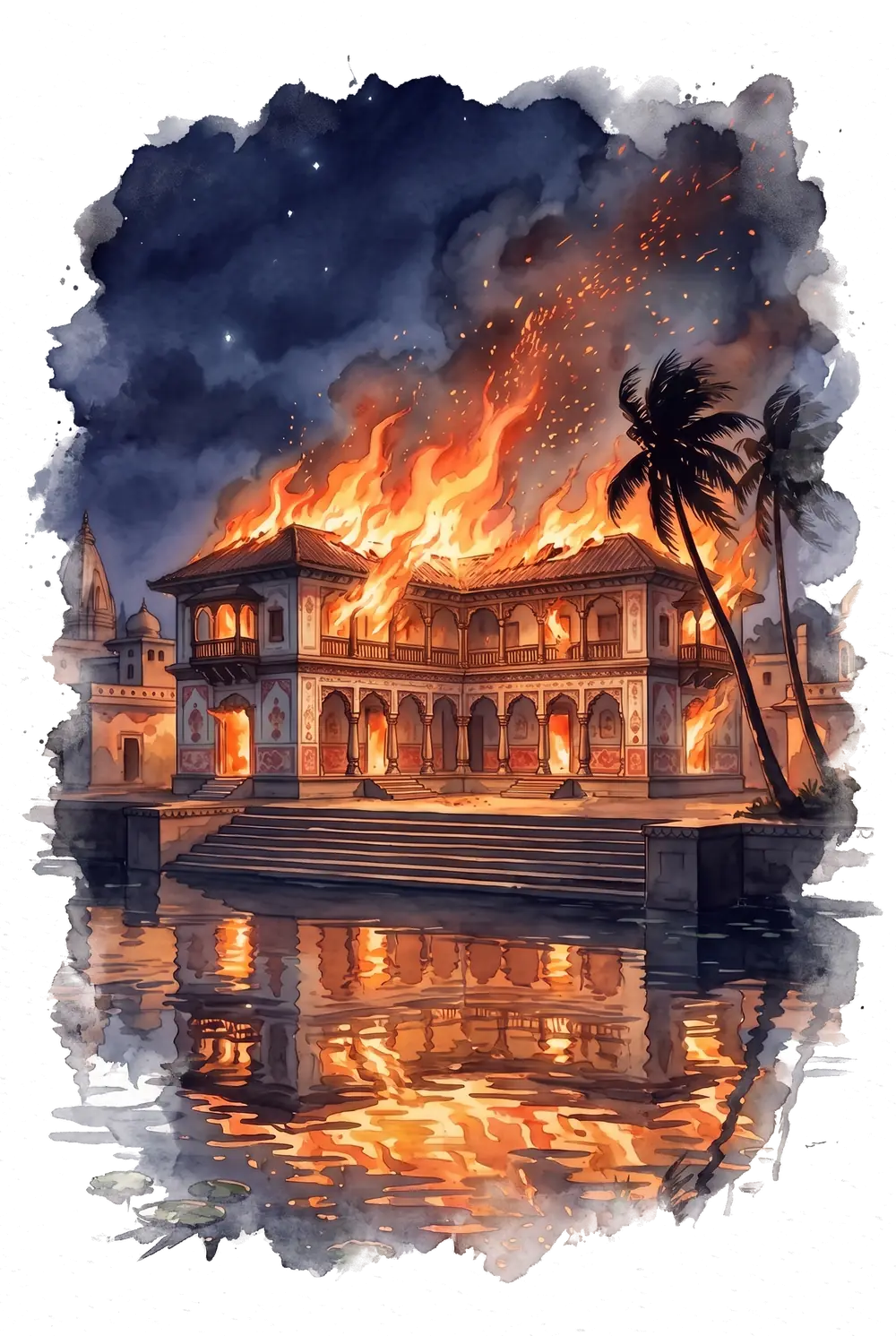
The charge. Duryodhana, eldest son of King Dhritarashtra, is charged with plotting to burn his five cousins and their mother in a house built to catch fire.
Evidence from the book
- People in Hastinapura wanted Yudhishthira to be king now. Duryodhana and his brothers had been handing out silver in the same squares, and Duryodhana had been to see his father alone. (Chapter 13)
- The king's counselors praised a festival at Varanavata, and King Dhritarashtra sent the Pandavas there. (Chapter 13)
- The house waiting for them was built by "Duryodhana's man Purochana," of hemp and bamboo soaked in ghee, with walls plastered with lac. (Chapter 13)
- Their uncle Vidura warned Yudhishthira in a language almost nobody knew, and sent a miner to dig them a tunnel. (Chapter 13)
- Years before, Duryodhana had fed Bhima poisoned sweets and pushed him into the river. (Chapter 7)
- Before that, Bhima had held his cousins under the water in his games until they could hardly breathe. Duryodhana once had to lift his brother Duhshasana, crying and shaking, off the sand. (Chapter 7)
Witnesses
Vidura, who saw the danger and sent help. The miner, who dug the tunnel. King Dhritarashtra, who sent the Pandavas away. Bhima, who has been on the wrong end of Duryodhana's plans before.
Questions for the prosecution
- Who built the house, and whose man was he?
- What happened at the river in Chapter 7? Does it matter that this wasn't the first time?
- Why did Vidura have to whisper his warning in a language almost nobody knew?
Questions for the defense
- In the book, nobody hears Duryodhana give an order. What does the evidence really prove?
- It was the king who sent the Pandavas to Varanavata. Should Dhritarashtra be on trial too?
- Think back to Bhima's games in the river. Does being bullied as a boy explain anything? Does it excuse anything?
After the verdict, you can tell the class what the old text adds. In the Ganguli translation, Duryodhana takes Purochana aside and gives him the orders for the house himself.
A harder case for older students
Put the Pandavas on trial instead. To escape, they set the house on fire themselves, with Purochana inside. A Nishada woman and her five sons had eaten at Kunti's feast and fallen asleep in the house, and they died in the fire. The book says that even Vyasa, who told the whole story, doesn't say whether the brothers knew they were still inside. Yudhishthira and Bhima can take the stand, and so can the townspeople who found the ashes.
Case 4: The laugh in the palace
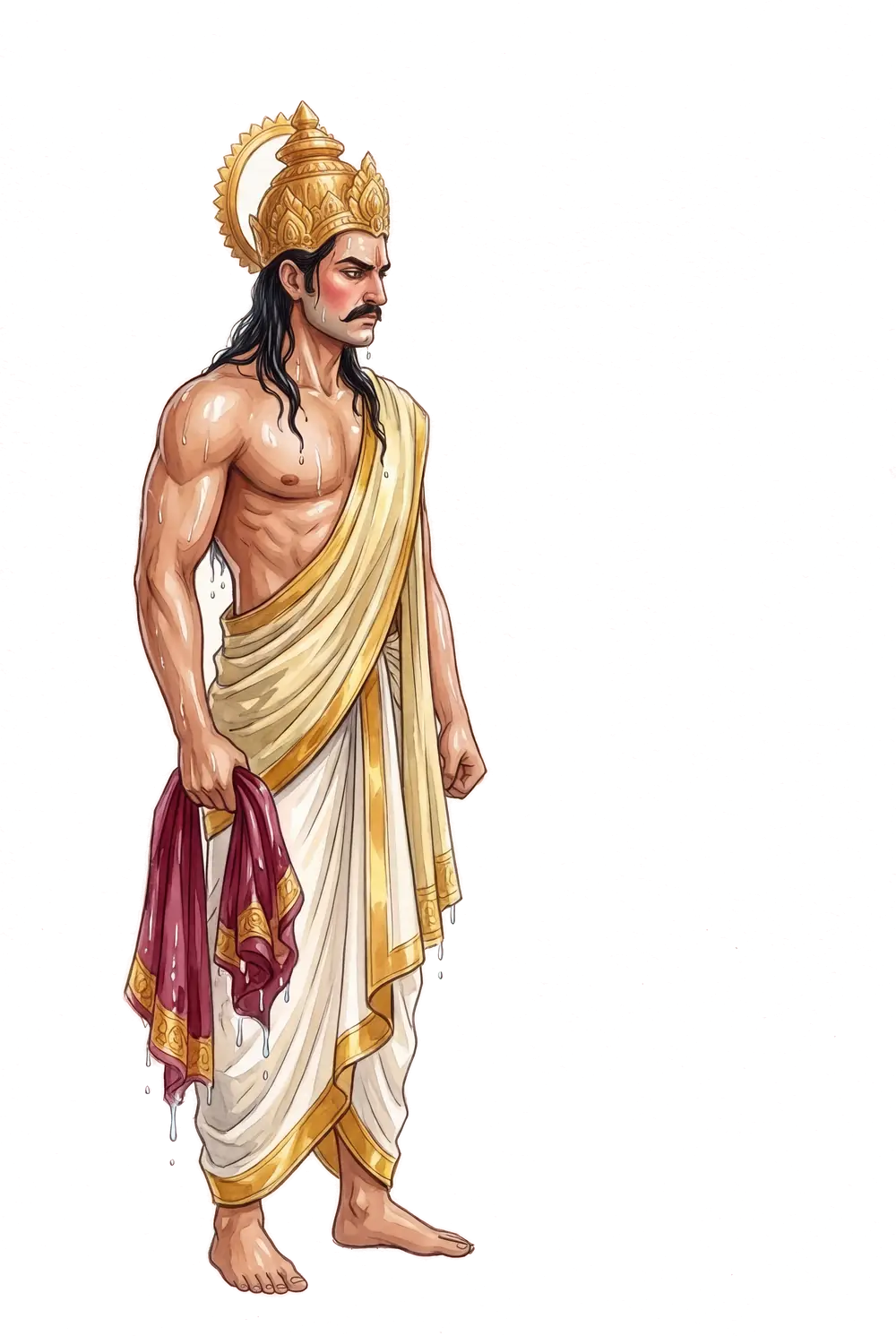
The charge. Bhima and his three younger brothers are charged with mocking a guest who fell into a pool in their palace.
Evidence from the book
- Duryodhana had spent days receiving the kings' gifts for Yudhishthira, until his hands ached. (Chapter 19)
- In Maya's hall he lifted his robe over a floor he took for water. Then he stepped onto what looked like a crystal floor, and it was water. (Chapter 19)
- The first thing he heard was Bhima laughing. The palace servants laughed too. (Chapter 19)
- Yudhishthira ordered dry clothes for him, fine ones. While he changed, Bhima, Arjuna and the twins stood together and laughed out loud. (Chapter 19)
- When he lifted his robe over dry floor, the laughter started all over again. (Chapter 19)
- He walked into a closed crystal door. The twins ran to hold him up, and Sahadeva showed him the way out. Bhima called across the hall, laughing, that the door was this way. (Chapter 19)
- Riding home, Duryodhana said nothing for a long time. Then he spoke about the servants laughing at him, and Shakuni offered him a game of dice. (Chapter 19)
Witnesses
Duryodhana, who fell in. Sahadeva, who laughed, then helped him at the door. A palace servant, who laughed too. Shakuni, who rode home with Duryodhana and heard what he said.
Questions for the prosecution
- They laughed more than once. When does laughing at an accident turn into mocking?
- He was a guest in their home. Do hosts owe a guest more?
- Duryodhana's hands still ached from holding his cousin's treasure. Should the brothers have seen how the laugh would land?
Questions for the defense
- Anyone who falls into a pool looks funny. Wouldn't Bhima have laughed just as hard at his own brother?
- Yudhishthira sent dry clothes, and the twins held him up at the door. Doesn't that count?
- Can the people who laughed be blamed for what Duryodhana decided to do next?
Students may know a version where Draupadi laughs at Duryodhana. In this book she isn't in the scene, because it follows the Ganguli translation. If someone raises it, let the judge rule on whether it counts.
Debate topics from The Vow
For a shorter lesson, use one of these as a debate. One team argues for the statement and one against, with the rest of the class as the audience who vote at the end. Every topic comes from The Vow, Book One.
- A promise should be kept even when it hurts people who never agreed to it. (Chapter 2, Bhishma's vow)
- Bhishma was right to carry off the princesses of Kashi for his brother. (Chapter 3, Amba's fire)
- Gandhari was right to tie a cloth over her eyes. (Chapter 4, Gandhari's blindfold)
- Kunti had no real choice at the river. (Chapter 5, Karna's birth)
- Dhritarashtra's love for his son did Duryodhana more harm than good. (Chapter 6, Pandu's curse)
- Bhima's games in the river were bullying. (Chapter 7, Bhima poisoned)
- Drupada was right that friendship can only be between equals. (Chapter 8, the ball in the well)
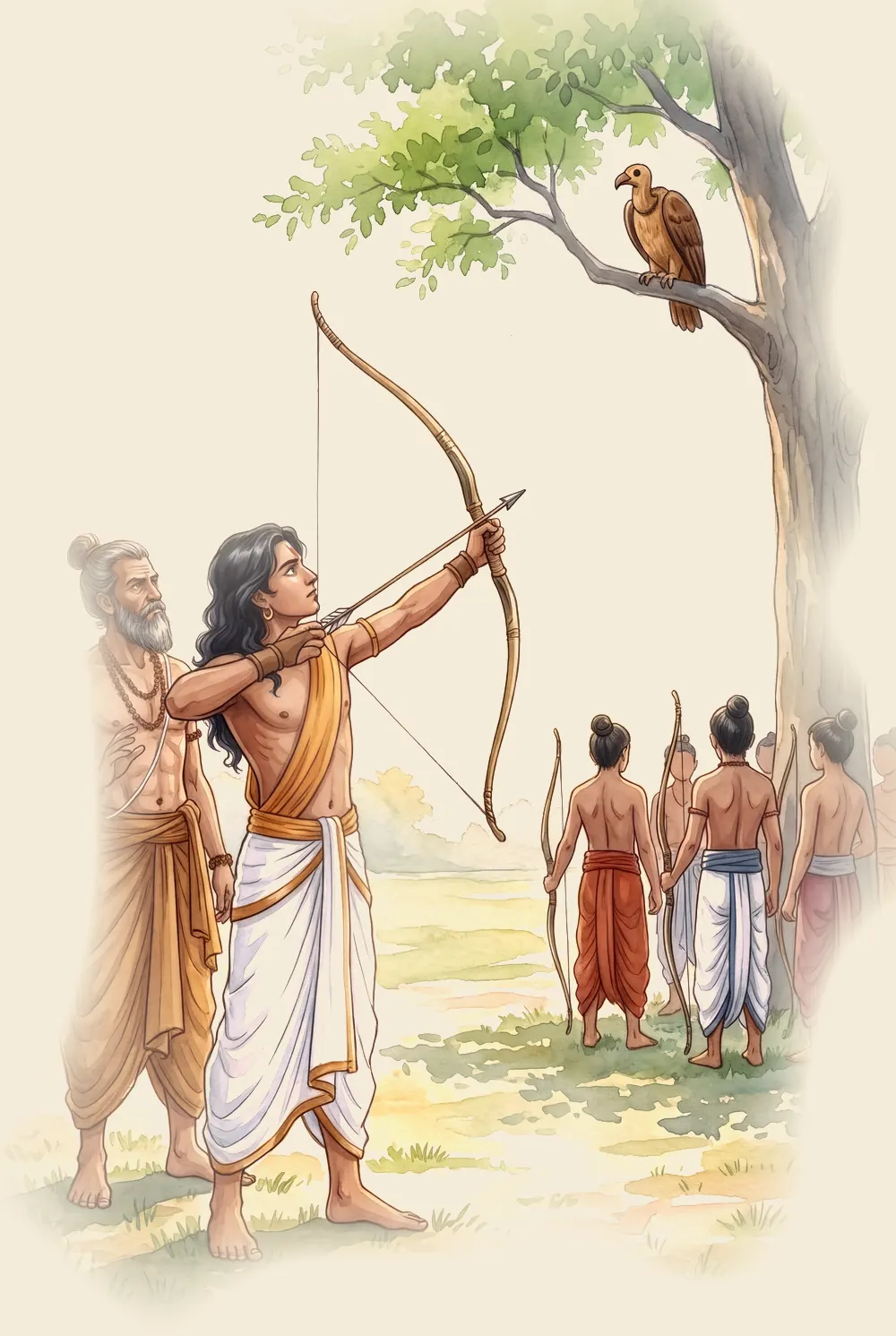
- A teacher should never have a favorite. (Chapter 9, the bird's eye)
- Karna should have been allowed to compete without naming his parents. (Chapter 11, Karna at the tournament)
- Kunti was right to send Bhima to fight Baka in the brahmin's place. (Chapter 14, Bhima, Hidimba and Baka)
- The choice that kept the five brothers together was unfair to Draupadi. (Chapter 16, "Share it equally")
- Arjuna and Krishna were right to help the fire god burn the forest. (Chapter 17, the burning forest)
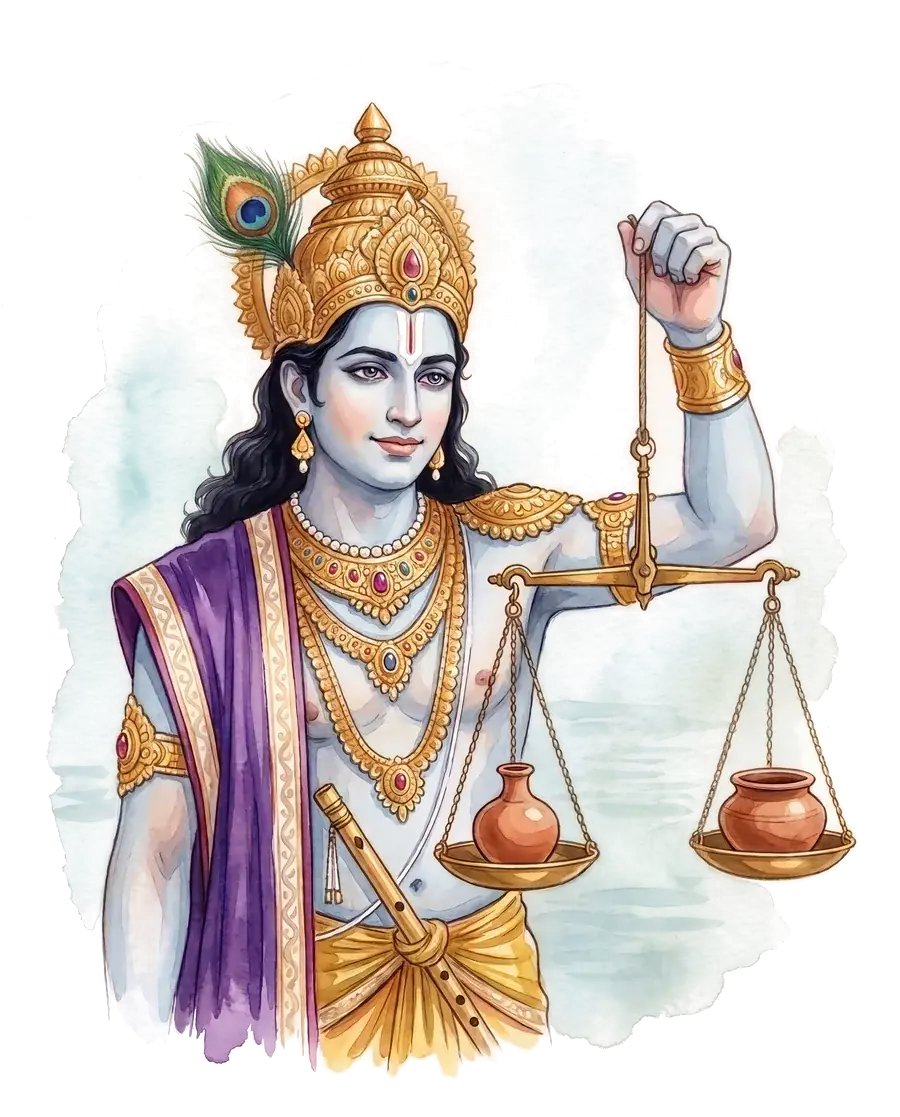
Krishna asks a question about most of these chapters too. Five of them are on Krishna asks, where students can choose an answer.
Verdict sheet for the jury
Print one for each group of jurors. They fill it in while they listen and finish it together before they vote.
| The case | |
|---|---|
| The charge | |
| The prosecution's strongest evidence | |
| The defense's strongest evidence | |
| Our verdict (circle one) | Guilty · Not guilty · Guilty, with reasons the court should weigh |
| Why we decided | |
| What would have changed our minds |
Book details for ordering
| Title | The Vow |
|---|---|
| Series | Mahabharata, Book One of three |
| Author | Ankita Sharma |
| Pages | 197 |
| Format | Paperback, 6 × 9 in, full color |
| ISBN | 979-8-9828468-0-8 |
| Publisher | Sharma Ink |
| Ages | 10 to 16 (about grades 5 to 10) |
| Release | November 30, 2026 |
Where this comes from: The cases follow The Vow, which follows the English translation of the Mahabharata by Kisari Mohan Ganguli (1883 to 1896). Bhishma's vow is Adi Parva §100, Amba is §101–102, and Kunti's son is §111 with the fuller telling in the Vana Parva, §301–307. Ekalavya is Adi Parva §134. The house of lac is §141–152, and Duryodhana gives Purochana his orders in §146. The laugh in the palace is Sabha Parva §46. In many retellings Draupadi laughs at Duryodhana, but in Ganguli she isn't there, and the book follows Ganguli. Krishna's questions were written for the book. The mock trial and its questions were written for these lessons.