A pronunciation guide
How to Say the Mahabharata Names
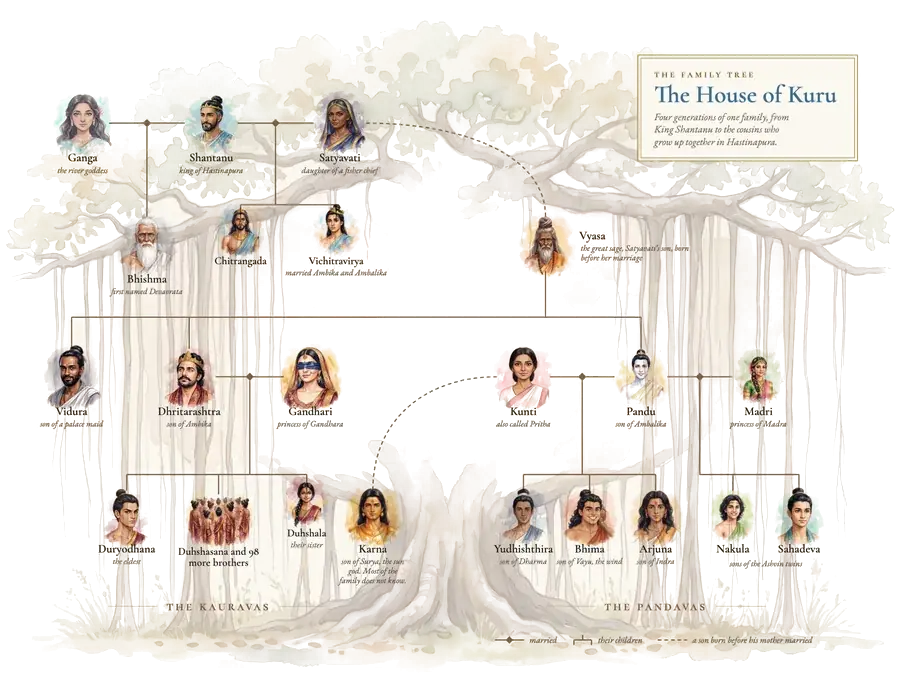
Say the part in capital letters a little more strongly than the rest. Draupadi is DRAU-pa-dee, Bhishma is BHEESH-ma, and Yudhishthira is yu-DHISH-ti-ra.
The sounds
These names come from Sanskrit, an ancient language of India. This guide uses one simple way of writing them in English letters, with the syllables split by hyphens. Each set of letters always makes the same sound.
| Letters | Sound |
|---|---|
| a | as in about |
| aa | as in father |
| i | as in sit |
| ee | as in see |
| u | as in put |
| oo | as in moon |
| ay | as in say |
| o | as in go |
| au | as in how |
| sh | as in shoe |
| ch | as in chair |
| bh, dh, kh, th | with a puff of breath, as in clubhouse and hothouse; th never sounds like the th in the word "the" |
Why the spellings change from book to book
Sanskrit is written in its own script, Devanagari, so every English spelling is someone's best try. You may see Yudhishthira written Yudhisthira, or Duhshasana written Dushasana. They are the same people.
Many families say the names the way they sound in Hindi or another modern Indian language, where the short a at the end is usually dropped. So Arjuna becomes Arjun, Bhima becomes Bhim, and Ekalavya is often written Eklavya.
Mahabharata names from A to Z
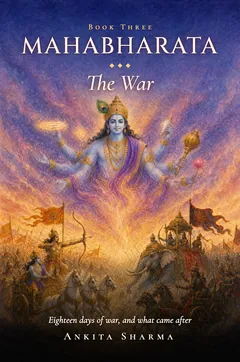
The 103 names come from all three books, The Vow, The Dice and The War, and each book opens with its own guide to saying them. Names new in Book Two or Book Three are marked with the books they appear in.
A
Abhimanyu
a-bhi-MAN-yu
अभिमन्यु
Son of Arjuna and Subhadra, a fierce, fearless baby.
Adhiratha
A-dhi-ra-tha
अधिरथ
Also spelled Adhirath
The charioteer who found Karna in a basket on the river and raised him as his own son.
Ambalika
am-BAA-li-kaa
अम्बालिका
Amba's youngest sister, and the mother of Pandu.
Ambika
AM-bi-kaa
अम्बिका
Amba's middle sister, and the mother of Dhritarashtra.
AR-ju-na
अर्जुन
Also spelled Arjun
The third Pandava, who wants to be the greatest archer in the world.
Ashwatthama
ash-wat-THAA-maa
अश्वत्थामा
Also spelled Ashvatthama, Ashwathama, Aswathama
Drona's only son, who grows up among the princes.
aas-TEE-ka
आस्तीक
A boy whose mother was the sister of Vasuki, king of the Nagas. He asked King Janamejaya to put out his snake fire.
In Book Three
B
Balarama
ba-la-RAA-ma
बलराम
Also spelled Balram, Balaram
Krishna's elder brother.
Bhagavad Gita
BHA-ga-vad GEE-taa
भगवद्गीता
Also called the Gita
“The Song of the Lord,” what Krishna taught Arjuna in the chariot between the two armies.
In Book Three
BHEE-ma
भीम
Also spelled Bhim, Bheem
The second Pandava, the biggest, strongest boy in Hastinapura.
BHEESH-ma
भीष्म
Also spelled Bheeshma, Bhisma
Son of King Shantanu and Ganga, who keeps every promise he makes.
Bhuminjaya
bhoo-MIN-ja-ya
भूमिञ्जय
Often called Uttar or Uttara in other retellings
King Virata's son, who held Arjuna's reins in the cattle raid.
In Books Two and Three
Bhurishravas
bhoo-RISH-ra-vas
भूरिश्रवा
Also spelled Bhurisravas
Somadatta's son, a Kuru prince who fought for Duryodhana.
In Book Three
C
Chitrasena
chi-tra-SAY-na
चित्रसेन
King of the gandharvas, who taught Arjuna music and dancing in heaven.
In Book Two
D
Damayanti
da-ma-YAN-tee
दमयन्ती
Also spelled Damyanti
Princess of Vidarbha in the tale of Nala, who chose Nala over four gods.
In Book Two
Daruka
DAA-ru-ka
दारुक
Krishna's charioteer.
In Book Three
Devavrata
day-VAV-ra-ta
देवव्रत
Also spelled Devavrat, Devvrat
Bhishma's first name, before his vow.
Dharma
DHAR-ma
धर्म
The god who judges right and wrong. Yudhishthira was born by his blessing.
Dhaumya
DHAUM-ya
धौम्य
The Pandavas' priest, who went with them into the forest.
In Books Two and Three
Dhrishtadyumna
dhrish-tad-YUM-na
धृष्टद्युम्न
Also spelled Dhristadyumna
Draupadi's brother, who stepped out of a sacred fire in armor.
Dhritarashtra
dhri-ta-RAASH-tra
धृतराष्ट्र
Also spelled Dhritarastra, Dhritrashtra
The eldest prince of Hastinapura, born blind, and father of the Kauravas.
DRAU-pa-dee
द्रौपदी
Also spelled Draupathi, Draupdi
Princess of Panchala, who rises from a sacred fire.
DRO-na
द्रोण
Also called Dronacharya, Drona the teacher
A poor brahmin who is the finest teacher of weapons in the land.
Drupada
DRU-pa-da
द्रुपद
Also spelled Drupad
King of Panchala and Drona's boyhood friend.
Duhshala
DUH-sha-laa
दुःशला
Also spelled Dushala
The only daughter of Dhritarashtra and Gandhari, sister of the hundred brothers.
In Book Two
Duhshasana
duh-SHAA-sa-na
दुःशासन
Also spelled Dushasana, Dushasan, Duhsasana
Duryodhana's next brother and his shadow.
Durvasa
dur-VAA-saa
दुर्वासा
Also spelled Durvasas
A sage with a famous temper.
dur-YO-dha-na
दुर्योधन
Also spelled Duryodhan
Eldest of Dhritarashtra's hundred sons, sure the throne should be his.
E
G
Gandhara
gaan-DHAA-ra
गान्धार
Also spelled Gandhar
A mountain kingdom far to the northwest, Gandhari's home.
gaan-DHAA-ree
गान्धारी
Princess of Gandhara, who ties a cloth over her own eyes when she marries a blind prince.
Ganesha
ga-NAY-sha
गणेश
Also spelled Ganesh
The elephant-headed god who writes the story down as Vyasa tells it.
Ganga
GAN-gaa
गङ्गा
Also called the Ganges
The river goddess, Shantanu's first wife and Bhishma's mother.
GA-ru-da
गरुड
Also spelled Garud
The great eagle who eats serpents. He flies on Krishna's banner.
In Book Three
Ghatotkacha
gha-TOT-ka-cha
घटोत्कच
Also spelled Ghatotkach
Son of Bhima and Hidimbi, named for his bald head, as round as a water pot.
H
Hanuman
HA-nu-maan
हनुमान्
The great monkey hero, son of Vayu the wind and so Bhima's brother.
In Books Two and Three
Hastinapura
has-ti-NAA-pu-ra
हस्तिनापुर
Also spelled Hastinapur
The capital of the Kurus, where the cousins grow up.
Hidimbi
hi-DIM-bee
Also spelled Hidimba
A rakshasa woman who falls in love with Bhima and marries him.
I
Indra
IN-dra
इन्द्र
King of the gods. Arjuna was born by his blessing.
Indraprastha
in-dra-PRAS-tha
इन्द्रप्रस्थ
The city the Pandavas build at the edge of the Khandava forest.
Iravan
i-RAA-vaan
इरावान्
Also called Aravan
Arjuna's son by the Naga princess Ulupi, who grew up among the Nagas.
In Book Three
J
Janamejaya
ja-na-MAY-ja-ya
जनमेजय
Also spelled Janmejay
Parikshit's son, the king who first heard this whole story told.
In Book Three
Jarasandha
ja-raa-SAN-dha
जरासन्ध
Also spelled Jarasandh
King of Magadha, who kept captured kings locked in his fortress.
Jayadratha
ja-YAD-ra-tha
जयद्रथ
Also spelled Jayadrath
King of Sindhu and husband of Duhshala, who carried Draupadi off from the forest.
In Books Two and Three
K
Kamyaka
KAAM-ya-ka
काम्यक
A forest where the Pandavas lived in their years of exile.
In Book Two
KAR-na
कर्ण
Also spelled Karan, Karn
A charioteer's son, found as a baby in a basket on the river.
Kauravas
KAU-ra-vas
कौरव
Also spelled Kaurava, Kauravs
Duryodhana and his brothers, the sons of Dhritarashtra.
Kichaka
KEE-cha-ka
कीचक
Also spelled Keechak
Queen Sudeshna's brother and the commander of King Virata's army.
In Books Two and Three
Kripa
KRI-pa
कृप
Also called Kripacharya
Teacher of the young princes.
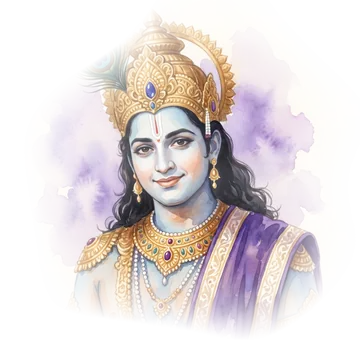
KRISH-na
कृष्ण
Prince of the Yadavas of Dwaraka and the Pandavas' cousin, who likes to answer a question with another question.
Kritavarma
kri-ta-VAR-maa
कृतवर्मा
Also spelled Kritavarman
A Yadava chief who gave Duryodhana a whole army and fought on his side.
In Books Two and Three
Kubera
ku-BAY-ra
कुबेर
The god of wealth, whose rakshasas guard a lake of golden lotuses.
In Books Two and Three
KUN-tee
कुन्ती
Also called Pritha
Mother of the Pandava brothers, given a secret gift by a sage when she was a girl.
Kuntibhoja
kun-ti-BHO-ja
कुन्तिभोज
Also spelled Kuntibhoj
The childless king who raised Kunti as his own daughter.
Kurukshetra
ku-ruk-SHAY-tra
कुरुक्षेत्र
A wide plain, where Parashurama sent for Bhishma to fight him.
L
Lomasha
LO-ma-sha
लोमश
A wandering sage who guided the Pandavas to the sacred rivers.
In Book Two
M
Madri
MAA-dree
माद्री
Princess of Madra, Pandu's second wife and the mother of the twins.
Mahabharata
ma-haa-BHAA-ra-ta
महाभारत
Also spelled Mahabharat
The great story of the family descended from King Bharata.
Markandeya
maar-kan-DAY-ya
मार्कण्डेय
A sage thousands of years old, who told Yudhishthira the tale of Savitri.
In Book Two
Matsya
MATS-ya
मत्स्य
King Virata's kingdom, where the Pandavas spent their year in hiding.
In Book Two
N
Nakula
NA-ku-la
नकुल
Also spelled Nakul
One of the Pandava twins, the handsome one, good with horses and swords.
Nala
NA-la
नल
A king in Brihadashva's tale who lost everything to his brother at dice, then won it all back.
In Book Two
Narada
NAA-ra-da
नारद
Also spelled Narad
A wandering sage.
P
Panchala
paan-CHAA-la
पाञ्चाल
Also spelled Panchal
King Drupada's kingdom, and Draupadi's home.
Pandavas
PAAN-da-vas
पाण्डव
Also spelled Pandava, Pandav
The five sons of Pandu: Yudhishthira, Bhima, Arjuna, Nakula and Sahadeva.
Pandu
PAAN-du
पाण्डु
Dhritarashtra's younger brother, a fine archer, happiest out hunting in the forest.
Parashurama
pa-ra-shu-RAA-ma
परशुराम
Also spelled Parshuram, Parasurama
A fierce warrior-sage with a great battle-axe.
Parikshit
pa-RIK-shit
परीक्षित्
Also spelled Pariksit
Son of Abhimanyu and Uttara. Yudhishthira crowned him king.
In Book Three
Prabhasa
pra-BHAA-sa
प्रभास
Also called Prabhas
A place on the coast near Dwaraka, where the Yadavas went to bathe in the holy sea.
In Book Three
Pradyumna
pra-DYUM-na
प्रद्युम्न
Krishna's son, one of the four warriors who knew the way into Drona's wheel.
In Book Three
R
Radha
RAA-dhaa
राधा
Adhiratha's wife, who raised Karna as her own son.
S
Sahadeva
sa-ha-DAY-va
सहदेव
Also spelled Sahadev
The youngest Pandava, Nakula's twin, who says little and reads the stars.
Sanjaya
SAN-ja-ya
सञ्जय
Also spelled Sanjay
Dhritarashtra's charioteer and counselor, who tells the blind king the whole war.
In Books Two and Three
Satyaki
SAAT-ya-ki
सात्यकि
A Yadava warrior and Arjuna's pupil, who rode with Krishna to Hastinapura.
In Books Two and Three
Satyavan
SAT-ya-vaan
सत्यवान्
Also spelled Satyavaan
Savitri's husband in Markandeya's tale, a prince living in the forest with his blind father.
In Book Two
Satyavati
SAT-ya-va-tee
सत्यवती
Also spelled Satyawati
A fisher chief's daughter who ferries travelers across the Yamuna.
Savitri
saa-VIT-ree
सावित्री
A princess in Markandeya's tale, who followed Yama, the god of death, until he gave her husband back.
In Book Two
SHA-ku-ni
शकुनि
Also spelled Sakuni
Gandhari's brother, clever with words and even cleverer with a pair of dice.
Shalya
SHAL-ya
शल्य
Also spelled Salya
King of Madra and Madri's brother.
Shantanu
SHAN-ta-nu
शन्तनु
Also spelled Santanu
King of Hastinapura and Bhishma's father.
Shikhandi
shi-KHAN-dee
शिखण्डी
Also called Shikhandin, Sikhandin
Drupada's child, Amba born again, raised as a prince.
In Books Two and Three
Shishupala
shi-shu-PAA-la
शिशुपाल
Also spelled Shishupal, Sisupala
King of Chedi and Krishna's cousin, born with three eyes and four arms.
Subhadra
su-BHAD-raa
सुभद्रा
Krishna's sister, who marries Arjuna.
Sudeshna
su-DAYSH-naa
सुदेष्णा
King Virata's queen. Draupadi served her as a maid in the year of hiding.
In Book Two
Surya
SOOR-ya
सूर्य
The sun god.
T
Takshaka
TAK-sha-ka
तक्षक
Also spelled Takshak
The great serpent of the Epilogue, whom Astika saved from Janamejaya's fire.
In Book Three
U
Ulupi
u-LOO-pee
उलूपी
A Naga princess who pulls Arjuna down to her palace under the river.
Upaplavya
u-pap-LAV-ya
उपप्लव्य
The town where the Pandavas made their camp before the war.
In Book Two
Urvashi
UR-va-shee
उर्वशी
Also spelled Urvasi
The loveliest apsara in Indra's heaven, who cursed Arjuna to live as a dancer.
In Book Two
Uttara
UT-ta-raa
उत्तरा
King Virata's daughter, who married Abhimanyu.
In Books Two and Three
V
Vaishampayana
vai-sham-PAA-ya-na
वैशम्पायन
Vyasa's pupil, who told this whole story for the first time, at Janamejaya's snake sacrifice.
In Book Three
Vasishtha
va-SISH-ta
वसिष्ठ
Also spelled Vashishtha, Vasistha
A great sage, who taught young Devavrata the Vedas.
Vayu
VAA-yu
वायु
The wind god. Bhima was born by his blessing.
Vichitravirya
vi-chit-ra-VEER-ya
विचित्रवीर्य
Also spelled Vichitraveerya
Son of Shantanu and Satyavati, crowned king of Hastinapura as a boy.
VI-du-ra
विदुर
Also spelled Vidur
The third prince, son of a palace maid, who always tells the truth.
Vikarna
vi-KAR-na
विकर्ण
One of Duryodhana's younger brothers, who stood up in the dice hall and said Draupadi had never been won.
In Book Two
Virata
vi-RAA-ta
विराट
Also spelled Virat
The good old king of Matsya, in whose palace the Pandavas served in disguise.
In Books Two and Three
Vyasa
VYAA-sa
व्यास
Also called Ved Vyas, Veda Vyasa
The great sage who composed the Mahabharata, and grandfather of the Pandavas and the Kauravas.
Y
Yama
YA-ma
यम
The god of death.
In Books Two and Three
Yamuna
YA-mu-naa
यमुना
Also spelled Jamuna
The river where Satyavati ferried travelers.
yu-DHISH-ti-ra
युधिष्ठिर
Also spelled Yudhisthira, Yudhishtir
Eldest of the five Pandavas, who does not tell lies, even small ones.
Yuyutsu
yu-YUT-su
युयुत्सु
Dhritarashtra's son with a palace maid.
Questions about saying the names
How do you say Draupadi?
Say DRAU-pa-dee. The first part rhymes with how, and it is said a little more strongly than the rest. The middle is a short pa, as in about, and the end is dee, as in see. In South India you may also see her name spelled Draupathi.
How do you say Yudhishthira?
Say yu-DHISH-ti-ra, with the loud part on DHISH. The dh has a little puff of breath, as in clubhouse. The third part is a plain ti, and nothing in the name sounds like the th in the word the. English books also spell it Yudhisthira.
Is it Arjun or Arjuna?
Both are right. Arjuna is the Sanskrit name, and the one used here. In Hindi and several other Indian languages the short a at the end of a name is usually dropped, so Arjuna becomes Arjun, Bhima becomes Bhim, and Duryodhana becomes Duryodhan. They are the same people.
How do you pronounce Mahabharata?
Say ma-haa-BHAA-ra-ta. Put the weight on BHAA, with a little puff of breath after the b. The two long a sounds are said as in father, and the short ones as in about. Many people also say and spell it Mahabharat, without the final a.
Where this comes from: the Sanskrit names, respelled for English readers as they are printed in the three books' own name guides and indexes. They follow one rule: the stressed syllable is the last long or closed syllable before the final one, otherwise the first, which is the usual way these names are said today.
Words like dharma and swayamvara are in the glossary. For names to give a child, see names from the Mahabharata and what they mean.