A well-known side story from the Mahabharata
Astika and the Snake Sacrifice: The Boy Who Saved the Nagas
One of the side stories at the very start of the Mahabharata, told by the bard Sauti to the sages of the Naimisha forest. King Janamejaya, who lived long after the Pandavas, holds a great sacrifice to burn every snake in the world, and a boy named Astika, whose mother is the sister of the snake king Vasuki, wins a boon from the king and uses it to stop the fire.
- AstikaAAS-tee-kaआस्तीकalso Astik, Aastik
- Janamejayaja-na-may-JA-yaजनमेजयalso Janmejay
- TakshakaTAK-sha-kaतक्षकalso Takshak
- VasukiVAA-su-keeवासुकि
- Jaratkaruja-rat-KAA-ruजरत्कारु
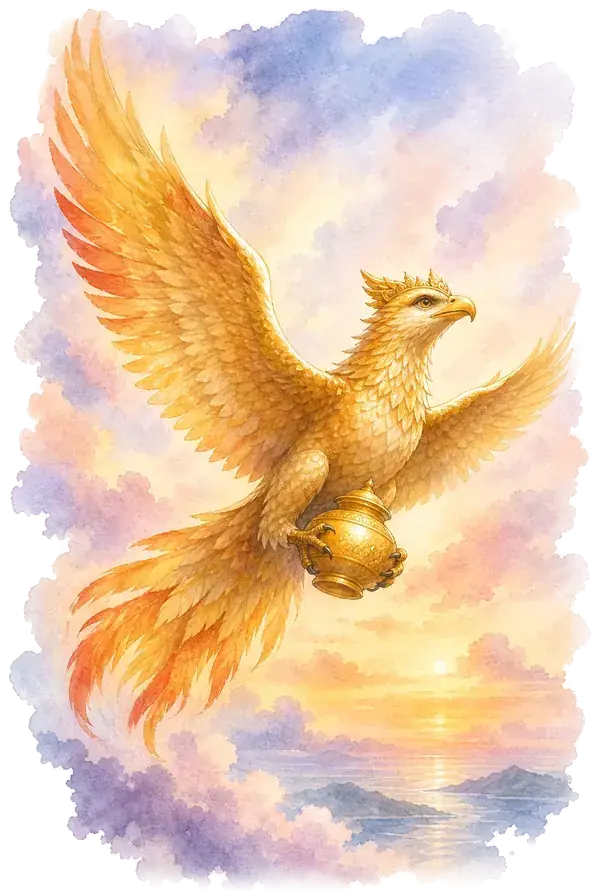
Long ago Kadru, the mother of all the snakes, cursed her own children when they refused to help her cheat in a wager. That tale belongs to Garuda. One day, she said, they would burn in a fire at the sacrifice of a king named Janamejaya.
Vasuki, king of the snakes, went to Brahma the Creator for help. Brahma told him that a sage named Jaratkaru would marry a woman with the same name, and their son would save the snakes.
Vasuki had a sister named Jaratkaru. He began to wait.
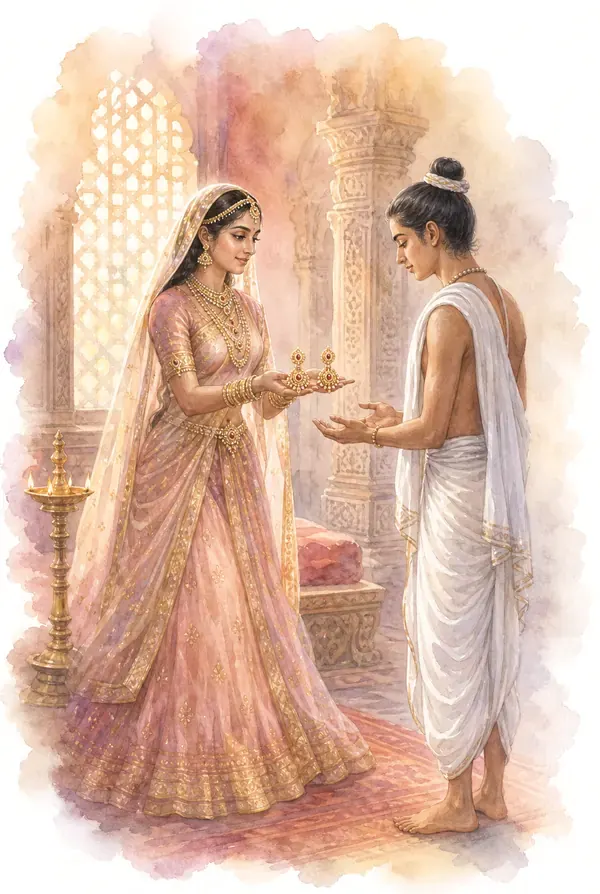
The sage Jaratkaru was a wanderer who ate almost nothing and never meant to marry. Then one day he came upon his ancestors hanging upside down over a deep pit. If he had no son, they told him, their family line would end. So he agreed to marry, on one condition. The bride must have his own name.
When he went into the forest and called for a bride, Vasuki brought his sister. “Her name is Jaratkaru too,” he said.
The sage made one more rule. “If you ever do anything I don't like, I'll leave.”
One evening he fell asleep with his head in his wife's lap. The sun began to set, and it was time for his evening prayers. If she woke him, he'd be angry. If she didn't, he'd miss them. She woke him, gently.
He was furious. “Do you think the sun would dare to set while I'm asleep?” He got up to go.
She begged him, crying. The son her people were waiting for hadn't been born yet. What would she tell her brother?
“There is,” said the sage. A son was coming, as bright as fire, who would know all the Vedas. Then he walked off into the forest.
The boy was born in Vasuki's palace and named Astika, from the words his father had spoken, asti, “there is.” He studied the Vedas with the sage Chyavana and grew up grave and wise, the delight of all the snakes.
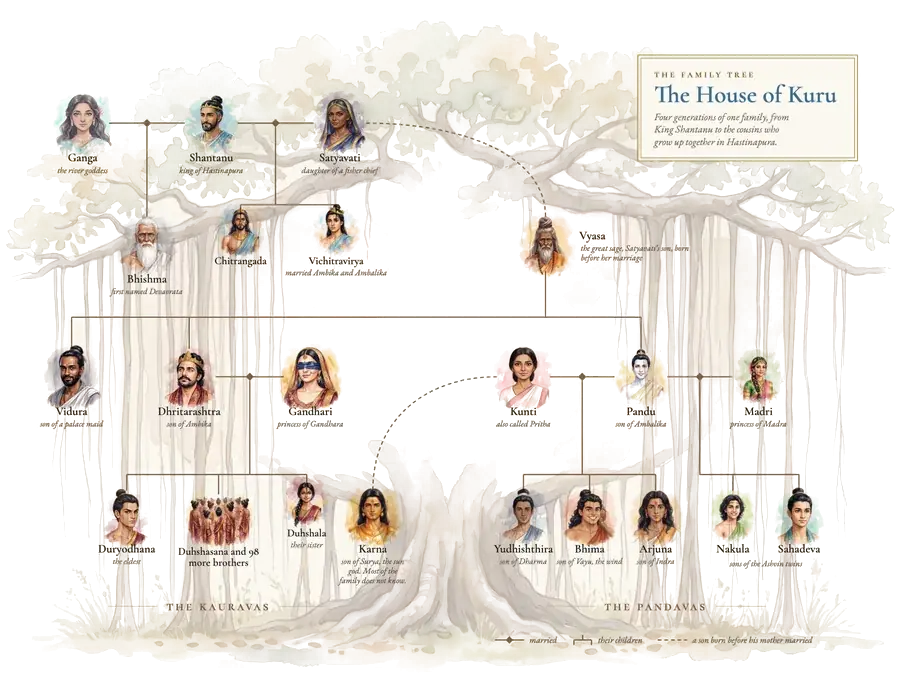
Far away in Hastinapura, King Parikshit, a grandson of Arjuna, had been cursed by a sage's son to die of Takshaka's bite within seven days. The king hid in a guarded palace, but the snake king reached him in disguise. His son Janamejaya was crowned while still a child. When he was grown, a student named Uttanka came to court and told him that Takshaka had killed his father.
Janamejaya wept. Then he called his priests. “Is there a way to throw Takshaka and all his kind into the fire?”
There was. They built an altar for a snake sacrifice, and the priests in black robes poured ghee into the flames, calling out the names of the snakes. And the snakes came. They were pulled through the air from every corner of the world, and they could not stop themselves. Thousands upon thousands fell into the fire.
Takshaka fled to Indra, king of the gods, who hid him. But Vasuki felt himself weakening, and his family was dwindling around him. He called his sister. “It's time.”
Jaratkaru told her son everything. “I'll save you, uncle,” Astika said. “I have never said anything false, even as a joke.”
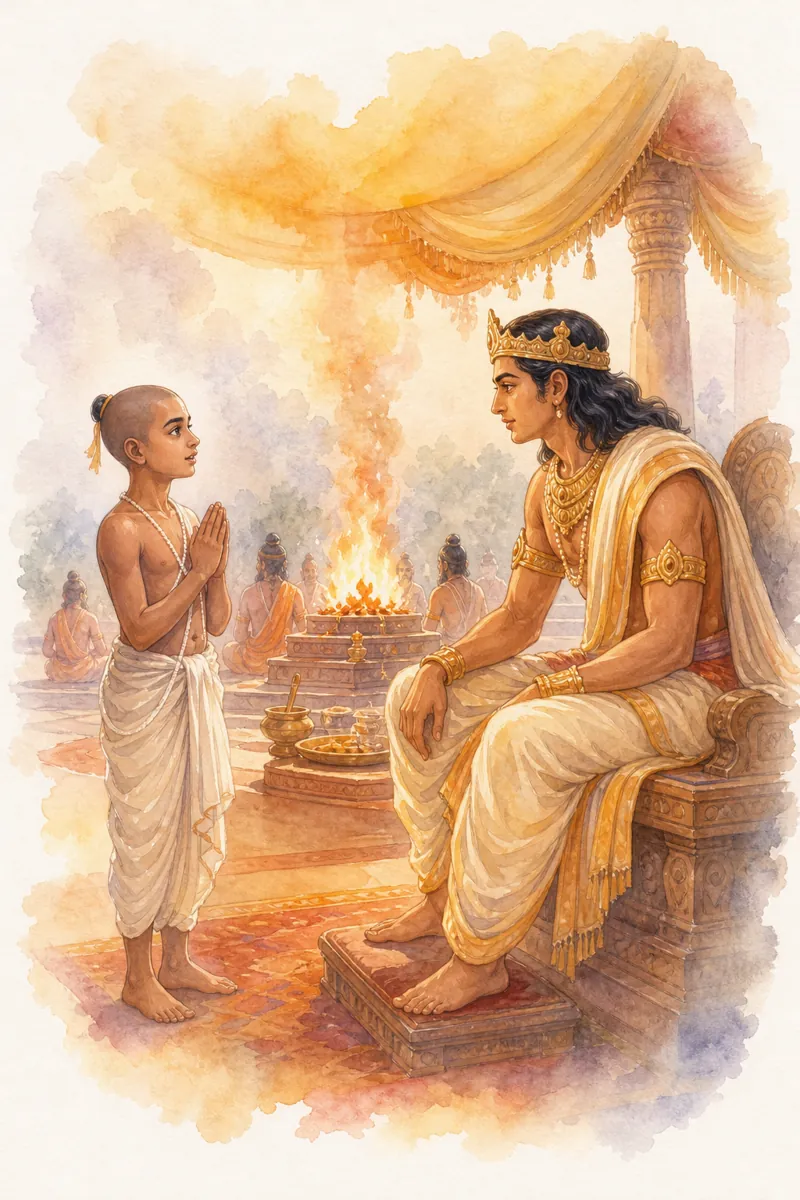
At the sacrifice the guards tried to keep him out, but he won them over. Inside, he praised the king and the priests and the fire. This sacrifice, he said, was as great as any the gods had ever held.
Janamejaya was charmed. “He's only a boy, but he speaks like a wise old man. I want to grant him a boon.”
“Not until Takshaka comes,” said the priests. They called his name again, and this time they called Indra's with it. Indra himself appeared in the sky with Takshaka hidden in his robe. When he saw the fire below, he took fright, let the snake go and fled home. Takshaka tumbled toward the flames.
“Ask your boon,” the king told Astika.
“Then end this sacrifice, and let no more snakes fall into the fire.”
The king's face fell. “Ask for gold, or silver, or cows. Anything else.”
Astika would ask for nothing else. He had already called out three times to the falling snake king, “Stay, stay, stay.” And Takshaka hung in the air above the fire and fell no farther.
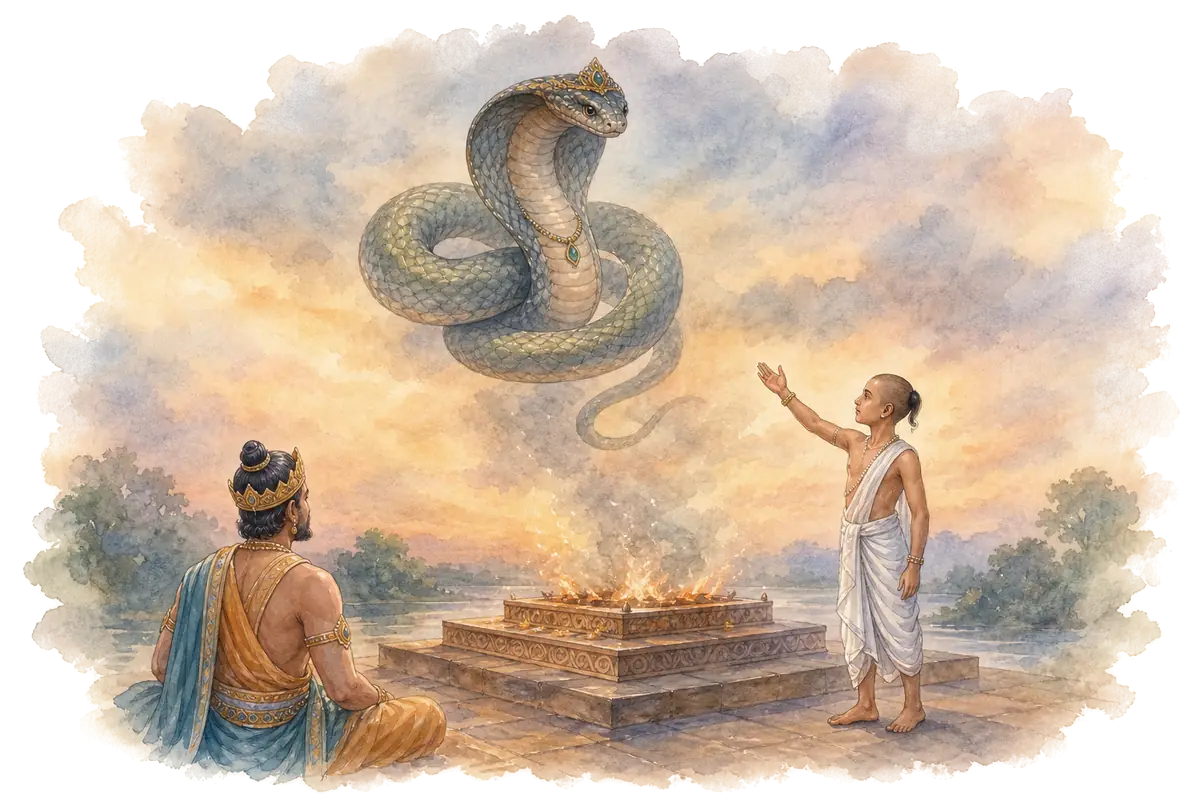
“Let the brahmin have his boon,” said the priests together.
“So be it,” said Janamejaya. “Let the sacrifice end and the snakes be safe.” Cheers rang through the air. The king gave gifts to everyone and asked Astika to come back one day for his horse sacrifice.
Astika went home and touched his mother's feet and his uncle's. The grateful snakes offered him a boon of his own. He asked that anyone who remembered this story would have nothing to fear from them, and the snakes promised.
Why it matters
Astika's story is part of the frame the whole Mahabharata sits inside. At this same sacrifice the sage Vyasa came to Janamejaya's court, and at the king's request Vyasa's pupil Vaishampayana told the story of the Kurus and the Pandavas aloud for the first time. Janamejaya was hearing the deeds of his own great-grandfather Arjuna. The great epic was first told at a fire that a boy had put out.
Where this comes from: Adi Parva §13–15 and §47–58 in the Ganguli translation of the Mahabharata, where the bard Sauti tells the story to the sage Saunaka; Vyasa's arrival at the sacrifice, and the first telling of the Mahabharata, are in Adi Parva §60. The longer tale of how King Parikshit was cursed and how Takshaka turned back the healer Kashyapa (§40–44, retold by Janamejaya's ministers in §49–50) is told here in two sentences. Kadru's curse is in §20. More about the sources.