Question cards · Book One
Question Cards for The Vow
36 printable question cards for The Vow, Book One of an illustrated Mahabharata for readers 10 to 16. Sixteen are Krishna's own questions from the book, and 20 are talking points, one for each chapter. Every card tells its scene in one line before it asks, so it works whether or not everyone has read the chapter.
The 36 cards
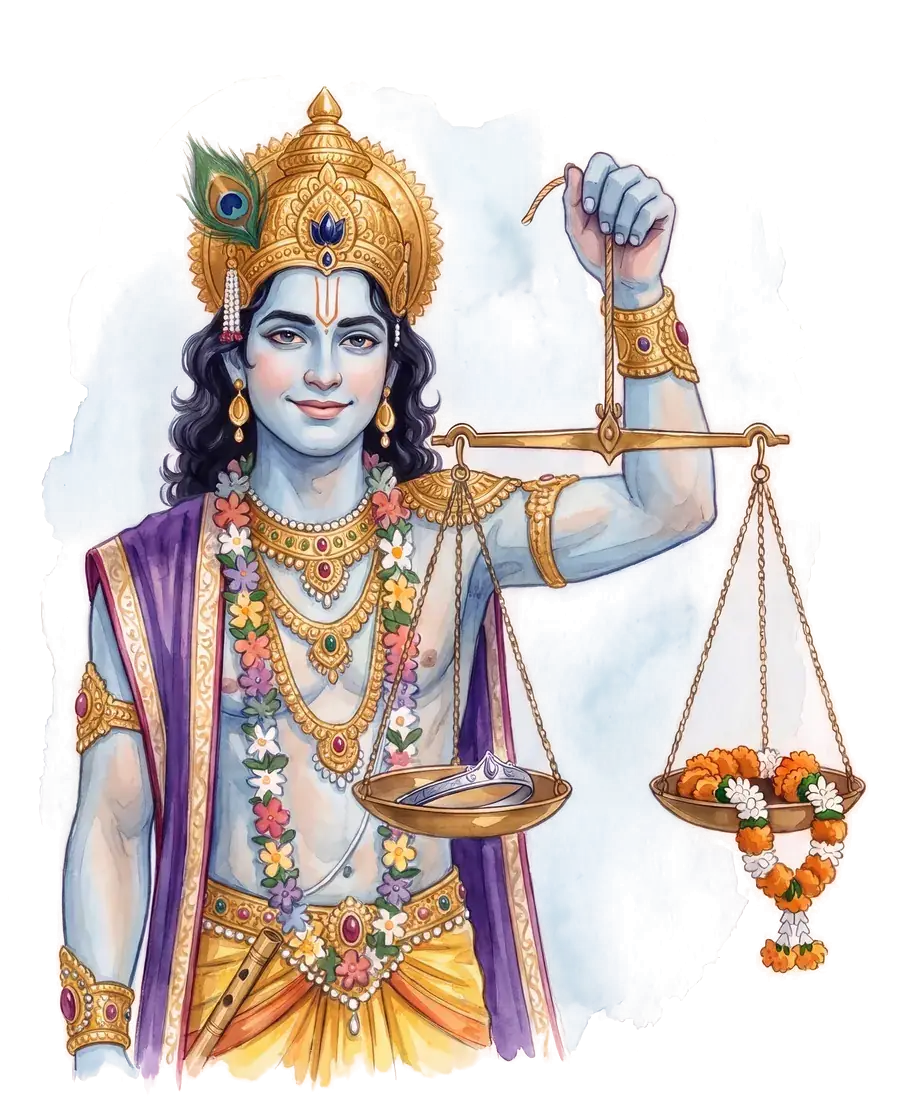
Cards with a gold edge are Krishna's questions.
Pick the card for the chapter you just read, read the scene aloud, then the question. Everyone answers with one reason from the story. More ways to play, at home and in class, are on the question cards page.
Mahabharata question cards
How to play
- Pick the card for the chapter you just read, or draw one.
- Read the scene aloud, then the question.
- Everyone answers with one reason from the story. You may pass once.
- If someone changes your mind, say what did it.
There are no model answers. Ages 10 to 16, about ten minutes a card.
mahabharatastories.com/question-cards/the-vow · from The Vow by Ankita Sharma
Talk about it
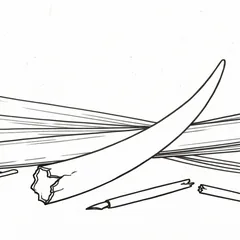
Prologue · The Sage and the Scribe
Ganesha agrees to write down the sage Vyasa's poem without ever stopping. When his pen snaps, he breaks off his own tusk and keeps going.
Ganesha tells readers to keep a list of heroes and villains. Start one now. What puts a name on it, and what would make you cross one out?
Talk about it
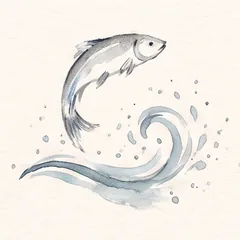
Chapter 1 · The River Goddess
King Shantanu promises never to question his new queen. Each time a son is born, she carries the baby to the river and lets him go.
Shantanu agreed to Ganga's condition before she had finished speaking. Did learning her reason at the end change what you thought of her?
Krishna asks
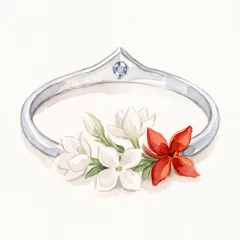
Chapter 2 · The Terrible Vow
Devavrata gives up his claim to the throne, and swears never to marry, so his father can marry the woman he loves.
Was his promise an act of great love, a terrible mistake, or both?
Talk about it
Chapter 2 · The Terrible Vow
In an old tale, a sage says that the god Dyu will be born on earth and never marry. Devavrata is that god, born again.
Chapter 1's tale says Dyu would never marry. When Devavrata made his vow, was it still his own choice?

Krishna asks
Chapter 3 · Amba's Fire
Bhishma carries off three princesses as brides for his brother. Amba had already chosen King Shalva, and Shalva will not take her back.
If you have hurt someone, even by the rules, what do you owe them afterward?
Talk about it
Chapter 3 · Amba's Fire
Turned away by Shalva and by Bhishma, Amba spends years looking for someone who will stand up for her.
Amba asked two kings, a great teacher and a god for justice. Who could have helped her sooner?
Krishna asks
Chapter 4 · Three Princes and a Blindfold
Princess Gandhari learns that the prince she will marry cannot see. She ties a cloth over her own eyes, for the rest of her life.
Is sharing someone's suffering always the most loving choice, or can love sometimes mean keeping your strength to help where they cannot?
Talk about it
Chapter 4 · Three Princes and a Blindfold
Three princes are born to save the Kuru family. The third, Vidura, is the son of a palace maid.
The bards never sang about Vidura's mother, the maid who was not afraid. Whose stories get left out, and why?
Krishna asks
Chapter 5 · The Basket on the River
Young Princess Kunti says a sage's sacred words to see if they work. The sun god comes, and soon she has a baby and no husband.
How free are you, when every choice in front of you is frightening?
Talk about it
Chapter 5 · The Basket on the River
A charioteer and his wife find a baby floating down the river in a basket. They raise him as their own son.
Radha and Adhiratha found a baby in a basket and called him their son. What makes someone a parent?
Krishna asks
Chapter 6 · The Hunter's Curse
When Duryodhana is born, jackals howl, and Vidura tells the blind king to give the baby up. Dhritarashtra keeps his firstborn.
When does a parent's love stop keeping a child safe, and start keeping him from ever hearing no?
Talk about it
Chapter 6 · The Hunter's Curse
King Pandu shoots a deer in the forest. It is a sage who has taken a deer's shape, and he curses Pandu before he dies.
Pandu said kings have always hunted deer. The stag said a warrior never shoots an enemy who isn't ready. Whose argument is stronger?
Krishna asks
Chapter 7 · Poison and the Serpent Kingdom
Bhima's rough games leave his cousins with real bruises. Duryodhana smiles at him and feeds him poisoned sweets with his own hands.
How can you tell when your fun has become someone else's pain, or when your own anger has turned cruel?
Talk about it
Chapter 7 · Poison and the Serpent Kingdom
Bhima comes home alive, and stronger, after Duryodhana poisoned him and threw him in the river.
Vidura and Yudhishthira tell the family to say nothing about the poison. Why? The next morning Bhima sits across from Duryodhana and asks for a second helping. What is he telling his cousin?

Talk about it
Chapter 8 · The Ball in the Well
Drona, a poor teacher, goes to his boyhood friend Drupada, who is now a king. Drupada laughs at him.
Drupada says friendship can only be between equals. Do you agree? Should a promise made as a boy still count when he is a king?
Krishna asks
Chapter 9 · The Bird's Eye
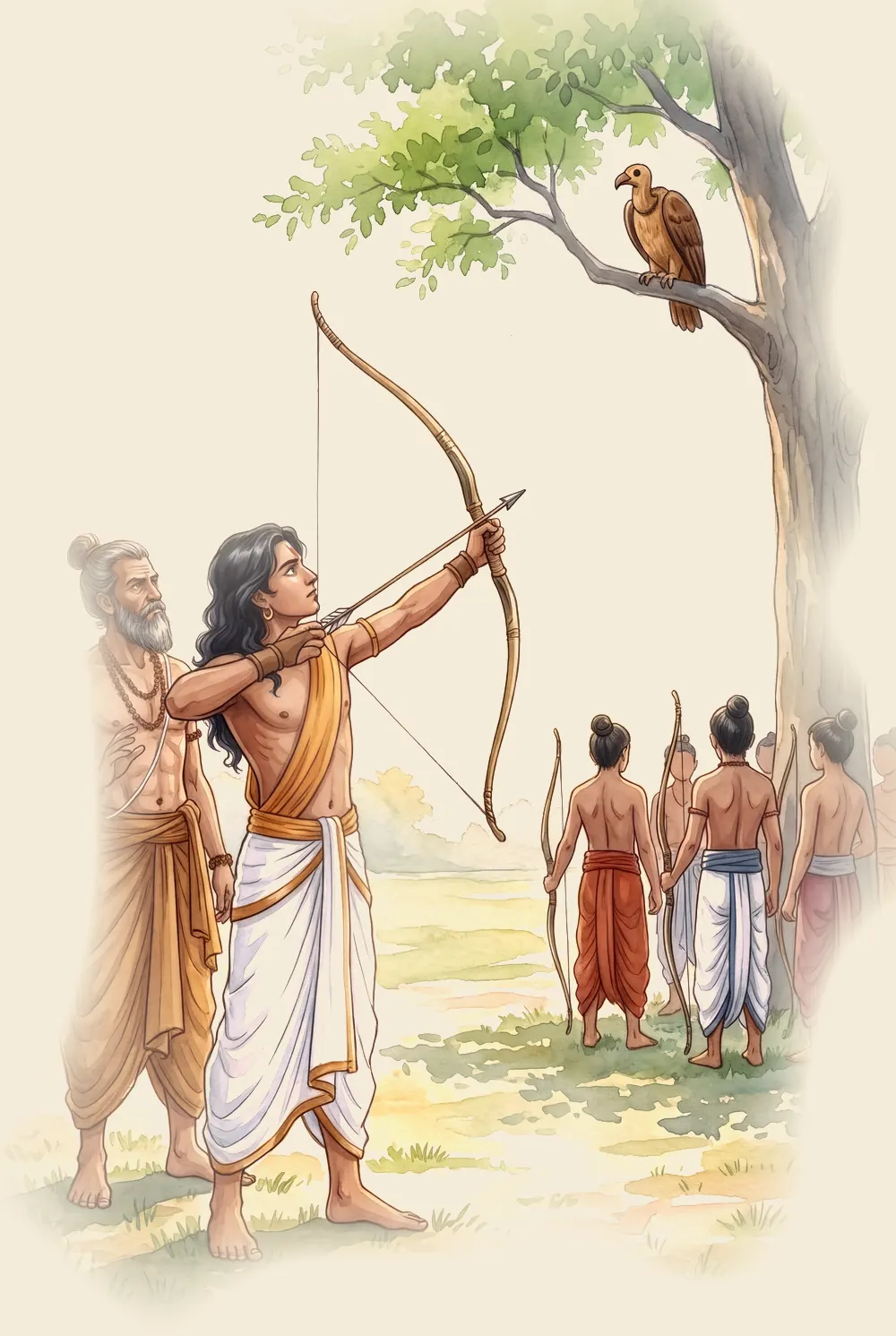
Drona asks each of his pupils what he can see. The others see the tree, the sky, their cousins. Arjuna sees only the bird's eye.
When you become the teacher's favorite, how should you treat everyone else?
Talk about it
Chapter 9 · The Bird's Eye
Before each prince shoots, Drona asks what he sees. Yudhishthira, who never lies, names the tree, his teacher, his brothers and the bird.
Yudhishthira told the truth about everything he saw and was sent to stand aside. Is seeing “only the bird” always a good thing?
Krishna asks
Chapter 10 · The Thumb
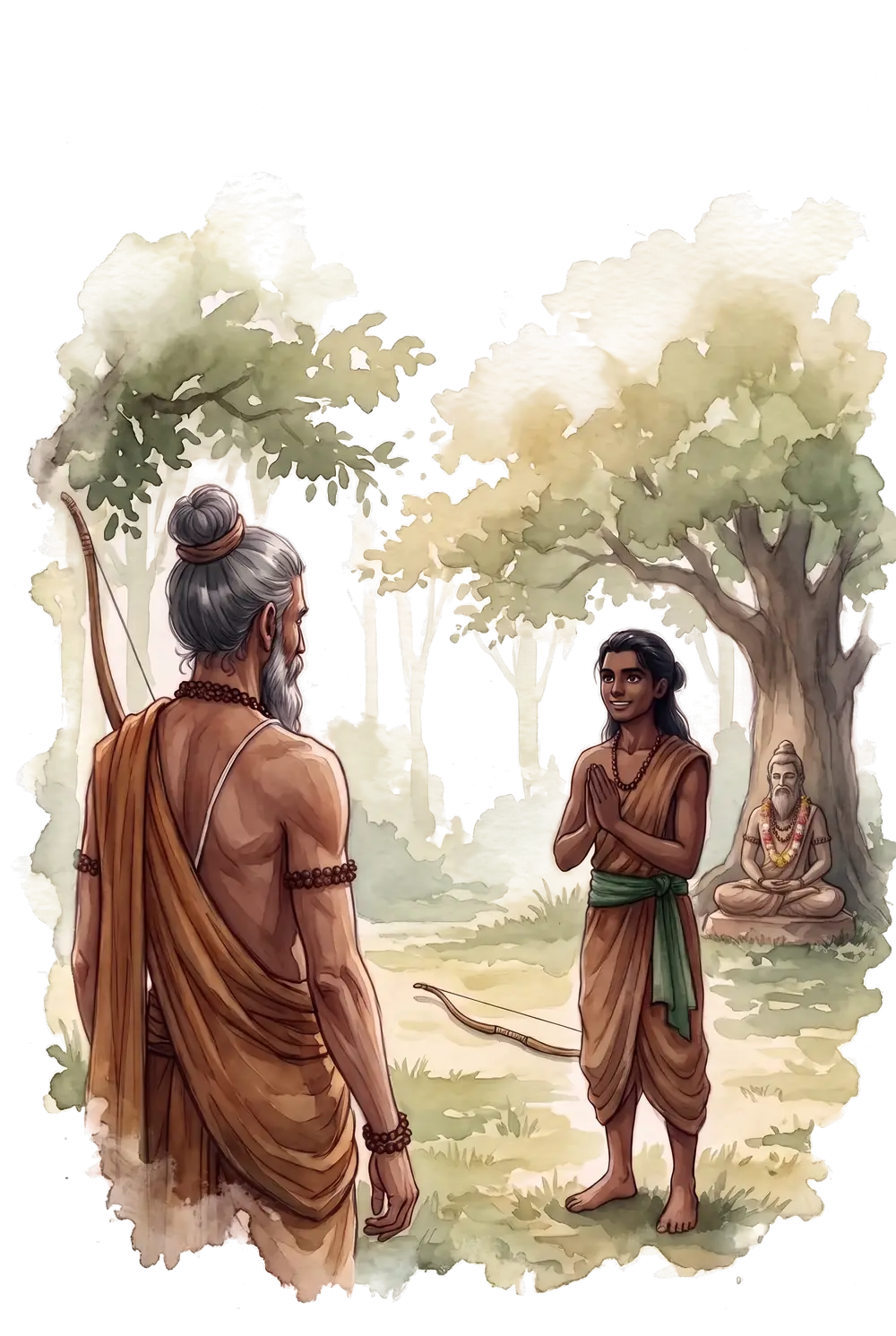
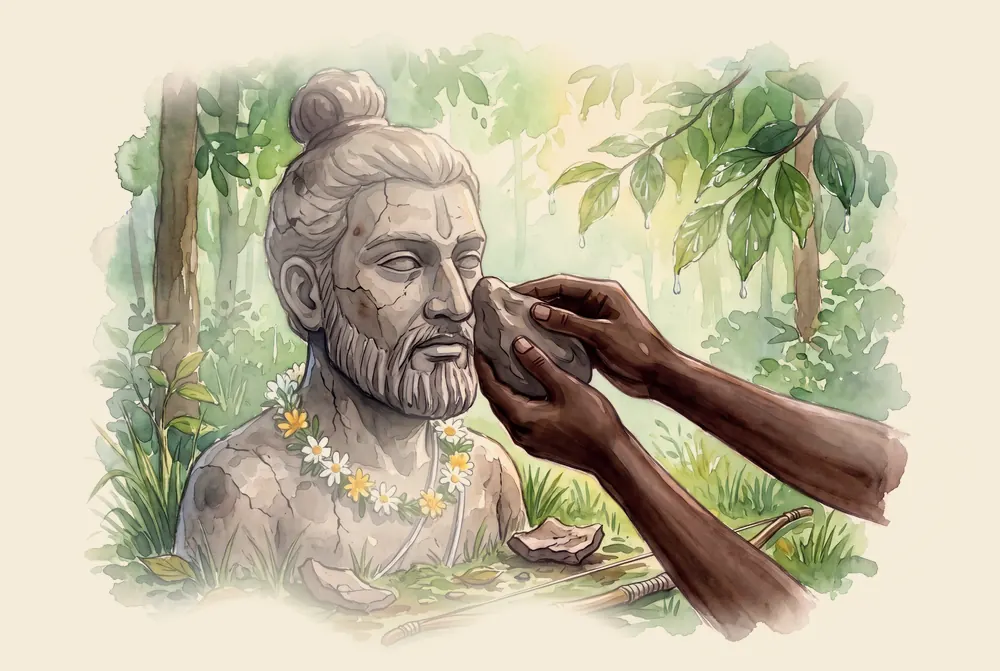
Turned away from Drona's school, Ekalavya taught himself in the forest before a clay statue of the teacher. Now Drona has found him, and asks for his fee.
Can a teacher ask for a fee from a boy he refused to teach?
Talk about it
Chapter 10 · The Thumb
Arjuna learns that a Nishada boy in the forest shoots better than he does. He goes straight to Drona.
Arjuna heard that someone was a better archer, and he went to his teacher. What else could he have done?

Krishna asks
Chapter 11 · The Uninvited Champion
Karna matches Arjuna feat for feat, and Kripa asks him to name his parents. Duryodhana makes him a king on the spot.
Does it matter why someone stands up for you, if nobody else will?
Talk about it
Chapter 11 · The Uninvited Champion
Karna has just been crowned king of Anga when his old father, the charioteer Adhiratha, comes into the arena.
Moments after he was crowned, Karna bent to his old father's feet in front of the whole city. What does that show about him?
Krishna asks
Chapter 12 · The Teacher's Fee
Drupada once laughed at Drona. Now Drona's pupils bring Drupada to him as a prisoner, and Drona keeps half his kingdom.
Where could either man have broken the chain?
Talk about it
Chapter 12 · The Teacher's Fee
Drupada lights a sacred fire for a son who will kill Drona. A young warrior and a young woman step out of the flames.
Dhrishtadyumna and Draupadi came out of the fire with a purpose already chosen for them. What would it be like to grow up with a job like that?

Krishna asks
Chapter 13 · The House That Burned
The Pandavas escape their burning house through a tunnel. A mother and her five sons, asleep inside, die in the fire.
Whose lives still count when you're running for your own?
Talk about it
Chapter 13 · The House That Burned
Warned by Vidura, the Pandavas know their new house is built to burn. For a year they live in it as if nothing were wrong.
For a whole year Yudhishthira smiled and thanked the man who meant to kill him. Is pretending to stay safe different from lying to get ahead?
Krishna asks
Chapter 14 · Rakshasas of the Forest
In the town of Ekachakra, the family sheltering the Pandavas must send one of their own to the rakshasa Baka. Kunti offers Bhima instead.
Was Bhima's life Kunti's to offer, even to repay a kindness?
Talk about it
Chapter 14 · Rakshasas of the Forest
Bhima kills the rakshasa Hidimba in the forest. Then Hidimba's sister, Hidimbi, asks to marry Bhima.
Bhima wanted to send Hidimbi “the way your brother went” because rakshasas take revenge. Was that fair to her?
Talk about it
Chapter 15 · The Fish in the Sky
At Draupadi's swayamvara, Karna strings the great bow and takes aim. Draupadi says she will not choose a charioteer's son.
Draupadi refused Karna for being a charioteer's son, and nobody told her she was wrong. Why might she keep coming back to it later? Compare Kripa's question to Karna in chapter 11.
Krishna asks
Chapter 16 · “Share It Equally”
To keep his brothers together, Yudhishthira decides that Draupadi will marry all five of them.
Can a choice that keeps a family together still be unfair to one person in it?
Talk about it
Chapter 16 · “Share It Equally”
The brothers bring Draupadi home. Kunti, with her back to the door, thinks they have brought food and says, “Share it equally, all of you.”
Kunti spoke without turning around, and her sons would not let her words fall. Have you ever said something you couldn't take back?
Krishna asks
Chapter 17 · The Burning Forest
Agni, the god of fire, asks Krishna and Arjuna to help him burn the Khandava forest. For fifteen days they hold back the rain.
Were Arjuna and I right to say yes to Agni?
Talk about it
Chapter 17 · The Burning Forest
To win back a brahmin's stolen cattle, Arjuna walks into a room that the brothers' rule says he must not enter.
Yudhishthira told Arjuna he did not need to leave. Arjuna went anyway. Why keep a rule after the person it protects has let you off?
Krishna asks
Chapter 18 · The Palace of Illusions
Krishna forgives his cousin Shishupala again and again. At Yudhishthira's great sacrifice, Shishupala calls the kings to arms, and Krishna's patience ends.
Should patience ever run out, and if it does, who gets to decide when?
Talk about it
Chapter 18 · The Palace of Illusions
At the great sacrifice, Shishupala insults Krishna and Bhishma in front of every king. Bhima jumps up in a rage.
Bhishma held Bhima's arm and talked to him until he sat down. Who helps you when you are angry?

Krishna asks
Chapter 19 · Water That Was Floor
In the Palace of Illusions, Duryodhana steps onto a polished floor that turns out to be water. His cousins laugh.
Is it fair to laugh at someone when you'd laugh the same way at your own brother?
Talk about it
Chapter 19 · Water That Was Floor
All the way home to Hastinapura, Shakuni talks to Duryodhana, until at last Duryodhana tells his uncle what is eating at him.
Duryodhana says, “I know I shouldn't be jealous. I am anyway.” What would you have told him in place of Shakuni?
How to print the cards
Print from your browser's print menu. Only the cards come out, six to a US Letter sheet, with dashed lines to cut along, plus a card with the rules. Each printed card carries the web address of its deck. Color looks best, though black and white works too.
Book details for ordering
| Title | The Vow |
|---|---|
| Series | Mahabharata, Book One of three |
| Author | Ankita Sharma |
| Pages | 197 |
| Format | Paperback, 6 × 9 in, full color |
| ISBN | 979-8-9828468-0-8 |
| Publisher | Sharma Ink |
| Ages | 10 to 16 (about grades 5 to 10) |
| Release | November 30, 2026 |
Where this comes from: The questions are the book's own, from The Vow by Ankita Sharma (Sharma Ink, 2026): Krishna's questions as they appear after each chapter, and the discussion questions the book gives for parents and teachers (where a chapter has more than one, the card takes one). The events follow Kisari Mohan Ganguli's English translation of the Mahabharata (Adi Parva and Sabha Parva). Ganesha's broken tusk and the bird's eye come from popular tellings, and Krishna's questions belong to this retelling. Our sources page has each chapter's sections.