From Book Three of the Mahabharata
Bhagavad Gita for Kids: What Krishna Told Arjuna
The Bhagavad Gita is the part of the Mahabharata where Krishna talks to Arjuna in his chariot between two armies at Kurukshetra, on the first morning of the war. Arjuna saw his teachers, his Grandsire and his cousins on the other side, let his bow fall and said he would not fight. Krishna told him that what lives in the body can never be killed, and that he should do his work without fighting for the prize. Book Three, The War, tells it for readers aged 10 to 16 in chapter 1.
- The name
- Bhagavad Gita (BHA-ga-vad GEE-taa, भगवद्गीता) means "The Song of the Lord." It is often called simply the Gita.
- Where
- In Arjuna's chariot, out on the empty ground between the two armies at Kurukshetra, on the first morning of the war.
- Who
- Krishna, who was driving the chariot, and his friend Arjuna. Far away in Hastinapura, Sanjaya told the blind King Dhritarashtra everything he saw.
- In the books
- Book Three, The War, chapter 1, The Bhagavad Gita
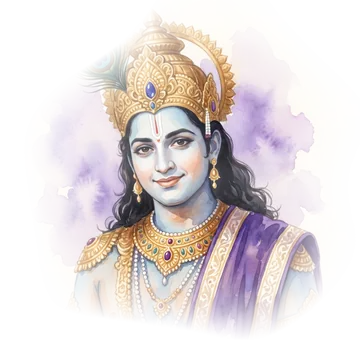
- KrishnaKRISH-naकृष्ण
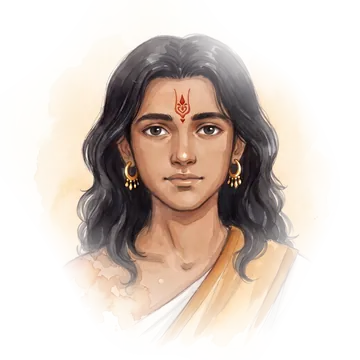
- ArjunaAR-ju-naअर्जुन
- BhishmaBHEESH-maभीष्म
- DronaDRO-naद्रोण
- Yudhishthirayu-DHISH-ti-raयुधिष्ठिर
- SanjayaSAN-ja-yaसञ्जयalso Sanjay
- Kurukshetraku-ruk-SHAY-traकुरुक्षेत्र
Why Arjuna put down his bow
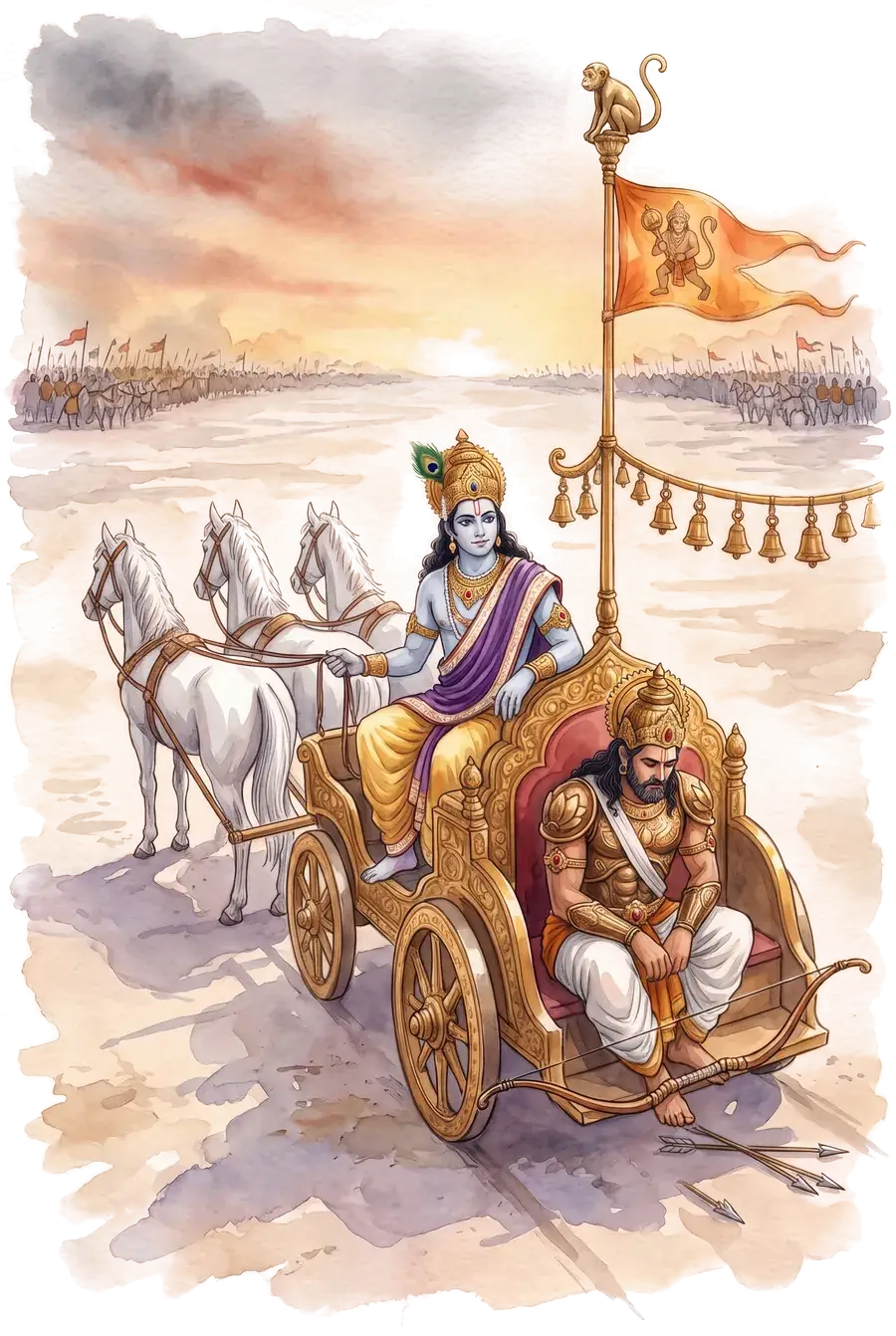
On the first morning at Kurukshetra, with the conches booming down both lines, Arjuna asked his charioteer to drive out between the two armies. "I want to see who has come here to fight me." Krishna stopped the chariot right in front of Bhishma and Drona.
Arjuna saw Bhishma, "who had taken in five fatherless boys and raised them in his own palace," and Drona, "who had taught Arjuna the bow," and the cousins he had wrestled with as a boy. "His mouth went dry. His legs shook, and his skin burned as if he had a fever. The Gandiva slid out of his hand."
"Krishna, I can't," he said. "My teachers. The Grandsire. Uncles and cousins and their sons. What would I do with a kingdom, with all of them dead?" He sat down on the floor of the chariot. "I will not fight."
What Krishna told Arjuna
Book Three tells the Gita in a few pages, through a handful of its ideas in Krishna's own images. Eighteen of its teachings, each with its Sanskrit verse, are in 18 teachings from the Bhagavad Gita.
What lives in the body never dies
"You're grieving for people who don't need your grief," Krishna said. When a body is worn out, he told Arjuna, what lives in it puts it down and takes up another, "the way a man takes off old clothes and puts on new ones."
"What lives in the body can't be cut by weapons. Fire can't burn it. Water can't wet it, and the wind can't dry it out. It is never born, and it never dies. It kills no one, and no one can kill it."
Do your work, and let go of the prize
"So do your work," said Krishna. "The work is yours. What comes of it isn't. Don't fight for the prize, and don't sit down and do nothing, either. Win or lose, stay the same inside."
"Better to do your own work badly than another man's well," he said. And when Arjuna said the mind is as hard to hold as the wind, Krishna agreed. "It is hard. But with practice it can be held."
The lotus leaf
"Look at a lotus leaf on a pond," Krishna said. "Water runs all over it and rolls off, and the leaf is never wet. A man who does his work as an offering, wanting nothing back for himself, is like that leaf. No wrong sticks to him."
Age after age
Then Krishna told Arjuna who he was. "Whenever goodness fails in the world and wickedness rises up, I come. I am born again, age after age, to protect the good and put down the wicked."
The universal form: a thousand suns
"I believe you," said Arjuna at last. "But I want to see it. If you think I can bear it, show me who you really are."
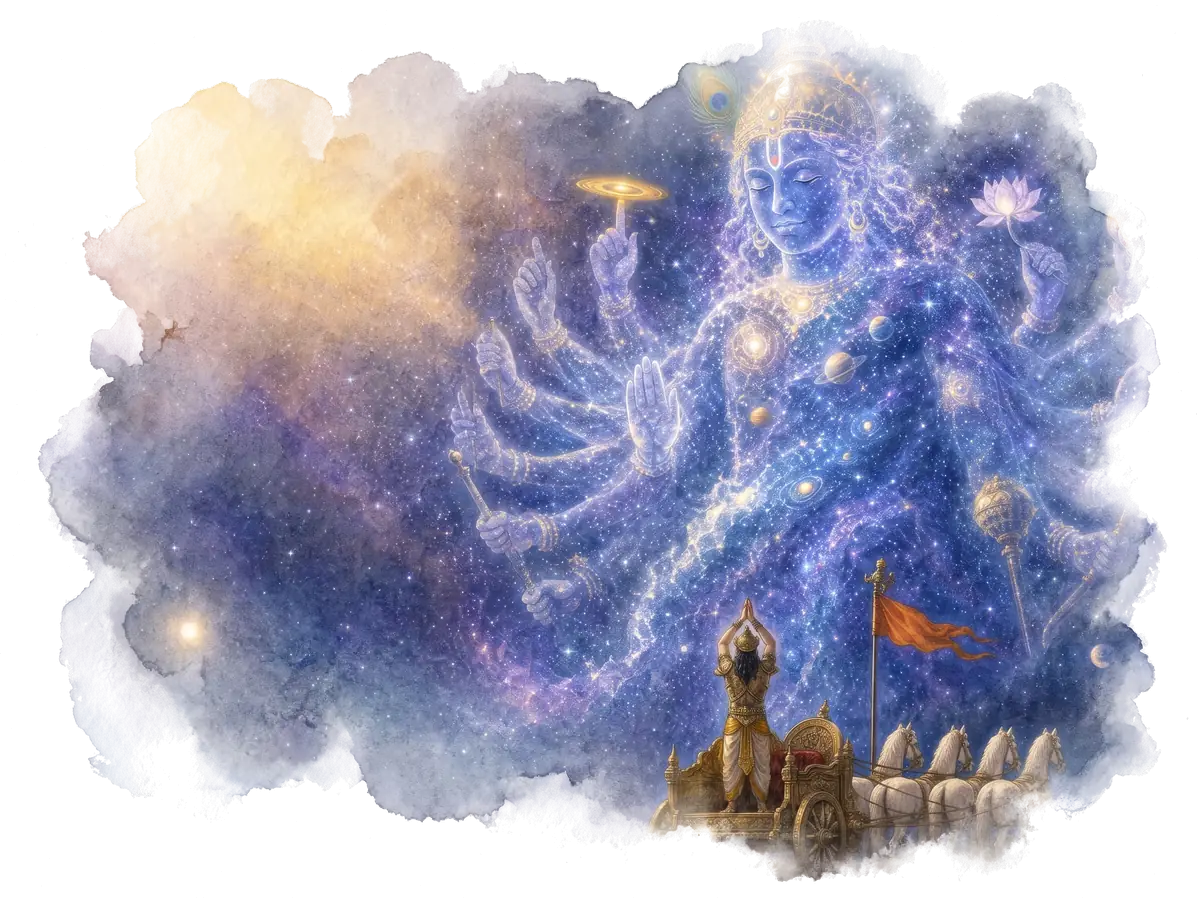
"If a thousand suns rose into the sky at once, they might shine like that."
Arjuna saw the whole world inside Krishna's body, all the gods and the sages, and "arms past counting held up the mace and the discus, and faces turned every way." "I am Time, which destroys the worlds," said the voice, and it told him, "Be my instrument, Arjuna. Stand up and fight."
Arjuna bowed, trembling, and asked to see his friend's own face again. "All those years I called you Krishna, and my friend," he said. "I joked with you. We sat together and ate together, and I never knew." And there was Krishna on the driver's seat, with the reins in one hand and the peacock feather in his crown. "Don't be afraid," he said.
Arjuna picks up his bow
"Think over everything I've told you," Krishna said. "Then do as you choose."
Arjuna wiped his eyes. "My doubts are gone," he said. "I remember who I am." He picked up the Gandiva, and a great shout went up all along the Pandava line.
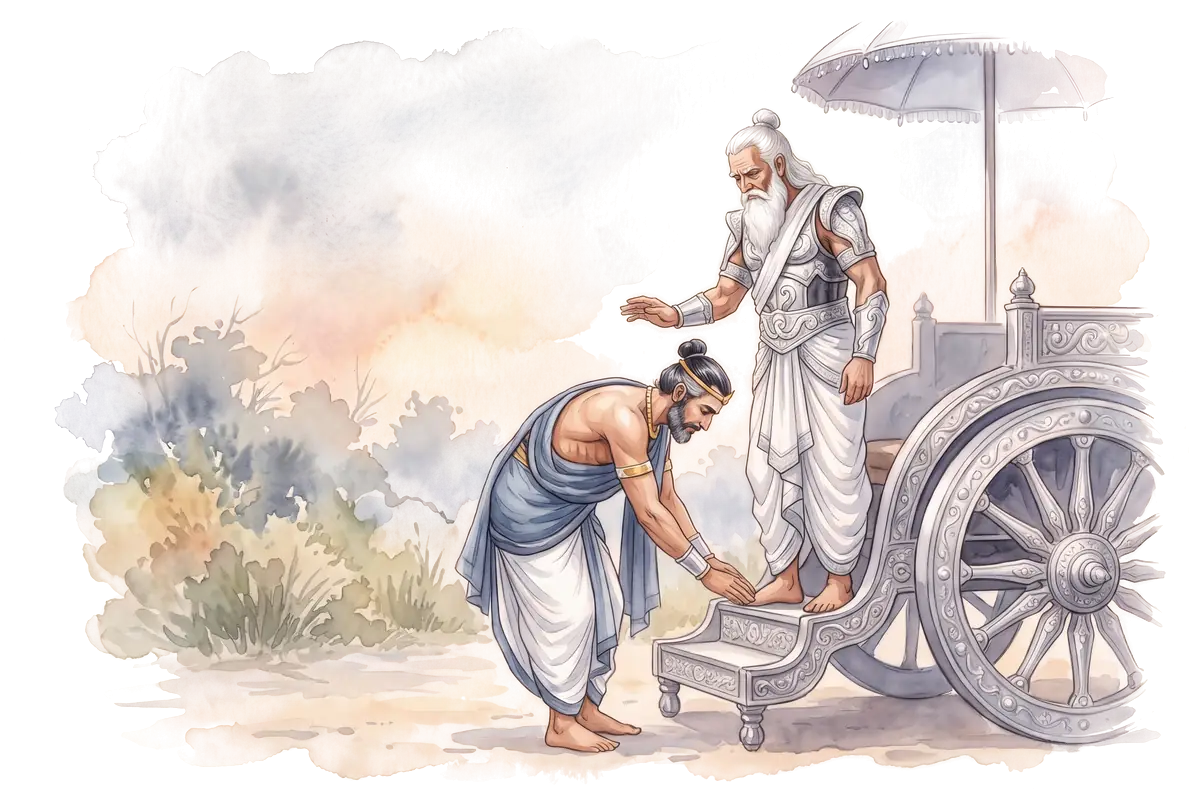
Then Yudhishthira took off his armor and walked across the empty ground to the Kaurava army, with his hands joined. He took Bhishma's feet in his hands. "Grandsire, we have to fight you. Give us your permission, and your blessing." Bhishma blessed him. "Go and win, my son." So did Drona, Kripa and Shalya, and each went back to his place to fight him.
What happened next
The war lasts eighteen days, with Krishna at Arjuna's reins. The whole war, short, is in the Mahabharata in five minutes, and one of its best-known days is Abhimanyu and the chakravyuha.
Questions about the Bhagavad Gita
What is the Bhagavad Gita about, in simple words?
Arjuna doesn't want to fight a war against his own family and teachers, and Krishna, his friend and charioteer, helps him decide what to do. Krishna tells him that what lives in the body can never be killed, and that he should do his work without fighting for the prize. "The work is yours," he says. "What comes of it isn't."
Where was the Bhagavad Gita spoken?
In Arjuna's chariot, out on the empty ground between the two armies at Kurukshetra, on the first morning of the war. Krishna was driving. Far away in Hastinapura, Sanjaya told the blind King Dhritarashtra everything he saw.
Why did Arjuna refuse to fight?
Across the field he saw Bhishma, who had raised him, Drona, who had taught him the bow, and the cousins he had wrestled with as a boy. "What would I do with a kingdom, with all of them dead?" he said. He laid down his bow and arrows and sat on the floor of the chariot.
What did Arjuna see when Krishna showed his true form?
He saw the whole world inside Krishna's body, all the gods and sages, arms past counting and faces turned every way, shining as if a thousand suns had risen at once. Frightened, Arjuna asked to see his friend's own face again, and Krishna came back to the driver's seat with the reins in his hand and said, "Don't be afraid."
Is the Bhagavad Gita part of the Mahabharata?
Yes. It is told in the Bhishma Parva, the part of the Mahabharata about Bhishma's ten days as commander, just before the fighting starts. People also read it today as a holy book of its own.
Where this comes from: Bhishma Parva §25–42 in the Ganguli translation of the Mahabharata (the Gita), and §43 (Yudhishthira's walk to the Kaurava elders and Yuyutsu). Ganguli has Krishna say "I am Death, the destroyer of the worlds." Book Three uses "I am Time," the wording most readers know, and leaves out the warriors Arjuna sees rushing into Krishna's mouths. Sources for The War, chapter by chapter.