From Book Two of the Mahabharata
The Yaksha's Questions (Yaksha Prashna) for Kids
Yaksha Prashna means "the yaksha's questions." Near the end of the Pandavas' twelve years in the forest, four of the brothers drink from a lake without answering the questions of the spirit who guards it, and fall dead. Yudhishthira answers every question, chooses his brother Nakula when he may bring back only one, and the yaksha, who is really the god Dharma, Yudhishthira's father, brings all four back to life. Book Two, The Dice, tells it in chapter 9, The Lake of Questions.
- The name
- Yaksha Prashna (यक्षप्रश्न) is Sanskrit for "the yaksha's questions." A yaksha (YAK-sha) is a spirit of the wild places, of lakes and forests and hidden treasure.
- Where
- A clear lake ringed with golden flowers and lotuses, deep in the Dwaita woods.
- When
- The end of the twelfth year of the Pandavas' exile in the forest, just before their year in hiding.
- In the books
- Book Two, The Dice, chapter 9, The Lake of Questions
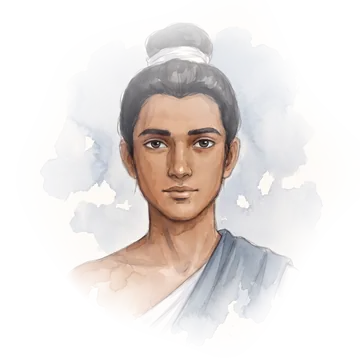
- Yudhishthirayu-DHISH-ti-raयुधिष्ठिर
- NakulaNA-ku-laनकुलalso Nakul
- BhimaBHEE-maभीम
- ArjunaAR-ju-naअर्जुन
- DharmaDHAR-maधर्म
- yakshaYAK-shaयक्ष
The deer and the fire-sticks
"The twelfth year of the exile was behind them when a deer ran off with a brahmin's fire." The brahmin's fire-sticks had caught in its antlers, and without them he could not light his sacred fire. The five brothers chased the deer deep into the Dwaita woods, and no arrow went into it, and then it was gone.
Four brothers at the lake
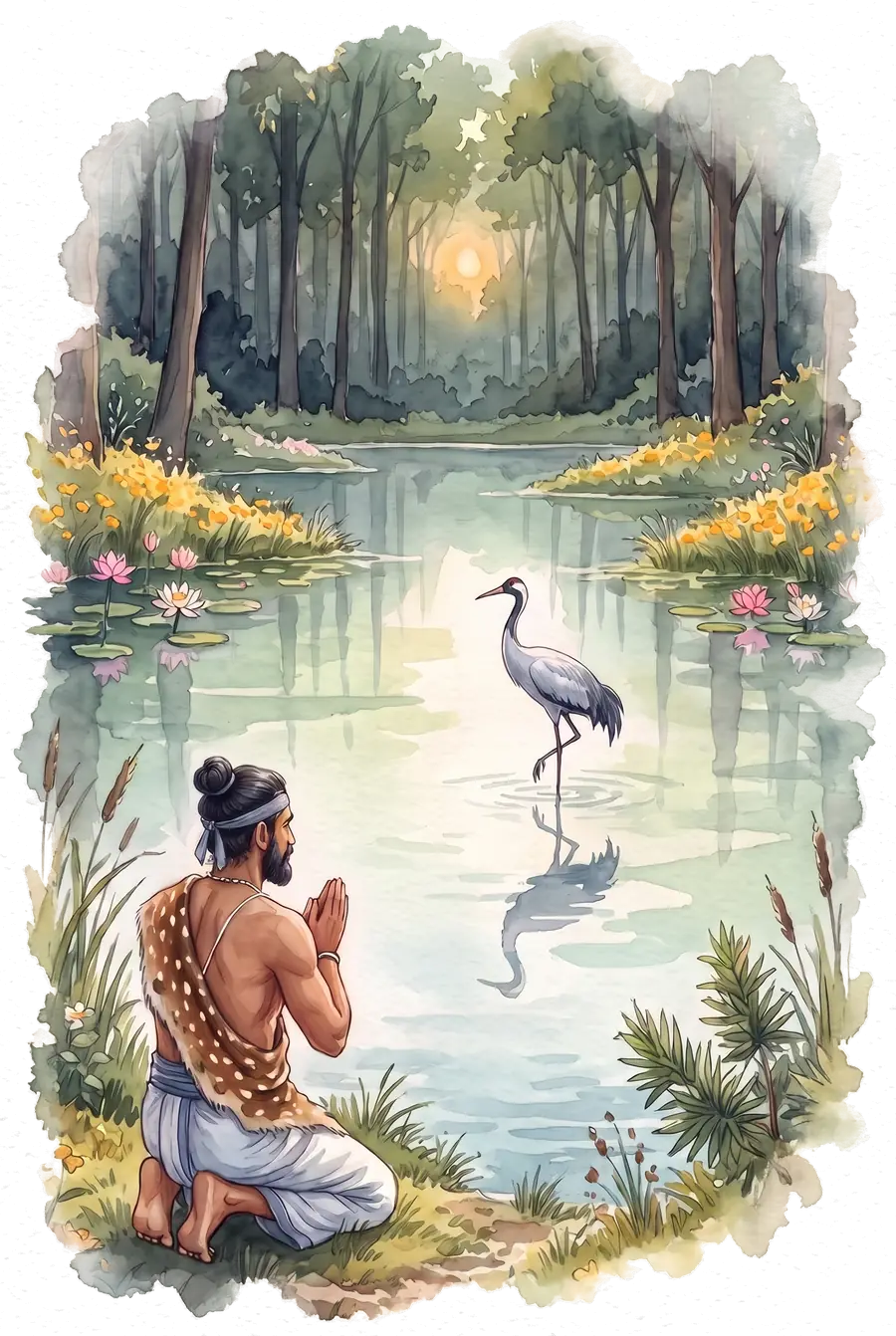
Hungry and parched, they sat down under a banyan tree. Nakula climbed it, saw trees that grow by water and heard cranes, and Yudhishthira sent him to fetch water. "Nakula did not come back." Nor did Sahadeva, then Arjuna, then Bhima. At last Yudhishthira followed their tracks to a lake "clear as crystal and edged with golden flowers and lotuses."
His four brothers lay on the bank. There was not a wound on any of them, and no footprints but their own. Yudhishthira waded in and cupped the water in his hands.
"Do not, child," said a voice. A crane stood in the shallows on one leg. "Answer my questions, and then drink. If you do not, you will be the fifth." Yudhishthira knew no bird had done this. In the trees above the water stood a yaksha, "as tall as a palm tree and blazing like a fire or the sun."
Yudhishthira joined his hands. "Ask your questions. I'll answer as well as I can."
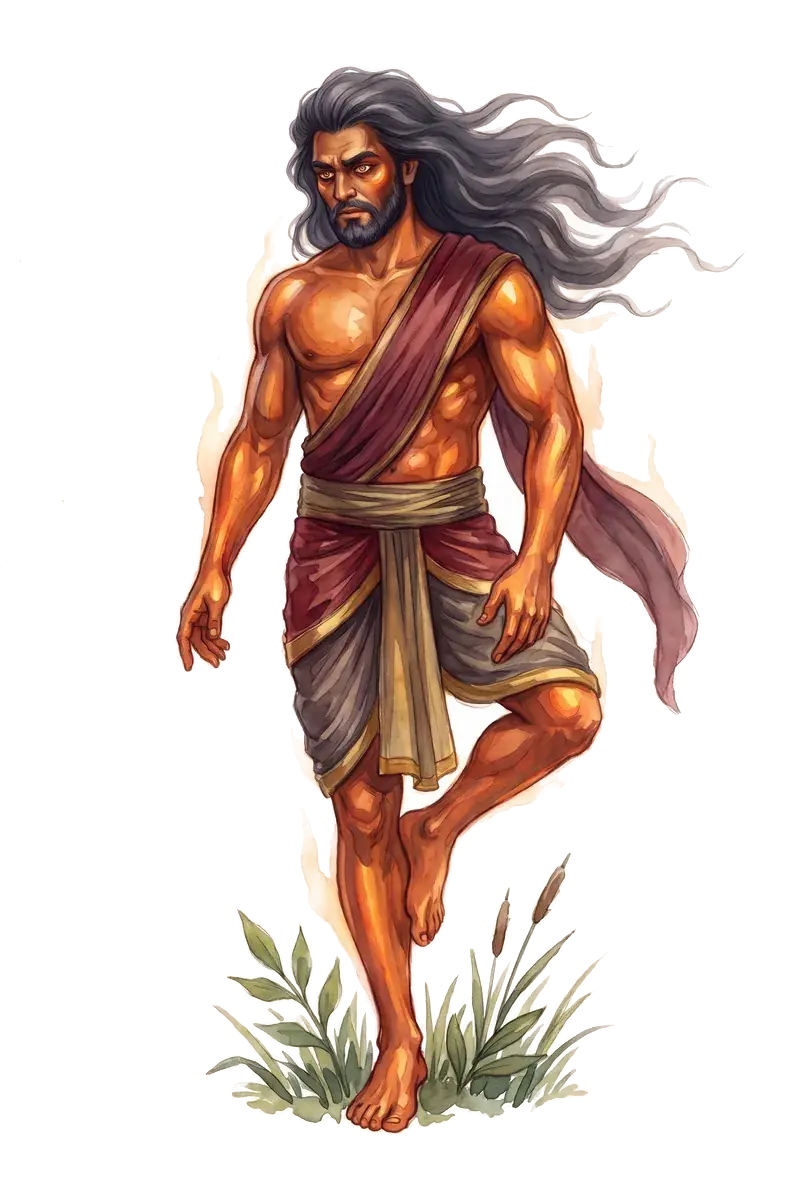
The yaksha's questions and Yudhishthira's answers
"The questions came one after another." Book Two gives these, in Yudhishthira's words.
- What is heavier than the earth? "A mother is heavier than the earth."
- What is higher than the sky? "A father is higher than the sky."
- What is faster than the wind? "The mind is faster than the wind."
- What is more numerous than the grass? "Our thoughts are more numerous than the grass."
- What does not close its eyes in sleep? "A fish doesn't close its eyes in sleep."
- What does not move once it is born? "An egg doesn't move once it's born."
- What has no heart, and what swells by its own force? "A stone has no heart, and a river swells by its own force."
- Who is the friend of an exile? "The one who goes with him."
- Which enemy can no one defeat? Which sickness can no one cure? "Anger. And greed."
- Who is truly happy? "Someone who cooks a few greens in his own house at the end of the day, who owes nobody anything, and never has to leave home."
- What is the most wonderful thing in the world? "Every day, people die and go to the god of death. And everyone left behind thinks they'll live forever. What could be more wonderful than that?"
"There were many more questions, and he answered every one while the sun moved across the water."
One brother back
"You have answered truly," said the yaksha at last. "So one of your brothers may live. Choose."
Bhima had the strength of ten thousand elephants, and Arjuna's bow lay beside him. "Let Nakula live," said Yudhishthira. When the yaksha asked why he would bring back Madri's son, he said, "My father had two wives, Kunti and Madri. I'm Kunti's son, and I'm alive. Let Madri have a son alive too. My two mothers are the same to me."
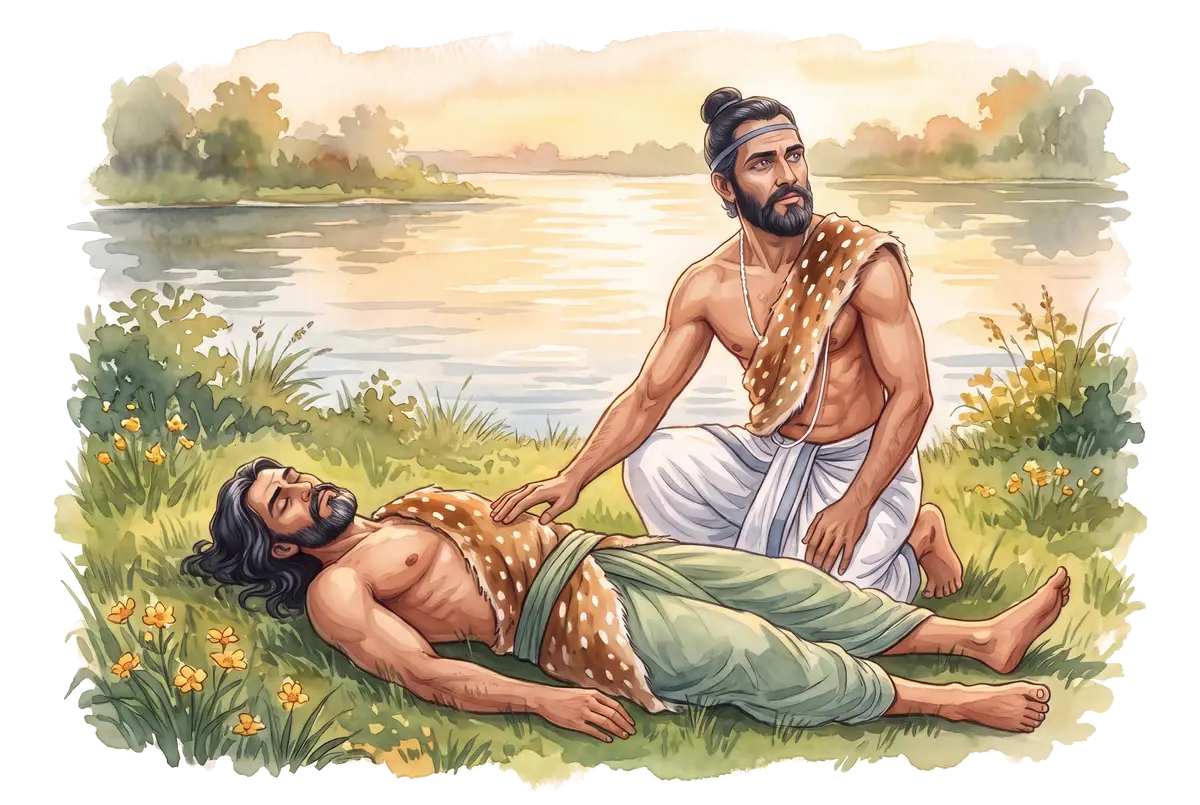
"You hold doing no harm higher than profit or pleasure," said the yaksha. "So let all your brothers live." Bhima sat up first, blinking, "as if he had slept the afternoon away." Not one of them asked for water.
Who the yaksha really was
"Who are you?" asked Yudhishthira. "A friend? Our father?"
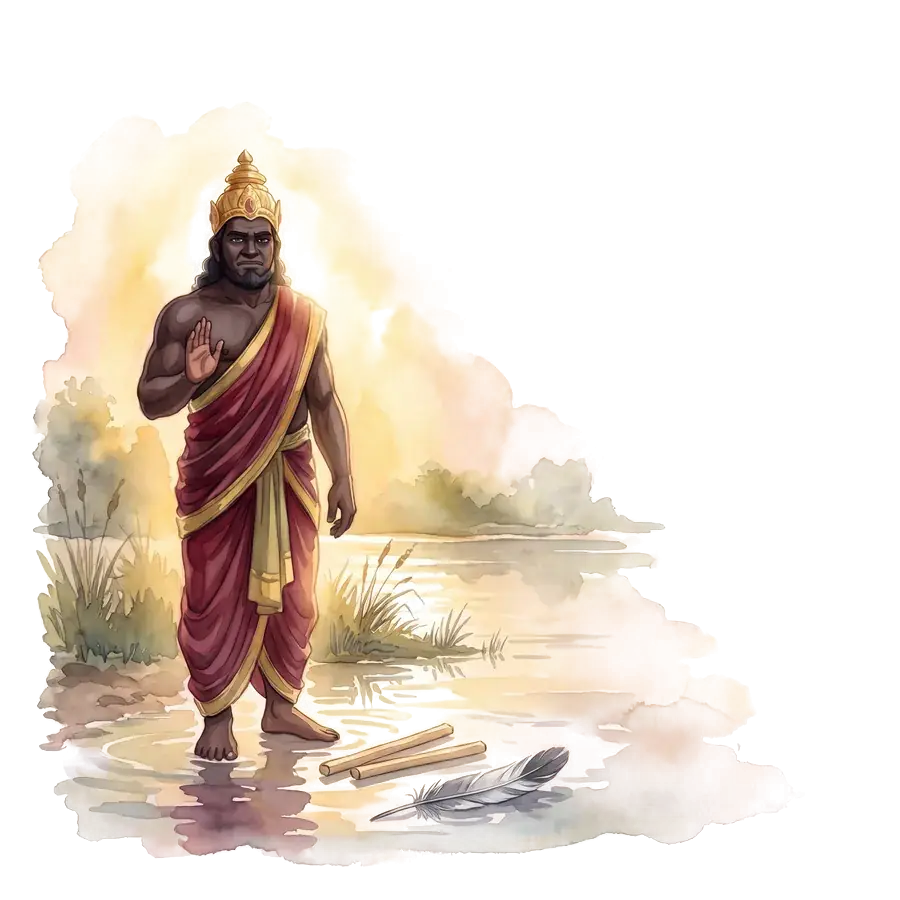
"Child, I am your father," he said. "I am Dharma, the god who judges right and wrong. I came to test you, and I am pleased with you. Ask me for a boon."
Dharma had been the deer as well, and he gave back the brahmin's fire-sticks. He promised that no one would recognize the brothers in their thirteenth year, the year in hiding. Last of all Yudhishthira asked, "Let me always overcome greed and foolishness and anger."
"You were born with that," said Dharma. "You are my son." Then there was only a crane's feather turning on the water where he had stood.
What happened next
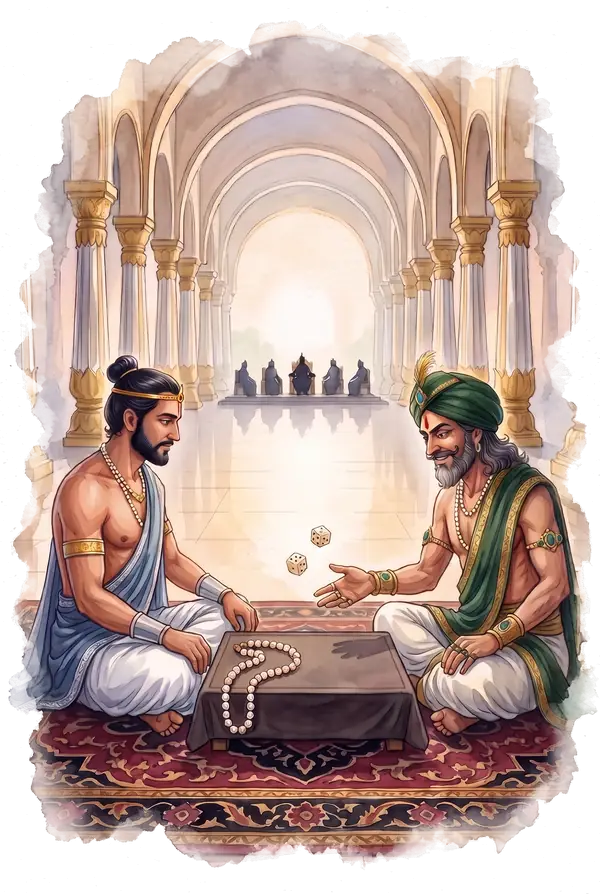
Dharma's promise holds. For the thirteenth year the Pandavas hide as servants at King Virata's court, and Yudhishthira becomes Kanka, a brahmin who plays dice with the king. How the exile began is in the dice game.
Questions about the Yaksha Prashna
What does Yaksha Prashna mean?
Yaksha Prashna is Sanskrit for "the yaksha's questions." A yaksha is a spirit of the wild places, of lakes and forests and hidden treasure. The name is used for the questions a yaksha asks Yudhishthira at a lake in the forest, near the end of the Pandavas' twelve years of exile.
What questions did the yaksha ask Yudhishthira?
Question after question, before he could drink. "What is heavier than the earth?" "A mother," said Yudhishthira, and a father is higher than the sky. Which enemy can no one defeat? "Anger. And greed." Who is the friend of an exile? "The one who goes with him." There were many more, and he answered every one.
What is the most wonderful thing in the world, in Yudhishthira's answer?
"Every day, people die and go to the god of death. And everyone left behind thinks they'll live forever. What could be more wonderful than that?"
Why did Yudhishthira choose Nakula over Bhima and Arjuna?
Yudhishthira was Kunti's son, and he was alive. Nakula was the son of Madri, his father's other wife. "Let Madri have a son alive too," he said. "My two mothers are the same to me." Because he held doing no harm higher than profit, the yaksha brought all four brothers back.
Who was the yaksha really?
Dharma, the god who judges right and wrong, Yudhishthira's own father. He had also been the deer that ran off with the brahmin's fire-sticks. "Child, I am your father," he says. "I came to test you, and I am pleased with you."
Where this comes from: Vana Parva §309–312 in the Ganguli translation of the Mahabharata. In Ganguli the yaksha asks about thirty sets of questions, and Yudhishthira answers them all; Book Two gives a handful of them in plain modern English. Sources for The Dice, chapter by chapter.