For parents and teachers
The Mahabharata for Kids: Where to Start
The Mahabharata is India's great epic about two families of cousins who grow up together and end up at war over a kingdom. You can tell a child single stories from it at any age, and a full retelling like this series suits readers 10 to 16. Begin with the family and the first great promise, Bhishma's vow, and stop often to ask what your child would have done.
What the Mahabharata is, in three sentences
The Mahabharata (महाभारत, often spelled Mahabharat) is a very long poem from ancient India, about a hundred thousand verses, said to have been composed by the sage Vyasa. It tells how the five Pandava brothers and their hundred Kaurava cousins grow up in the same palace in Hastinapura, become rivals for its throne, and finally fight a great war on the field of Kurukshetra. Inside that story sit many shorter ones, and the Bhagavad Gita, Krishna's advice to Arjuna before the battle.
For a young child you can make it shorter still. A family cannot agree on who should be king, and every choice the grown-ups make, good or bad, comes back to the children years later.
Why it matters to children today
Children already care about the things the Mahabharata cares about: who gets picked and who is left out, whether a promise still counts when keeping it hurts, and what is fair when the rules themselves are not. The epic asks these questions with whole kingdoms at stake, and it rarely gives an easy answer.
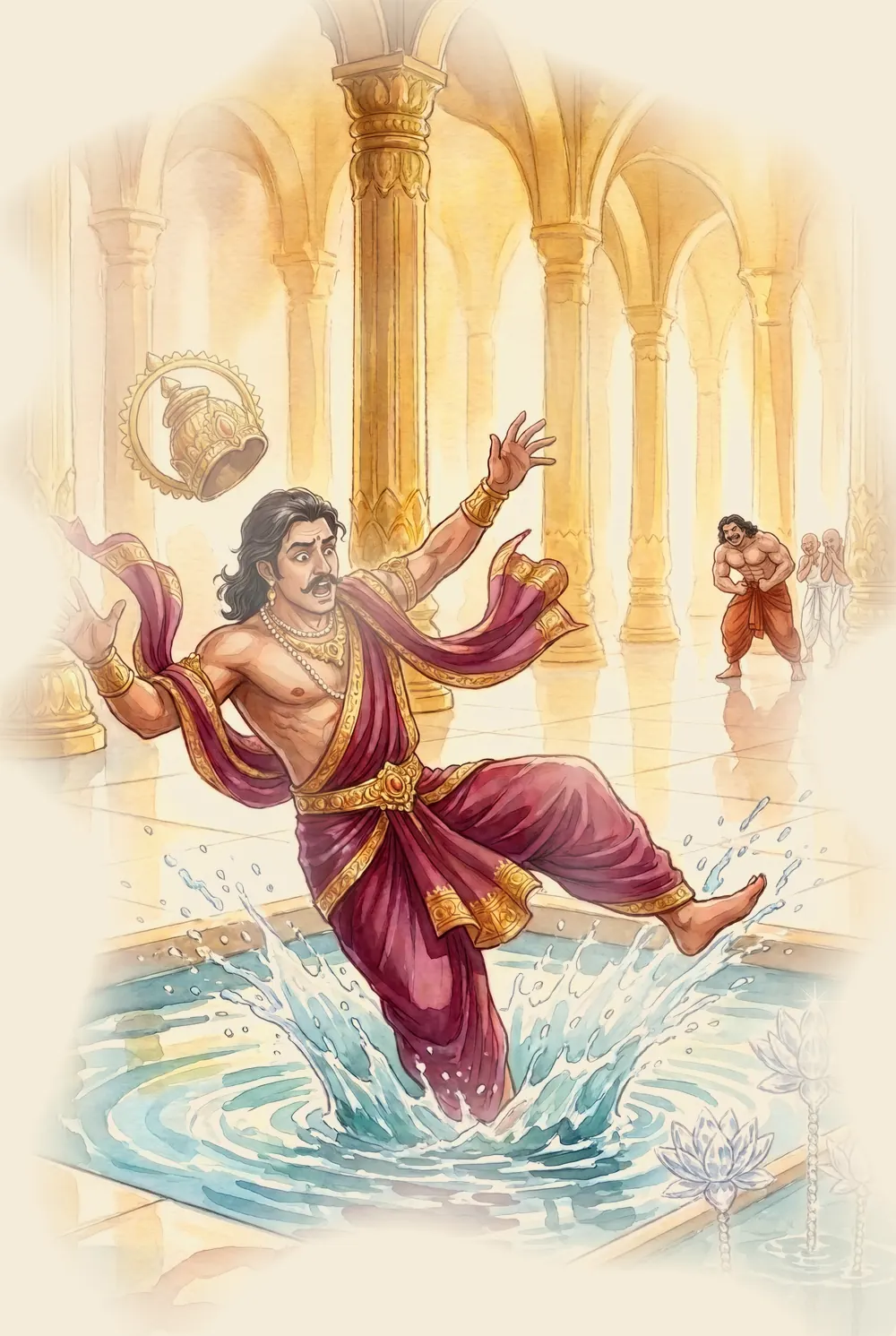
Its people make real mistakes, which is what makes them worth meeting. Yudhishthira, the brother who will not tell a lie, agrees to a game he should refuse. Duryodhana causes great harm, and he is also the boy who falls into a pool in his cousins' palace and hears them laugh. Karna is brave and generous, and he is turned away again and again because of his birth. A child reading about them has to decide what they think of each one.
For families of Indian heritage there is one more reason. The names turn up everywhere, even in children's own names, and knowing the story lets a child join in. For everyone else, it is a famous story worth knowing.
What age to start
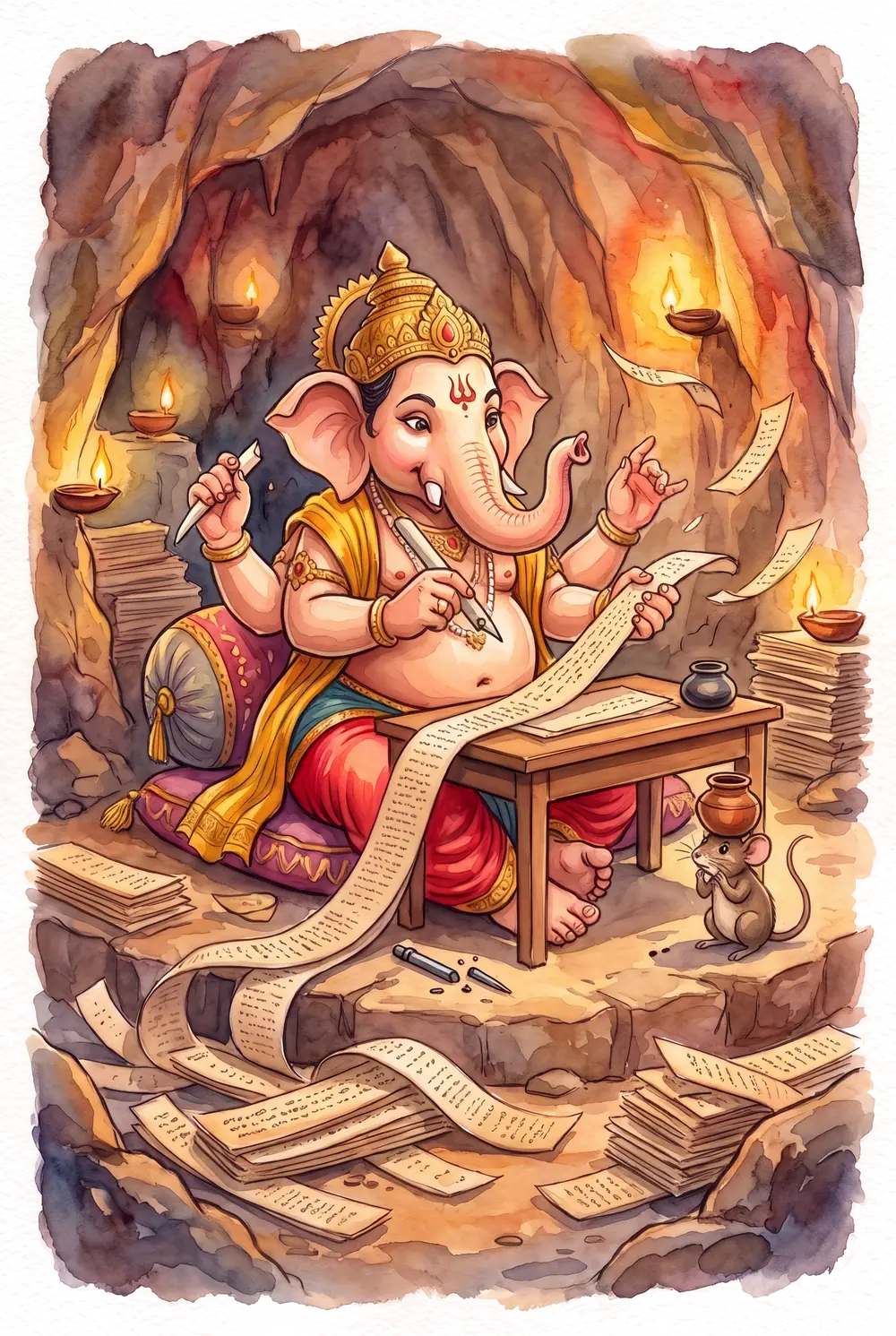
This series is written for readers 10 to 16, to read alone or aloud together. Younger children can enjoy single stories told by a grown-up, such as Ganesha writing the epic down or Arjuna aiming at a wooden bird. The full story has hard parts, and it ends in a war, and a long telling works best once a child is old enough to talk those through with you.
If you are not sure your child is ready, our age guide goes through each hard moment in all three books and how each book handles it.
How to explain the Mahabharata to a child
These five ideas help whether you use this series, another book or your own memory of the story.
- Start with the family. Most of the confusion comes from the names. Sketch the tree together. Bhishma is the great-uncle who never marries. The blind king Dhritarashtra and his younger brother Pandu come next, then the hundred sons of one and the five sons of the other. Our family tree has it in words and pictures.
- Say the names out loud. A child who can't say a name skips it, and soon loses track of who is who. Practice a few together. Yudhishthira is yu-DHISH-ti-ra, and Dhritarashtra is dhri-ta-RAASH-tra. The full list is on our page about how to say the names.
- Stop at the choices. Nearly every episode turns on someone deciding something. Pause there and ask your child what they would have done, and why. Let them disagree with you.
- Don't rush to the war. The battle is the famous part, yet its causes are laid down over two generations, in a vow, a blindfold, a teacher's favorite and a laugh. Children follow the war far better once they have watched those happen.
- Let it be a story first. You don't need to explain every religious meaning before you begin. A child can meet Krishna first as a friend who asks hard questions, and the deeper meanings can come later.
The characters page introduces the main people one at a time, which helps when a child asks "wait, who is he again?"
How this series tells it
Mahabharata by Ankita Sharma retells the whole epic in three illustrated books for readers 10 to 16.
- A painting on every page. Every page of the 6 × 9 inch paperback has a soft watercolor painting in full color. A child who reads slowly always has a picture to hold on to.
- Told by Ganesha. Ganesha, who wrote the epic down as Vyasa spoke it, opens each book and talks to the reader directly. Each chapter then follows one person closely, such as Devavrata, Amba, Karna or Draupadi, so the reader sees the story through many eyes.
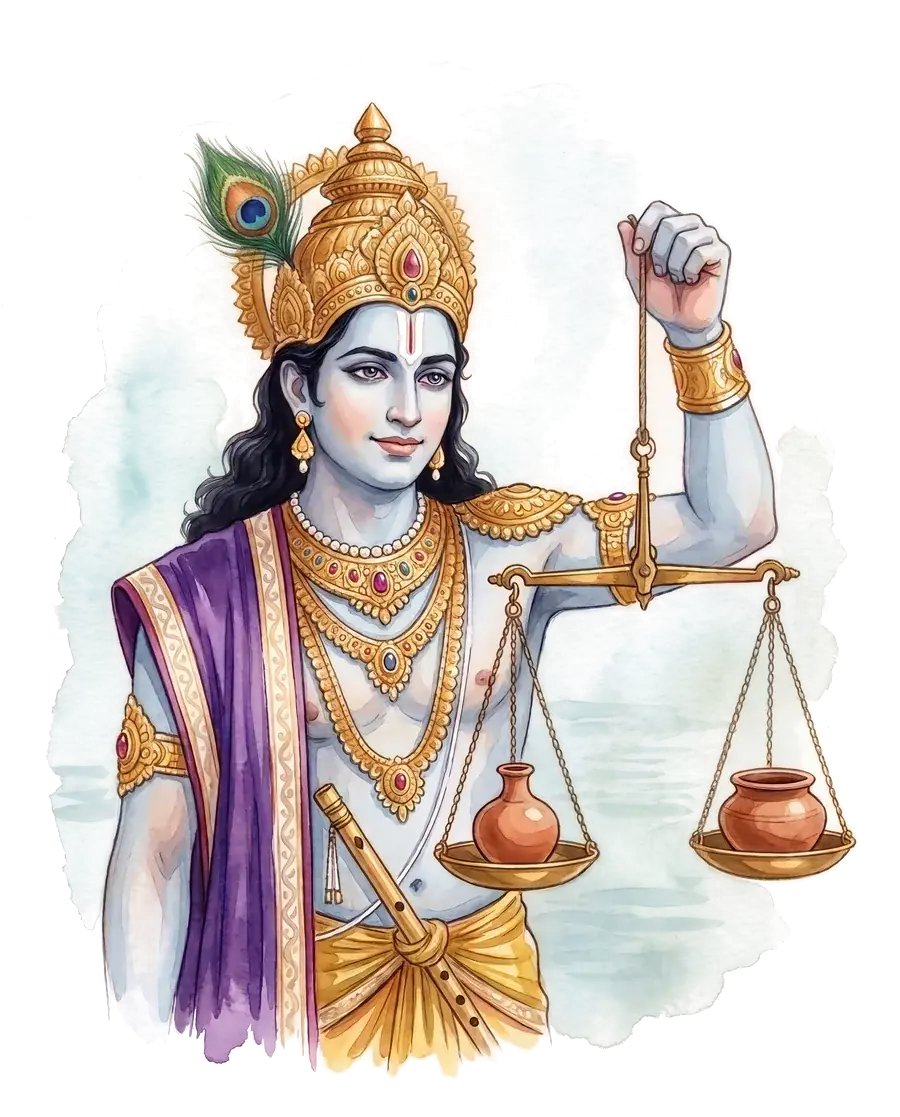
- Krishna asks. After key scenes, Krishna appears with a balance scale on a page called The Right Path. He explains the duties pulling against each other and asks what you would have done. Readers are free to argue with him.
- Tales within the tale. Short framed stories tell the old curses and past lives behind the main events, such as "The Eight Who Stole a Cow" in Book One, "Savitri and Satyavan" in Book Two and "Half a Lesson" in Book Three.
- True to the source. The story follows Kisari Mohan Ganguli's English translation, published between 1883 and 1896. Where the books use a well-known later telling, such as the arrow through the bird's eye, our sources page says so.
- Help with the names. Keep the family tree and the guide to saying the names open beside you while you read.
The three books
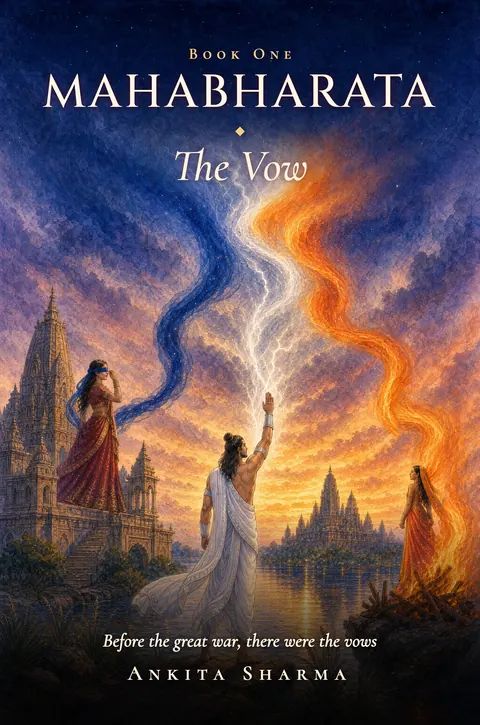
- Book One, The Vow. Bhishma's vow, Amba's fire, Gandhari's blindfold, and five brothers growing up beside their hundred cousins, up to the Palace of Illusions. 197 pages. Coming November 30, 2026.
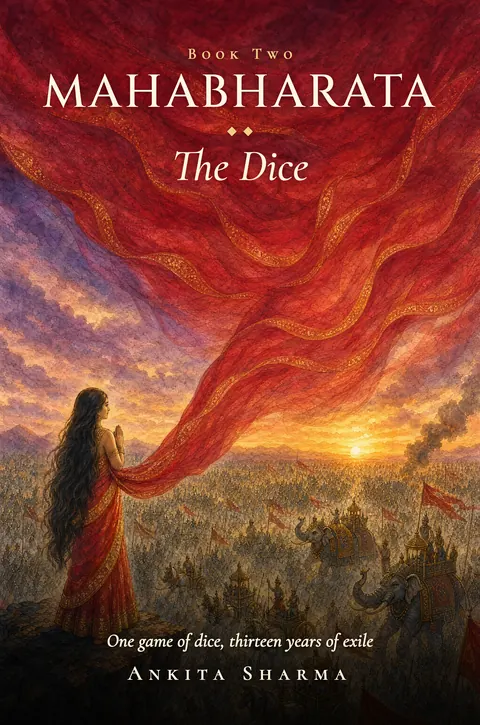
- Book Two, The Dice. The game of dice, the years in the forest and the road to war, up to the moment the conches sound at Kurukshetra. 205 pages. Coming December 7, 2026.
- Book Three, The War. The Bhagavad Gita, the eighteen days on the field of Kurukshetra, and the years after, to the road to heaven. 236 pages. Coming December 14, 2026.
Where to start
Start at the beginning, with Book One. The Mahabharata makes the most sense in order, because nearly every quarrel in it grows from something that happened a generation before. The Vow opens with Ganesha agreeing to write the epic down, then goes back to a king named Shantanu, who meets a beautiful stranger beside the river Ganga.
You can turn the pages of The Vow in the preview, or try Krishna's questions and choose your own answer. Teachers can begin with the teachers page, which has a unit for The Vow, The Dice and The War, or with the question cards and the mock trial. The FAQ has short answers on age, sources and buying.
More guides
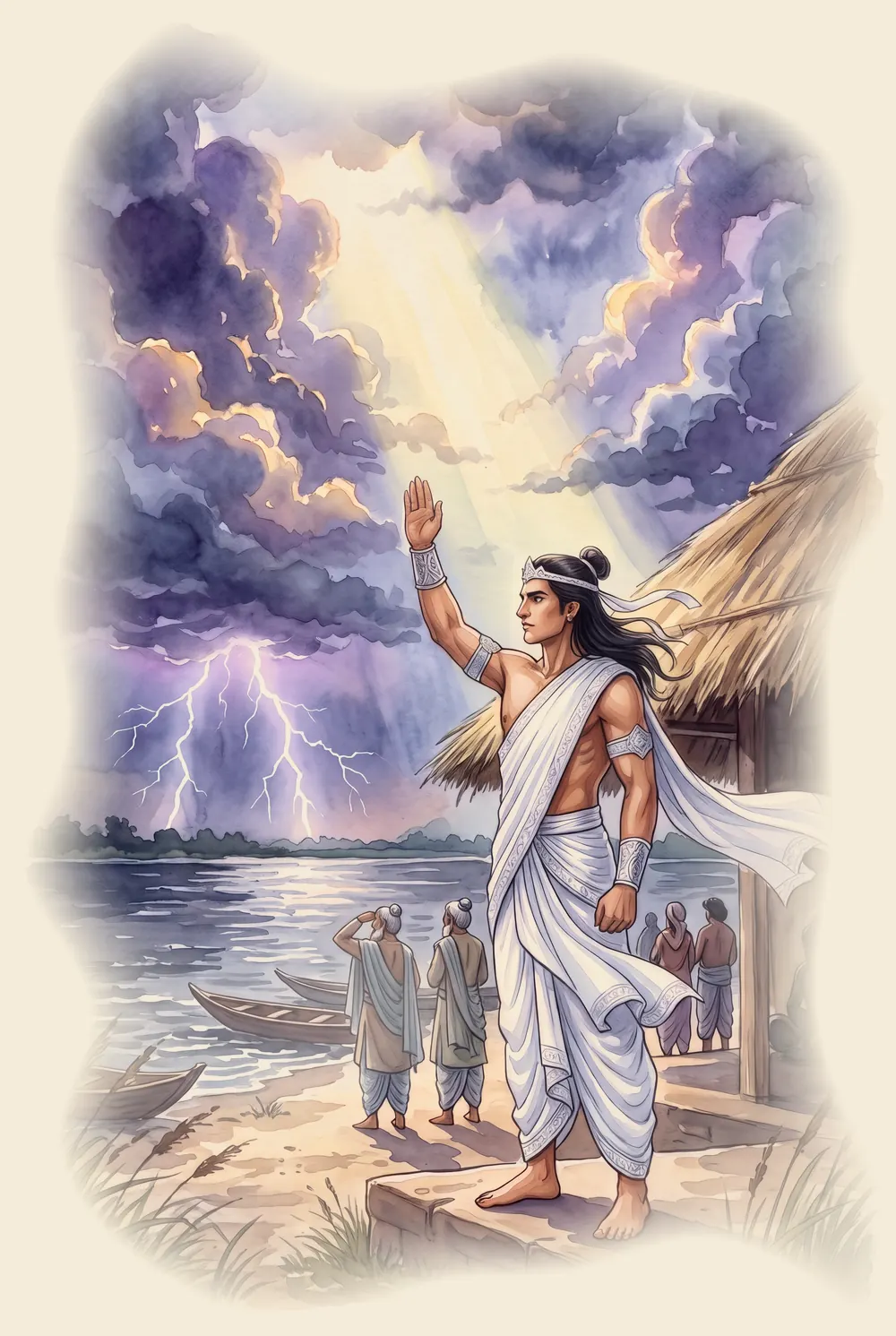 Age guideIs the Mahabharata right for your child? Every hard moment, and how it is handled.
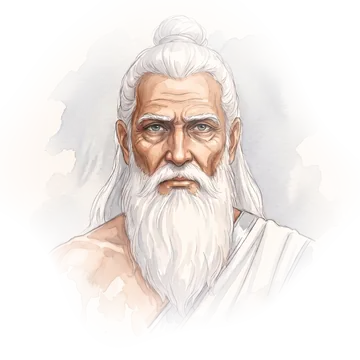 Family treeHow the Pandavas and the Kauravas are related.
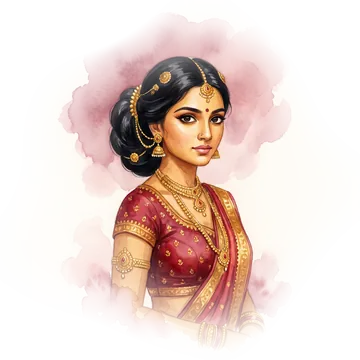 How to say the namesYudhishthira, Draupadi, Dhritarashtra and the rest, said out loud.
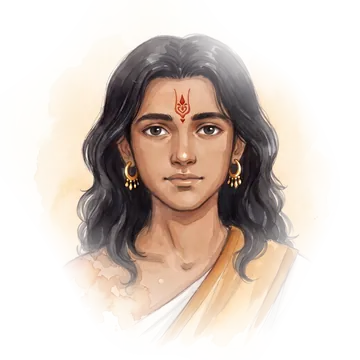 CharactersWho's who in the series, one line each.
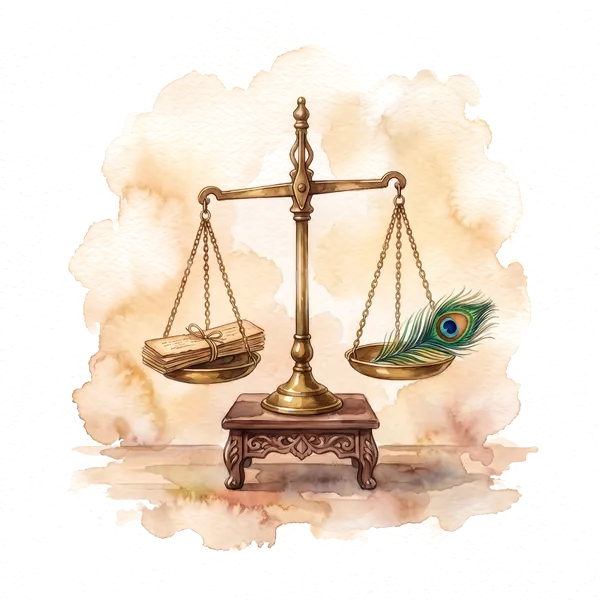 For teachersUsing the books in class or at home.
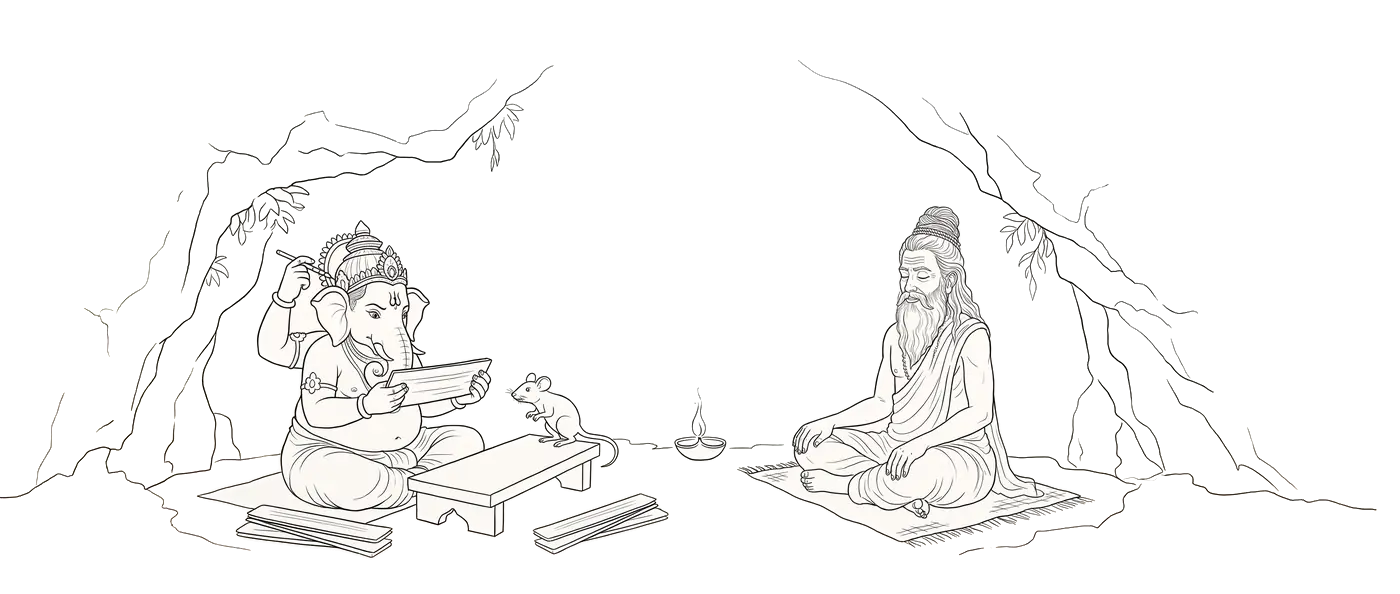 SourcesWhere each chapter comes from in the Ganguli translation.
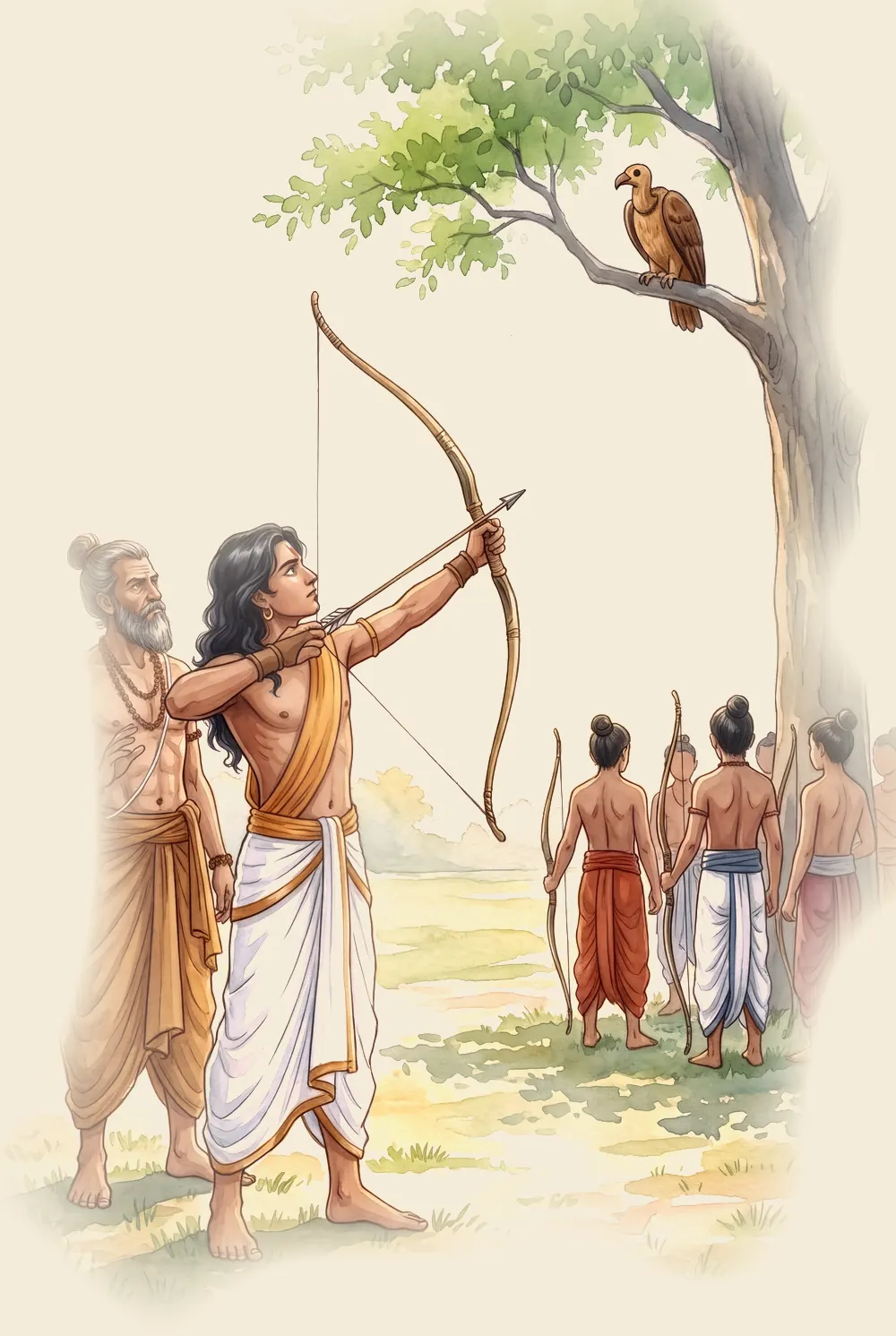 FAQShort answers on age, battles, sources and buying.
 StoriesWell-known side stories of the Mahabharata, retold with new paintings.
 The story in 5 minutesThe whole epic, ending and all.
 Books comparedMahabharata books for children, side by side.
 GlossaryDharma, rakshasa, swayamvara and more, in a line each.
 ResourcesFree activities, question cards and lessons.