For parents and teachers
Mahabharata Book Series for Kids: Questions and Answers
Mahabharata by Ankita Sharma is a series of three illustrated books for readers 10 to 16, with a painting on every page. The three books come out on Amazon in the US a week apart: The Vow on November 30, 2026, The Dice on December 7 and The War on December 14.
What age is the series for?
The books are written for readers 10 to 16, from upper middle grade into the early teens. Chapters are short, every page has a painting, and the language stays plain, so a confident 10-year-old can read alone. Older readers still get the full story, told at length. It is written to be read alone or aloud together.
Is the Mahabharata appropriate for children?
Yes, when it is told with care. Children in India have grown up with these stories for centuries, through grandparents and television. The epic does include war and cruelty, and this retelling keeps them in the story without graphic detail. Our age guide lists each hard moment in all three books and how each book handles it.
How are the battles and deaths handled?
Honestly, and without gore. The books show the weight of a death and give room to the people who grieve, then move on before anything graphic. Book One has deaths, curses, a burning house and fights with rakshasas, but no war. Book Two's hardest scenes are in the dice hall and at King Virata's court, where Draupadi is mistreated. The great battle fills Book Three, where many people die, each death told plainly and briefly. Chapters are short, so a parent can read ahead and talk about the hard ones first.
Which translation does it follow?
The story follows the English translation by Kisari Mohan Ganguli, published between 1883 and 1896, which is now in the public domain. The events in each chapter were checked against it. In a few places the books use a popular later telling that many families know, such as Arjuna's arrow through the bird's eye. Our sources page lists those places.
How is it different from other Mahabharata books for kids?
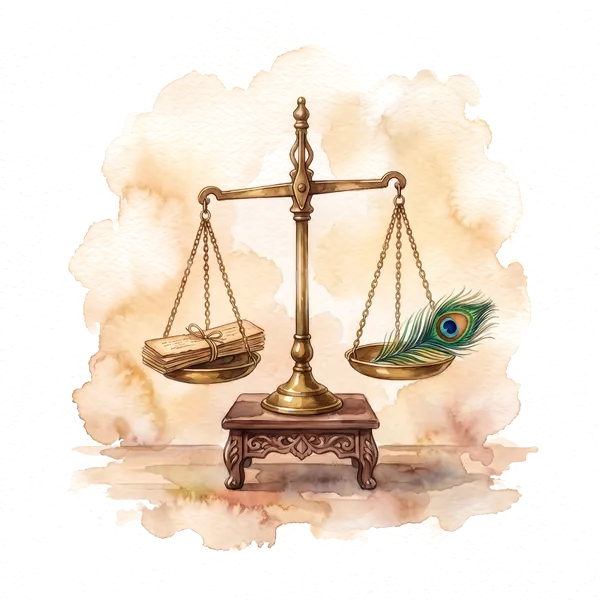
It has a painting on every page and is written for 10- to 16-year-olds, so it can tell the story at full length for that age. Ganesha narrates, and after key scenes Krishna asks the reader what they would have done. The text follows the Ganguli translation. Spread over three books, it has room for the side stories too.
Is there a Mahabharata in simple English for kids?
Yes. The three books of the series tell the whole Mahabharata in plain modern English for readers 10 to 16, with a painting on every page. Sanskrit names are kept to the ones the story needs, and How to Say the Names gives the pronunciation of each. For a quick start before the books, the Mahabharata summary tells the whole story in simple English, one book at a time.
How many books are there, and in what order?
There are three, read in order. Book One, The Vow, runs from the river goddess Ganga to the Palace of Illusions and comes out on November 30, 2026. Book Two, The Dice, covers the dice game, the years of exile and the road to war, and comes out on December 7, 2026. Book Three, The War, tells the eighteen days at Kurukshetra and what came after, and comes out on December 14, 2026. Each of the first two books ends with Ganesha's look ahead at the next.
When do the books come out, and where can I buy them?
All three are sold on Amazon in the US first, as full-color paperbacks, 6 by 9 inches. Book One, The Vow, comes out on November 30, 2026 (197 pages, ISBN 979-8-9828468-0-8). Book Two, The Dice, follows on December 7, 2026 (205 pages, ISBN 979-8-9828468-1-5), and Book Three, The War, on December 14, 2026 (236 pages, ISBN 979-8-9828468-2-2). Until they are out, you can leaf through the previews of The Vow, The Dice and The War.
Does my child need to know Hindu traditions first?
No. The books explain what a reader needs along the way. Sanskrit words are kept few, with their meaning clear from the sentence. The family tree and the guide to saying the names help too. A reader from any background can start on the first page.
Can it be used in a classroom or homeschool?
Yes. Each chapter is short enough for one sitting, and Krishna's questions make ready-made discussion prompts. There are no model answers, so students can disagree as long as they can say why. Our teachers page has a guide to each book, for The Vow, The Dice and The War, along with question cards and a mock trial.
Who tells the story?
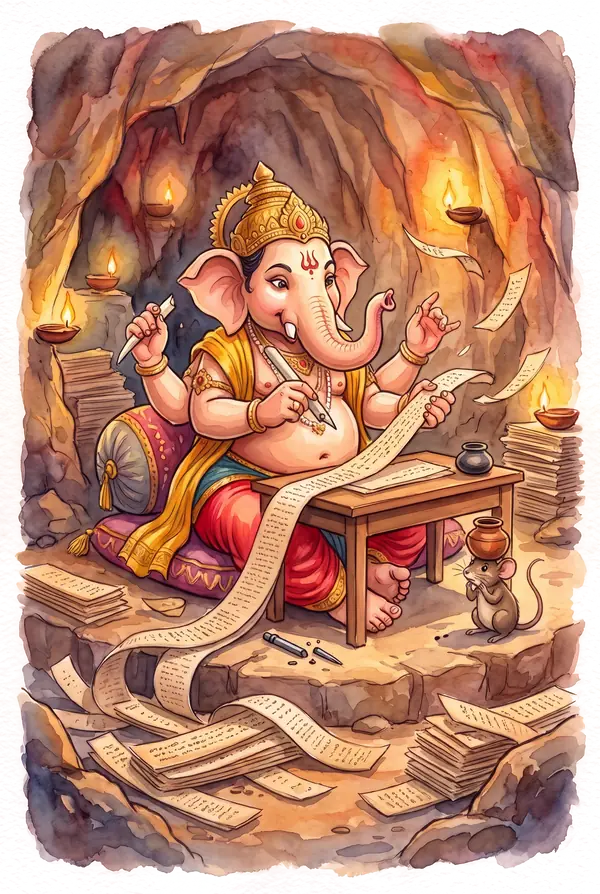
Ganesha, the elephant-headed god who wrote the Mahabharata down as the sage Vyasa spoke it. He opens each book and talks to the reader directly, and at the end of Book Three he tells the Epilogue, The Broken Tusk. In between, each chapter follows one person closely, so the reader sees events through the eyes of Devavrata, Amba, Vidura, Karna, Draupadi, Abhimanyu, Sanjaya and others.
More for parents: the whole story in five minutes, and Mahabharata books for kids, compared.