Sources · Books One to Three
Where the Stories Come From
All three books, The Vow, The Dice and The War, follow the Mahabharata in the English translation by Kisari Mohan Ganguli, published between 1883 and 1896. Each chapter follows a known part of Ganguli, and in a few places the books chose a popular retelling over his.
The Mahabharata and its eighteen parvas
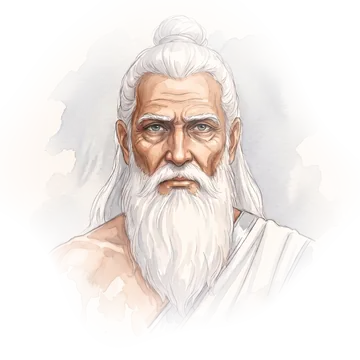
The Mahabharata is a very long poem from ancient India, about a hundred thousand verses, said to have been composed by the sage Vyasa. It is divided into eighteen books called parvas, and each parva into numbered sections, written here with the sign §.
Most of Book One comes from the first two parvas, the Adi Parva (the Book of the Beginning) and the Sabha Parva (the Book of the Assembly Hall). A few chapters also draw on two later parvas, the Vana Parva (the Book of the Forest) and the Udyoga Parva. Book Two comes from the Sabha, Vana, Virata and Udyoga Parvas, and Book Three runs from the Bhishma Parva to the last, the Svargarohana.
The eighteen parvas, in order:
- Adi
- Sabha
- Vana
- Virata
- Udyoga
- Bhishma
- Drona
- Karna
- Shalya
- Sauptika
- Stri
- Shanti
- Anushasana
- Ashvamedhika
- Ashramavasika
- Mausala
- Mahaprasthanika
- Svargarohana
The translation these books follow
Kisari Mohan Ganguli's English translation came out in parts between 1883 and 1896. It is in the public domain and free to read online. The events in all three books were checked against it, chapter by chapter, and the section numbers are his.
The Mahabharata has never been one fixed book. Scholars at the Bhandarkar Oriental Research Institute in Pune compared more than a thousand old manuscripts to make the Critical Edition, finished in 1966, which leaves out some passages that Ganguli's text includes. Across India and beyond, the story also lives in regional versions, in songs and plays, in family tellings and in television serials, and these often differ in their details. Ganguli is the version followed here.
What is imagined
Most of what people say and think in these chapters is imagined, and so are many small scenes that join one event to the next. Ganesha's narration and Krishna's Right Path questions belong to this retelling. Nothing invented here is meant to be read as a quotation from the epic.
Chapter by chapter
Where each chapter comes from, and the few places these books chose a popular retelling over Ganguli's. Each book has its own page.
Prologue: The Sage and the Scribe
Adi Parva §1, §62
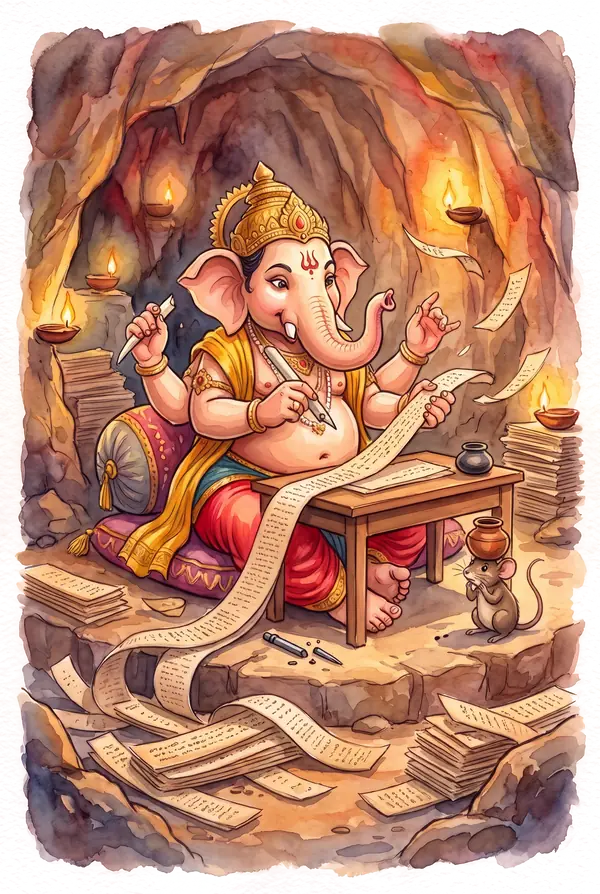
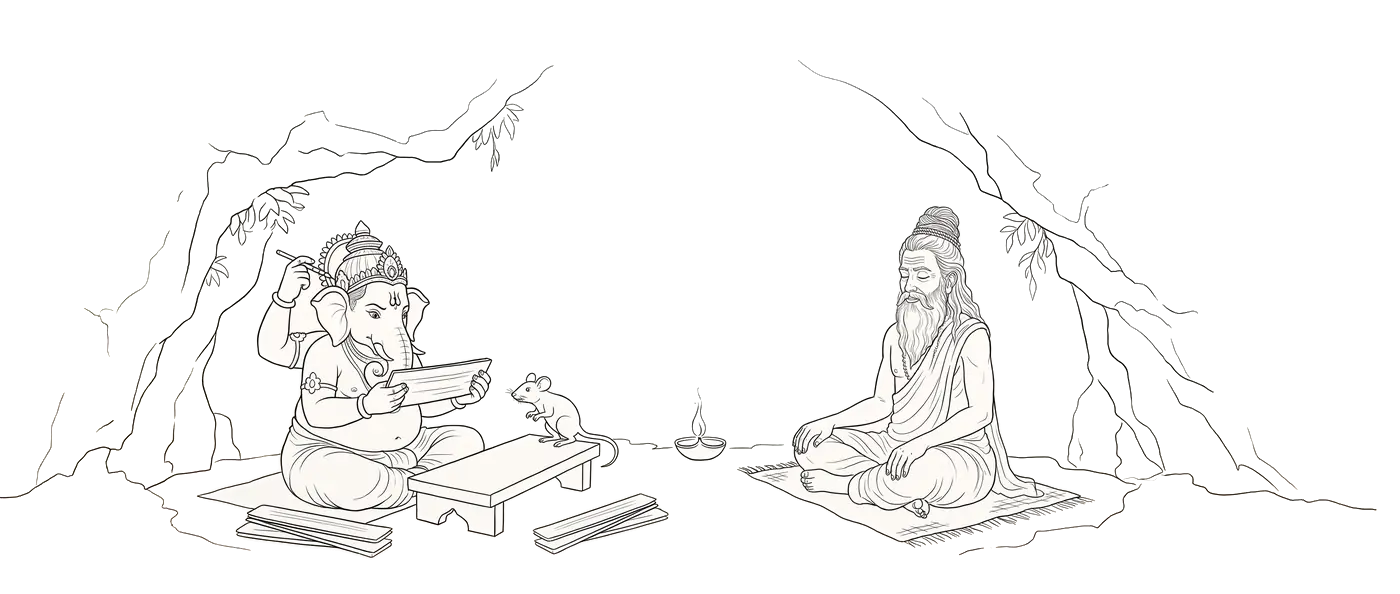
Vyasa asks Ganesha to write the poem down in §1. The broken tusk comes from later tellings. Ganesha talking to the reader, here and elsewhere in the book, is this book's own idea.

1. The River Goddess
Adi Parva §96–100

2. The Terrible Vow
Adi Parva §100
Ganguli has flowers falling after Bhishma's vow. The thunder was added for this book.
See every chapter of The Vow → Or go to The Dice or The War.
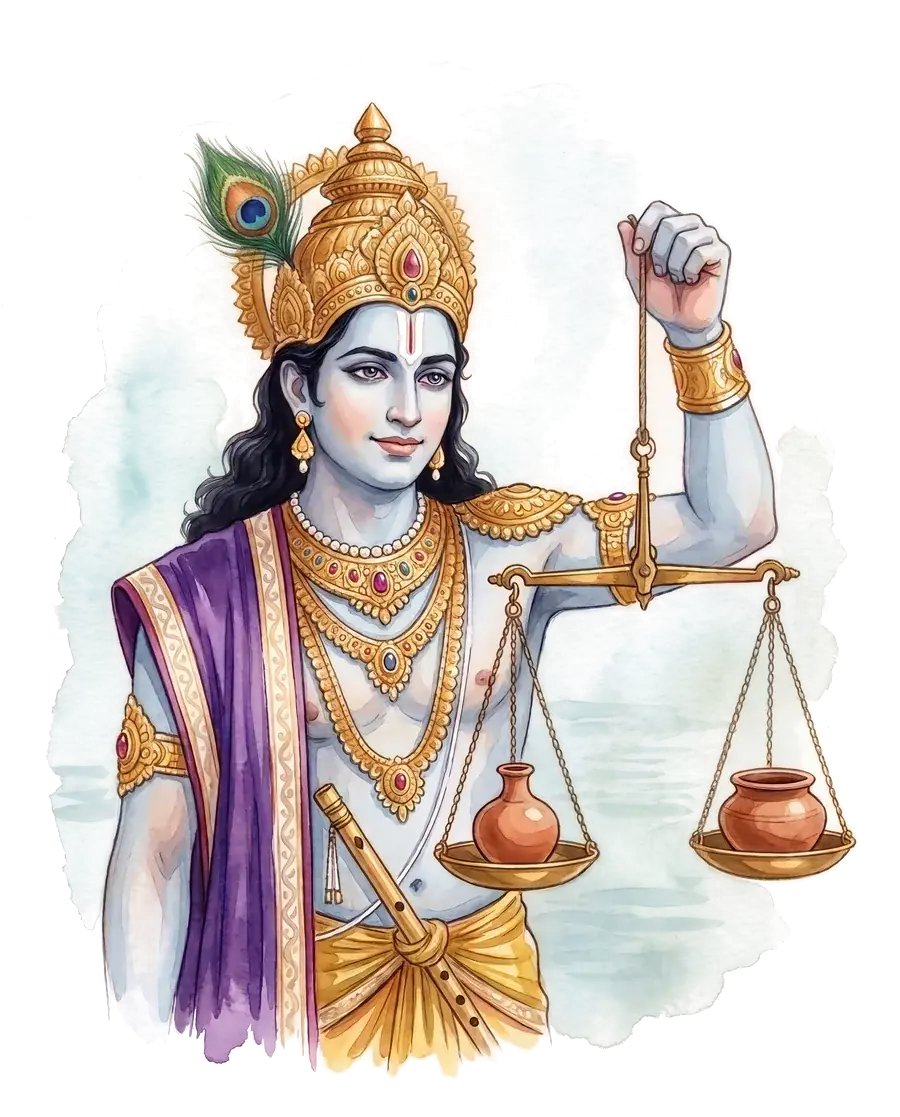
The Right Path. Krishna's Right Path questions, in all three books, were written for this retelling. They come with no answers, and readers are free to argue with him.
Reading Ganguli yourself
Ganguli's translation is free online in two easy places, with the same section numbers.
- Project Gutenberg, eBook #15474 has the Adi, Sabha and Vana Parvas in one file. The later parvas are separate eBooks there.
- mahabharata-online gives one section per page. The address is the parva's number and then the section, so Adi Parva §111, where Kunti meets the sage Durvasa, is at
/1/111.html.
The Mahabharata is sacred to many families. This retelling tries to honor that, and to tell the story as faithfully as a book for young readers can.
Questions about the sources
Which translation of the Mahabharata does The Vow follow?
The English translation by Kisari Mohan Ganguli, published between 1883 and 1896. It is in the public domain and free to read online, at Project Gutenberg and at mahabharata-online, with the same section numbers. Every chapter of The Vow was checked against it.
Is this Mahabharata retelling accurate?
The events, names and order follow Ganguli. In a few places the book chose a popular telling that many readers already know. Most of the dialogue and the characters' thoughts are imagined, and so are the small scenes that join one event to the next. Nothing invented is meant as a quotation from the epic.