For parents · Age guide
Is the Mahabharata Appropriate for Children?
For most children from about 10, yes, when it is told with care. The Mahabharata is a family story about promises and the rivalry between cousins. It also has battles and deaths, and the three books tell them honestly but never in graphic detail. Book Three, the war, is the hardest, and if you read one chapter ahead, make it Book Three, chapter 10.
Ten is a good age to start
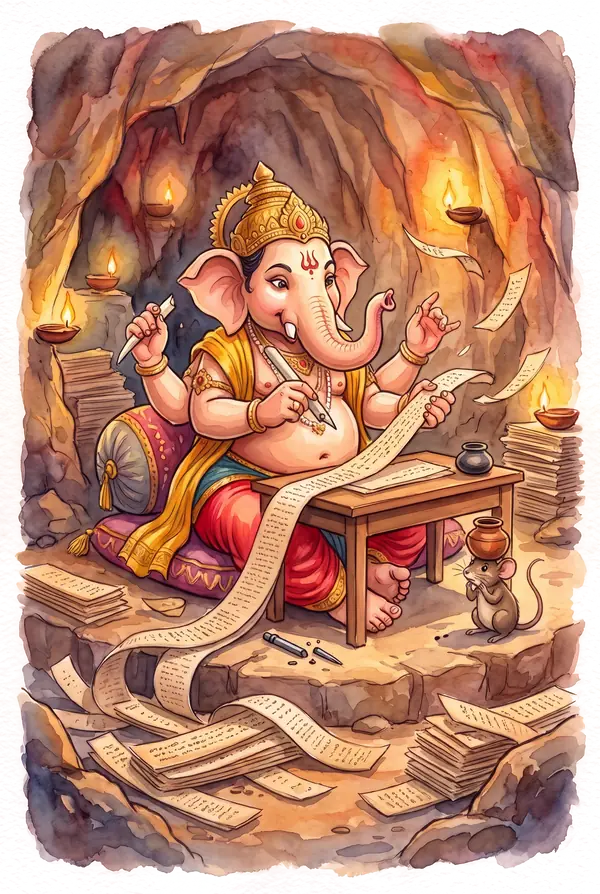
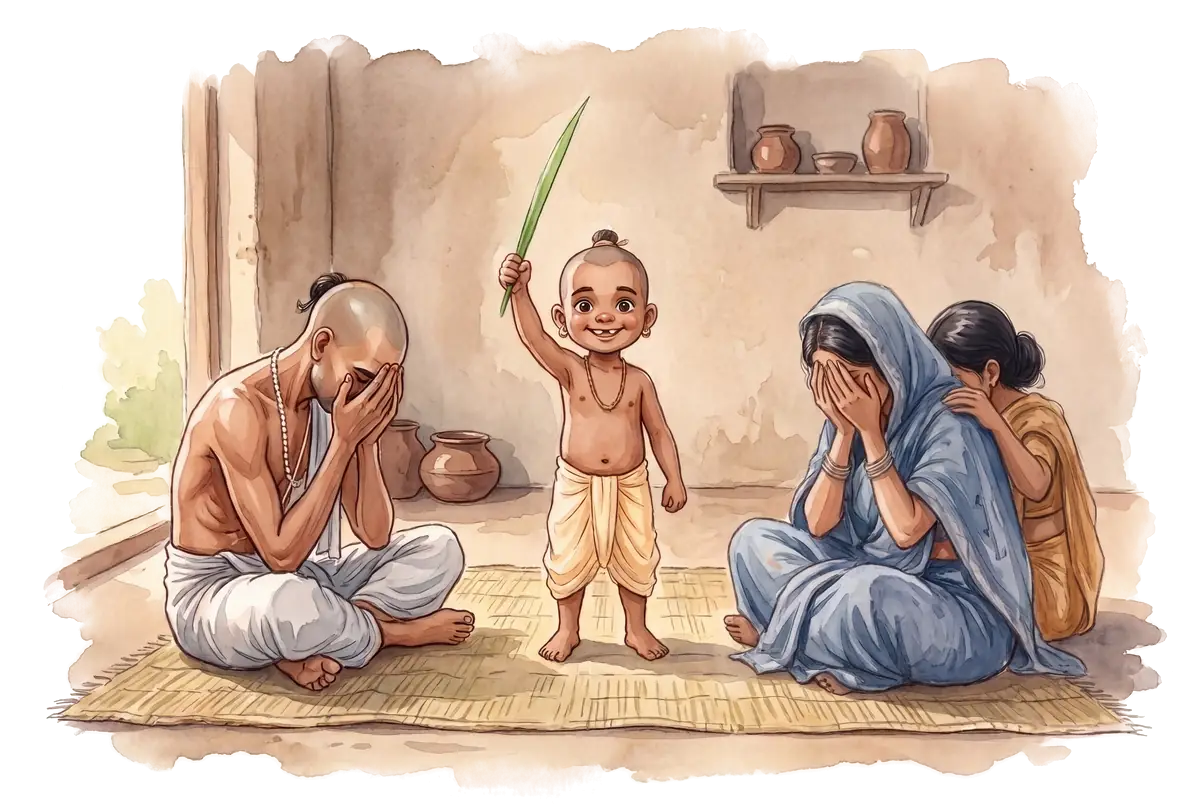
The series is written for readers aged 10 to 16. The Mahabharata runs on questions that children start asking around ten. Is a promise worth keeping when it hurts someone? What do you do about a cousin who always wins? The people in the story are rarely all good or all bad. In the Prologue, Ganesha tells readers to keep a list of heroes and villains. By the end of Book One he warns them they will need a fresh page, and at the very end of Book Three he asks to see the list.
Younger children who love myths can enjoy it read aloud. You know your child best.
The hard moments in Book One, and how the book tells them
People die in the Mahabharata from the first chapter on. The Vow tells each death honestly and briefly, usually in a sentence or two, and never in gory detail. The paintings in these chapters show the struggle or the place, never a wound. Births that come from gods or sages are told as blessings, with no physical detail.
| The moment | Chapter | How the book handles it |
|---|---|---|
| Ganga and her sons | 1, The River Goddess | The queen lays each newborn son on the river, and the current carries him away. When the king stops her, she explains that the boys were gods under a curse, set free at birth. The eighth son lives, and the pictures show him safe in her arms. |
| Amba walks into the fire | 3, Amba's Fire | Bhishma carries Amba off from her own swayamvara, and the king she loves turns her away. After twelve years of hard vows, the god Shiva promises she will be born again to bring Bhishma down. She walks into a pyre by the river, in one sentence. The painting is her silhouette before the fire at dusk. |
| Pandu's death | 6, The Hunter's Curse | Pandu shoots a stag that is really a sage, who curses him as he dies. Years later Pandu forgets the curse while walking alone with his wife Madri, and the book says only that he died there. Madri goes with him onto the funeral fire, also in one sentence. That page's painting is an empty swing under flowering trees. |
| Bhima poisoned | 7, Poison and the Serpent Kingdom | Duryodhana feeds Bhima poisoned sweets and pushes him, tied up, into the river. The serpent people's bites cancel the poison, and he comes home stronger. The chapter is just as honest about Bhima's rough games with his cousins. |
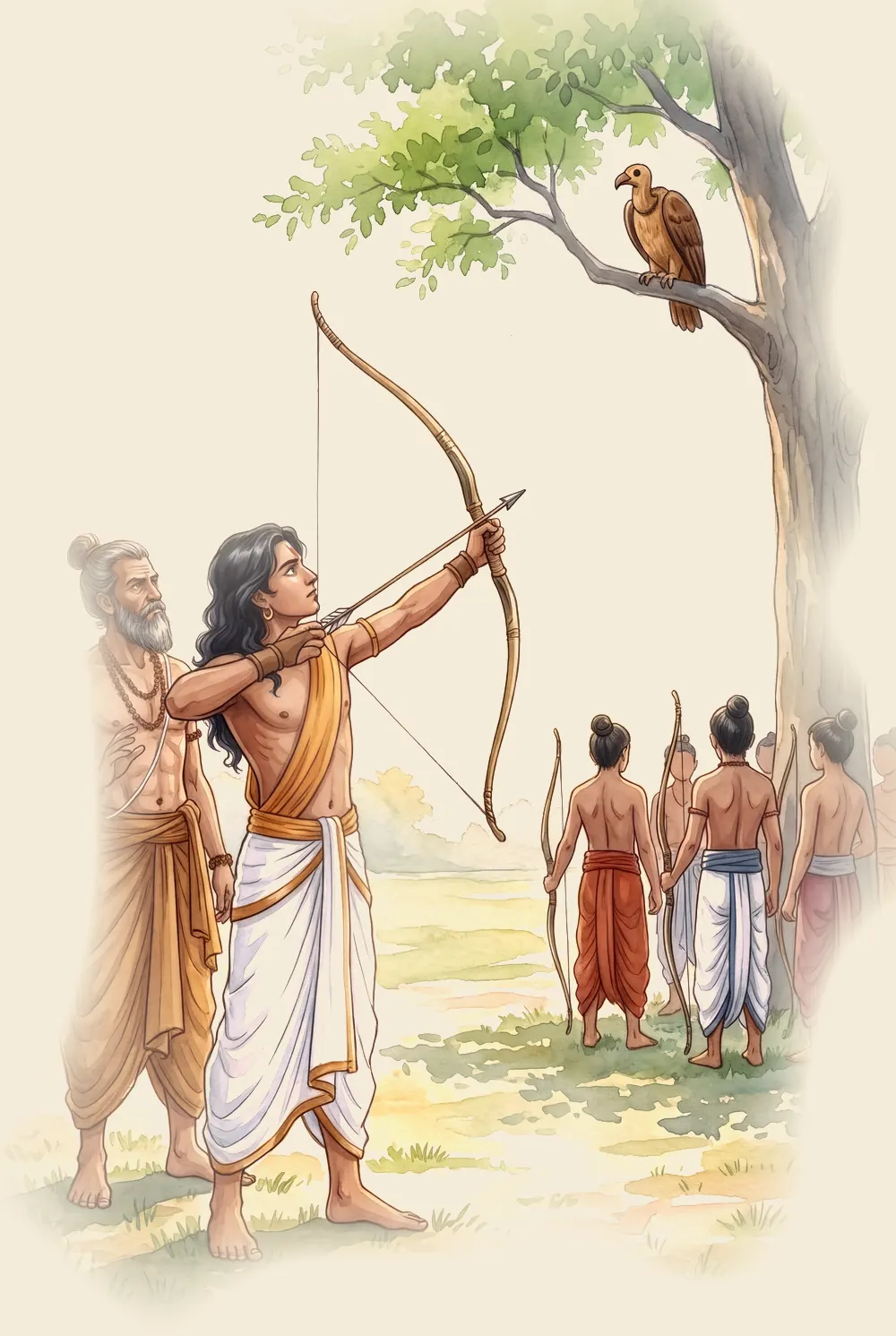
| Ekalavya's thumb | 10, The Thumb | Drona refuses to teach Ekalavya because he is a Nishada, then asks for his right thumb as a teacher's fee. The page ends as Ekalavya reaches for his knife, and the next finds his hand bound in cloth. No cut is described or painted. The hunting dog in this chapter is unhurt. |
| The house of lac | 13, The House That Burned | The Pandavas escape a house built to burn them, and the man who built it dies inside. So do a forest woman and her five sons, asleep after a feast. Krishna's question at the end asks the reader to think about them. The paintings show the house burning at night and Bhima with a torch at a glowing doorway. |
| The rakshasas | 14, Rakshasas of the Forest | Rakshasas eat people in this story, though nobody is eaten on the page. Bhima kills Hidimba at the end of a wrestling match, in two short sentences, and marries his sister Hidimbi. Bhima tells his fight with Baka afterward, mostly about thrown trees and eaten rice. The chapter is full of jokes. |
| The burning forest | 17, The Burning Forest | Arjuna and Krishna help the fire god burn the Khandava forest and shoot the animals that run. It takes a few sentences, and the paintings show flames and fleeing birds. Afterward, Krishna says the creatures had done nothing to Arjuna or to him. |
| Jarasandha and Shishupala | 18, The Palace of Illusions | After thirteen days of wrestling, Bhima tears King Jarasandha in two, told in one plain sentence. Later, after a hundred pardons, Krishna's discus kills Shishupala, and a light rises out of him and goes into Krishna. The pictures show the wrestling hold and that light. |
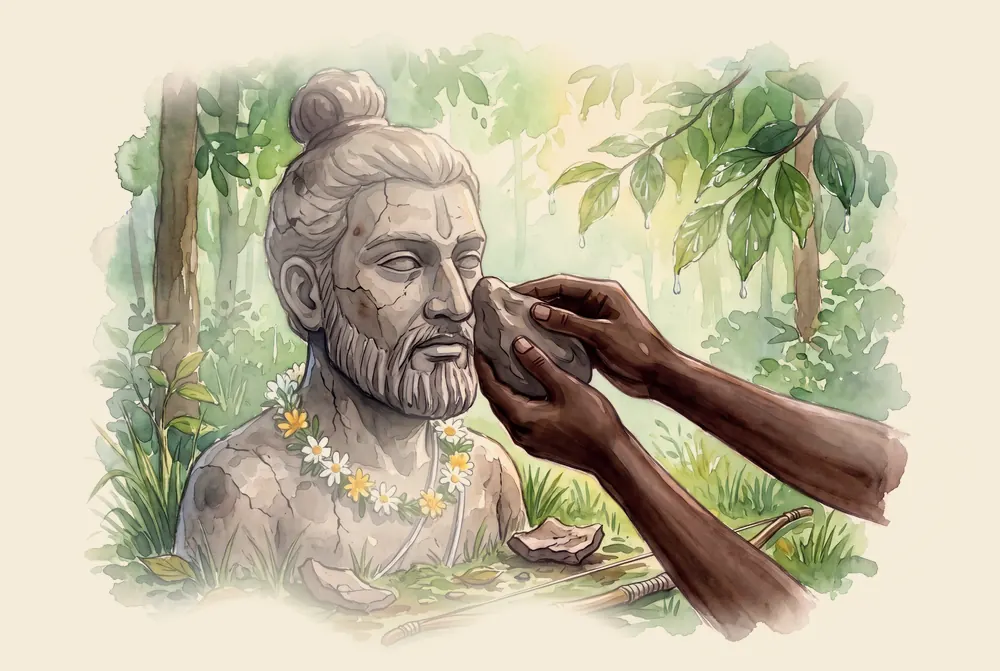
Ekalavya, and Karna in chapter 11, are both looked down on for their birth, and the book shows it as unfair. Draupadi's marriage to five brothers in chapter 16 is stated plainly. Where the book follows a popular telling over the old text, the sources page says so.
The hard moments in Book Two, The Dice
Book Two is darker than Book One in places, and most of its hardest scenes are about how Draupadi is treated. They are told plainly, without graphic detail, and the book keeps the reader's eye on what she says and on who speaks up for her.
| The moment | Chapter | How the book handles it |
|---|---|---|
| A Handful of Rice | 1, Shakuni's Dice | In a Tale Within the Tale, Shakuni's father and brothers are jailed with one handful of rice a day, and they give it all to him so that one of them will live. They die one by one in the dark, in a single line: "One by one they grew too weak to sit up, and then too weak to speak." |
| The dice hall | 2, Draupadi's Question | Duhshasana drags Draupadi into the hall by her hair, and at Karna's word he begins to pull away her cloth. She calls on Krishna, and the cloth never ends: lengths of every color pile up at Duhshasana's feet, and she stays covered. The chapter turns on her question to the elders, on Vikarna, who answers it, and on the kings who sit silent. |
| Jayadratha | 7, The King Who Stole a Queen | King Jayadratha asks Draupadi to leave her husbands, and when she refuses he drags her to his chariot. Her husbands catch him the same day. He sets her down and runs, and they bring him back in chains, with his head shaved except for five tufts, and let him go. |
| The lake | 9, The Lake of Questions | Four brothers drink from a lake without answering the spirit who guards it, and fall dead at the water's edge. Yudhishthira answers its questions, and all four are brought back to life. |
| Kichaka | 10, The Year of Disguises | At King Virata's court the queen's brother pursues Draupadi, who is in disguise as a maid, and kicks her in front of the king. Bhima kills him at night in an empty hall, and the fight is only heard, as crashing and roaring. When Kichaka's family try to burn Draupadi on his pyre, Bhima drives them off, and their deaths take one sentence. |
| The edge of war | 13 to 15 | Peace fails and eighteen armies gather at Kurukshetra. The book ends with the conches, before the first day of the battle. |
The hard moments in Book Three, The War
This is the book of the war, and many people die in it, some of them young. Each death is named plainly, usually in a sentence or two, away from wounds. It stays with the choices people make and with the people who grieve, and after many chapters Krishna asks whether his own choices were fair.
| The moment | Chapter | How the book handles it |
|---|---|---|
| Bhishma falls | 2, The Grandsire's Ten Days | In the first ten days, Virata's young son Bhuminjaya, whom readers met in Book Two, and Arjuna's son Iravan fall, each in a line or two. On the tenth day Arjuna shoots at Bhishma from behind Shikhandi, and the old man falls onto a bed of arrows that holds him off the ground. He lives on, asks Arjuna for a pillow, and tells Duryodhana to make peace. |
| Abhimanyu | 3, The Wheel of Death | Arjuna's son, who is sixteen, breaks into Drona's wheel-shaped army alone, and his uncles are held back at the gap. Six warriors surround him and break his bow, his sword and his shield. "Abhimanyu was still getting to his knees when the mace came down. He did not get up again." Many readers feel this death most. In chapter 4 Arjuna hears the news, and Abhimanyu's mother and his young wife weep together. |
| Jayadratha | 4, Before Sunset | Arjuna swears to kill Jayadratha before sunset or walk into a fire, and goes to the fire's edge when the sky goes dark. Krishna has only hidden the sun. Jayadratha steps out to watch, and Arjuna's arrow kills him. |
| Satyaki and Bhurishravas | 5, The Arm and the Sword | Bhurishravas raises his sword over Satyaki, and Arjuna's arrow cuts off his arm. Bhurishravas sits down to wait for death, and though men on both sides shout at him to stop, Satyaki kills him. "When it was done, nobody cheered." |
| Ghatotkacha and Drona | 6, "Ashwatthama Is Dead" | Karna throws Indra's spear at Bhima's son Ghatotkacha, who "fell the way a mountain falls." Krishna dances for joy, because the spear was meant for Arjuna, and Arjuna and Yudhishthira are shocked by it. Drona kills King Drupada and King Virata. Then Yudhishthira's half-truth makes Drona put down his bow, and he is killed sitting with his eyes closed, saying his son's name. |
| Arjuna's sword | 7, Give Away Your Bow | Yudhishthira taunts Arjuna, and Arjuna draws his sword on him, then for a moment turns its point toward himself. Krishna talks him down, and the brothers make peace. A sensitive reader may want to talk this scene over. |
| Duhshasana and Karna | 8, The Sinking Wheel | Bhima keeps his vow from the dice hall. The book tells it through Karna's eyes: "Bhima knelt. The dust blew between them, and Karna turned his face away." Arjuna kills Karna's son in front of him. Karna's wheel sinks, and Arjuna shoots him while he struggles to free it. A light leaves his body and goes into the sun. |
| Duryodhana | 9, The Lake and the Mace | Shalya and Shakuni die on the last day, each in a few lines. Duryodhana hides in a lake, then fights Bhima with the mace, and Bhima breaks his thighs with a blow the rules forbid. Yudhishthira stops Bhima from setting his foot on him, and Balarama calls it shameful. Duryodhana is left lying on the field with flowers falling on him. |
| The night raid | 10, Night of the Owl | The hardest chapter in the series. After watching an owl kill sleeping crows, Ashwatthama goes into the sleeping Pandava camp, though Kripa begs him not to. The book does not go in with him: "The camp had been asleep when he went in. A little before dawn it was quiet again, and he came out." He names the dead, among them Draupadi's five sons. Draupadi learns it from Nakula's face. Read this chapter yourself first. |
| The mothers | 11, The Mothers' Grief | The women of both sides walk out to the field. Gandhari sees her son's face for the first time, and Abhimanyu's young wife holds his head in her lap and talks to him. The field is shown through what is left on it: fallen chariots, banners and armor. The funeral fires burn all night, and Kunti tells her sons that Karna was their brother. |
| Bhishma's death | 12, Lessons from a Bed of Arrows | After fifty-eight nights Bhishma chooses his time. The arrows fall away, every wound closes, and his life climbs the sky like a shooting star. It is one of the gentlest deaths in the series. |
| The old king and queen | 13, The Last Walk into the Forest | Abhimanyu's son is born dead, and Krishna gives him life. Years later Vidura dies leaning against a tree in the forest, and the blind king, Gandhari and Kunti sit down calmly together to meet a forest fire. Sanjaya walks away to the river, and their deaths are not described. |
| The fall of the Yadavas | 14, The Fall of the Yadavas | Thirty-six years after the war, Krishna's people quarrel while drinking at Prabhasa, by the sea, and kill one another with grass that turns to iron. A hunter's arrow strikes Krishna in the heel, and he tells the hunter, "Don't be afraid," and rises into the sky. On the road home robbers carry off many of the women Arjuna is guarding, and he cannot stop them. |
| The road to heaven | 15, The Road to Heaven | Draupadi and the four brothers fall one by one in the snow, and Yudhishthira walks on with the dog. In heaven he is shown a dark place where he hears his family crying out in pain. It turns out to be an illusion, and the book ends with every one of them in light, Karna among them. |
| The serpent | Epilogue, The Broken Tusk | Ganesha tells how the serpent Takshaka killed old King Parikshit, and how his son lit a fire to burn every snake in the world. Ganesha keeps it short: "That part I wrote quickly. I don't like to read it back." A boy named Astika stops the fire. |
Reading alone or reading aloud
The books are written for both. Reading aloud helps most where a child may want to stop and ask. In Book One those are chapters 3, 6 and 13, in Book Two chapters 2 and 10, and in Book Three chapters 3, 10 and 11. If your child is sensitive, read those yourself first. For many families the names are the hardest part, so keep How to Say the Names open beside you.
Talking it over with Krishna's questions
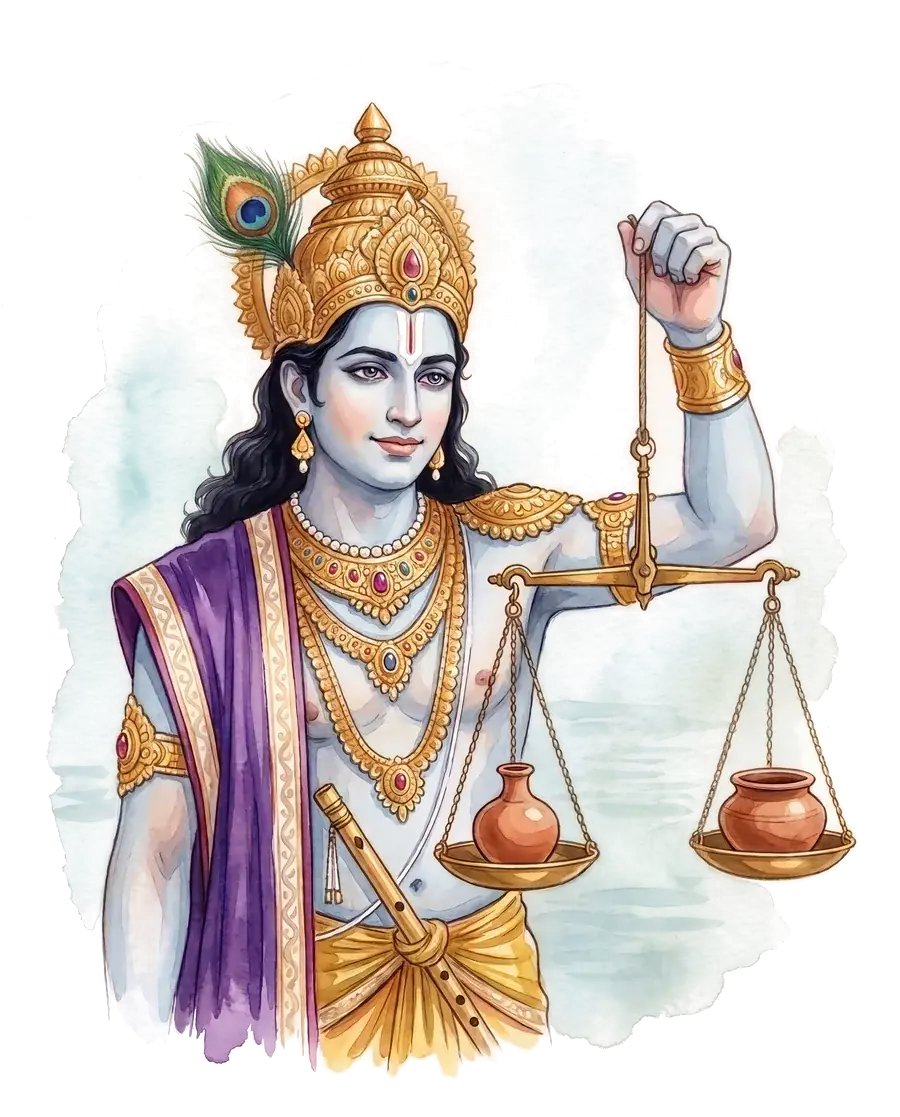
After key scenes, a page called The Right Path has Krishna ask what the reader would have done. There are no model answers. Krishna often says what he thinks, and children may disagree with him, with each other and with you, as long as they can say why.
Deciding about Books Two and Three
Book Two, The Dice, comes out on December 7, 2026, and Book Three, The War, on December 14, 2026. A child who was comfortable with Book One will usually be fine with Book Two. Its hardest scenes are about cruelty to Draupadi, and the book keeps them on her question and on the people who stayed silent.
Book Three asks the most of a young reader. If you are unsure, read chapter 10, Night of the Owl, yourself first. It is the hardest chapter in the series, and a child who can manage it can manage the rest. Chapter 3, where Abhimanyu dies at sixteen, is the death many readers feel most, and chapters 14 and 15, where Krishna leaves the world and the brothers fall on the mountain, are sad in a quieter way. The series ends in light, with Yudhishthira's whole family together again in heaven.
A child who has followed the family through two books usually wants to know how it ends. Reading Book Three aloud, a chapter at a time, leaves room to stop. Teachers can find the same chapters, with notes for class, in the guides to teaching The Dice and teaching The War.
Questions parents ask
What age are the books for?
Ten and up. The series is written for readers aged 10 to 16, to be read alone or aloud. The chapters are short and every page has a watercolor painting, so a confident ten-year-old can manage them alone.
Is the Mahabharata violent?
It is the story of a family that ends in a war, so there are fights and deaths, and Book Three is about the war itself. In all three books a death is told plainly and briefly, with no gory detail. In The Vow the paintings of these moments never show a wound.
Does my child need to know Hindu traditions first?
No. The book explains customs, and words like rakshasa and swayamvara, as they come up. Families who grew up with these stories will recognize them.
Which chapter should I read ahead?
Start with Book Three, chapter 10, Night of the Owl, where Ashwatthama attacks the sleeping Pandava camp and Draupadi's five sons are among the dead. It is the hardest chapter in the series. In Book Two, read chapter 2, Draupadi's Question, where Draupadi is dragged into the dice hall.