Names from the Mahabharata
Mahabharata Baby Names and What They Mean
Many Indian names come from the Mahabharata. Arjun means "bright, white," like daylight or silver, Karan means "ear," and Subhadra means "very fortunate."
Arjun means bright, Karan means ear, and Subhadra means very fortunate. These and 42 more names from The Vow, The Dice and The War, the three books of the illustrated Mahabharata, have Sanskrit meanings, and each belongs to someone in the story.
Girls' names and boys' names at a glance
A few are given to children all the time, like Arjun, Karan and Radha. Others, like Yudhishthira, are rare.
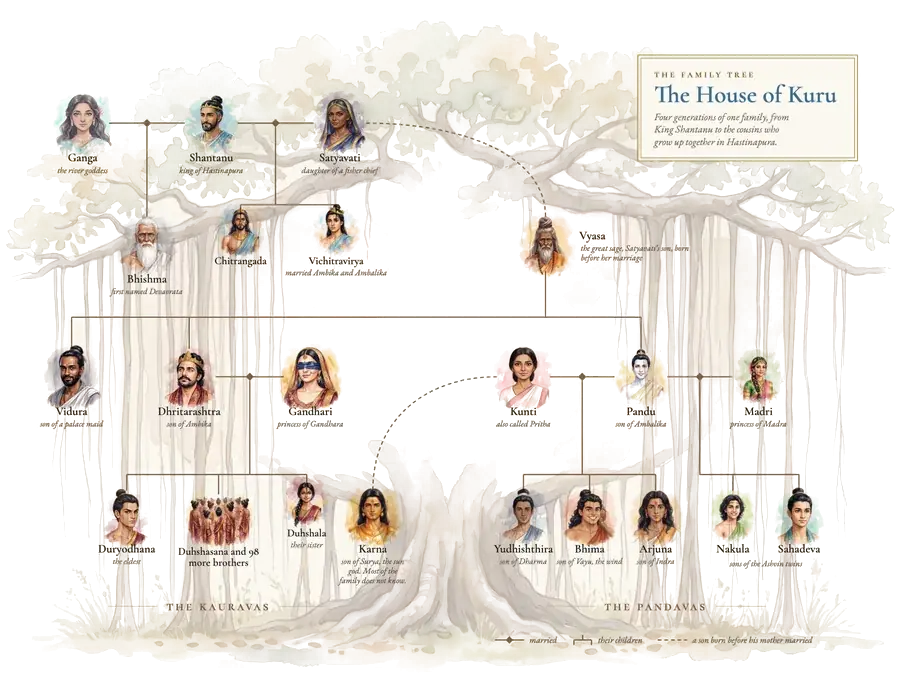
Girls' names: Amba, Ambalika, Ambika, Damayanti, Draupadi, Gandhari, Ganga, Kripa, Kunti, Madri, Panchali, Radha, Satyavati, Savitri, Subhadra, Urvashi, Uttara.
Boys' names: Arjuna, Balarama, Bhima, Bhishma, Devavrata, Dhananjaya, Drona, Ganesha, Govinda, Hanuman, Karna, Kripa, Krishna, Nakula, Nala, Parikshit, Partha, Pradyumna, Sahadeva, Sanjaya, Satyaki, Satyavan, Shantanu, Surya, Vidura, Vyasa, Yudhishthira.
Mahabharata names from A to Z
Say the part in capital letters a little more strongly than the rest.
A
Amba
AM-baa
अम्बा
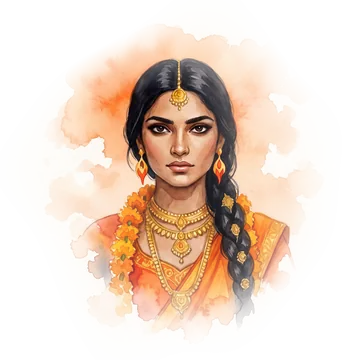
Meaning: mother, a word of respect for a good woman. It is also a name of the goddess Durga.
Girl's name
The eldest princess of Kashi. Bhishma carried her off from her swayamvara, and the king she loved would not take her back, so she went looking for justice. Amba's story
Ambalika
am-BAA-li-kaa
अम्बालिका
Meaning: mother.
Girl's name, rarely given
Amba's youngest sister, who married King Vichitravirya of Hastinapura. Her son Pandu became the father of the five Pandava brothers.
Ambika
AM-bi-kaa
अम्बिका
Meaning: mother. It is also a name of the goddess Parvati.
Girl's name
Amba's middle sister, who also married King Vichitravirya. Her son Dhritarashtra was born blind, and he became the father of the hundred Kauravas.
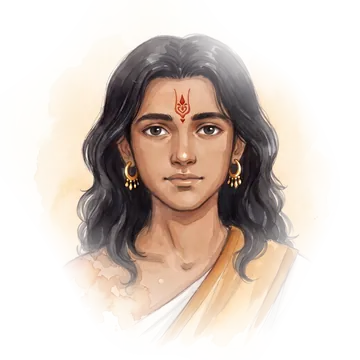
Arjuna
AR-ju-na
अर्जुन
Also spelled Arjun
Meaning: white, bright, clear, the color of daylight. In old hymns the word is also used for silver.
Boy's name
The third Pandava, born to Kunti by the blessing of Indra. At Drona's archery test he saw only the bird's eye, and later he won Draupadi at her swayamvara. Arjuna's story
B
Balarama
ba-la-RAA-ma
बलराम
Also spelled Balram, Balaram
Meaning: Rama the strong. Bala is strength, and rama means pleasing or charming.
Boy's name
Krishna's elder brother. When Arjuna carried off their sister Subhadra, Balarama roared for war until Krishna talked the Yadavas around.
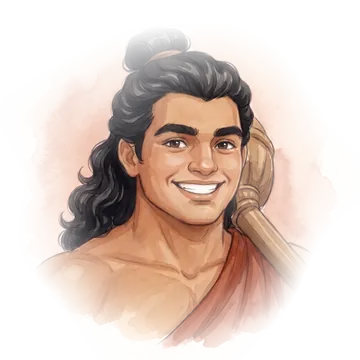
Bhima
BHEE-ma
भीम
Also spelled Bhim, Bheem
Meaning: fearsome, formidable, tremendous.
Boy's name
The second Pandava, born by the blessing of Vayu, the wind, and the hungriest boy in Hastinapura. When Duryodhana poisoned him, the Nagas under the river gave him the strength of ten thousand elephants. Bhima's story
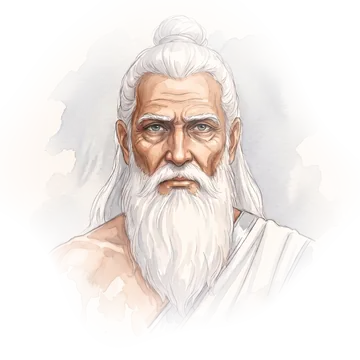
Bhishma
BHEESH-ma
भीष्म
Also spelled Bheeshma
Meaning: terrible, dreadful. The gods gave him the name for the vow he made.
Boy's name, rarely given
Born Devavrata, the son of King Shantanu and the river goddess Ganga. He swore never to marry so that Satyavati's son could be king, and the gods called him Bhishma, the one of the terrible vow. Bhishma's story
D
Damayanti
da-ma-YAN-tee
दमयन्ती
Also spelled Damyanti
Meaning: subduing, taming. Damayanti is also the name of a kind of jasmine.
Girl's name
A princess of Vidarbha in the tale of Nala, which the sage Brihadashva tells Yudhishthira. Four gods came to her swayamvara, and she chose Nala over all of them. When he left her in the forest, she found him again.
In Book Two, chapter 5 (Arjuna in Heaven)
Devavrata
day-VAV-ra-ta
देवव्रत
Also spelled Devavrat
Meaning: devoted to the gods. A devavrata is also a vow made to the gods.
Boy's name
Bhishma's first name. His mother Ganga raised him in her own waters and sent him to the greatest teachers in the three worlds.
Dhananjaya
dha-NAN-ja-ya
धनञ्जय
Also spelled Dhananjay
Meaning: winning wealth. Dhana is wealth, and jaya is winning.
Boy's name
One of Arjuna's names. In the cattle raid he tells Prince Bhuminjaya that he was called Dhananjaya because he had won the wealth of every land. Arjuna's story
In Book Two, chapter 11 (The Cattle Raid)
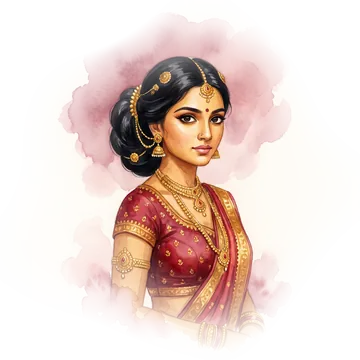
Draupadi
DRAU-pa-dee
द्रौपदी
Also spelled Draupathi
Meaning: daughter of Drupada.
Girl's name, rarely given
She rose from the fire of King Drupada's sacrifice. Arjuna won her at her swayamvara, and she married all five Pandava brothers. Draupadi's story
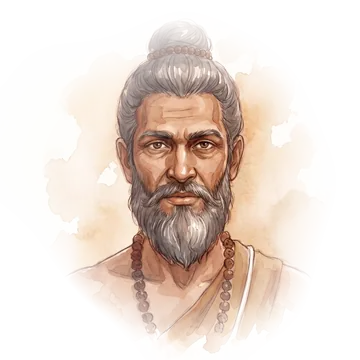
Drona
DRO-na
द्रोण
Also called Dronacharya
Meaning: a wooden vessel or bucket. The epic says he was born in a vessel called a drona.
Boy's name, rarely given
A poor brahmin and the finest teacher of weapons in the land. He fished the princes' ball out of a well with a chain of grass blades, and Bhishma made him their teacher. Drona's story
G
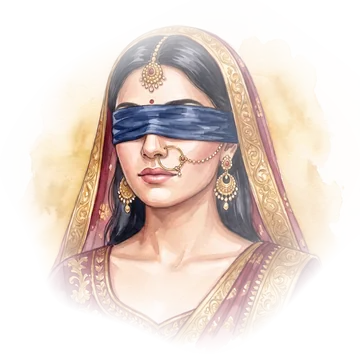
Gandhari
gaan-DHAA-ree
गान्धारी
Meaning: princess of Gandhara, a kingdom in the mountains to the northwest.
Girl's name, rarely given
When she married Dhritarashtra, a prince born blind, she tied a cloth over her own eyes. She became the mother of a hundred sons and a daughter. Gandhari's story
Ganesha
ga-NAY-sha
गणेश
Also spelled Ganesh
Meaning: lord of the ganas, the companions of the god Shiva.
Boy's name
The elephant-headed god who wrote the Mahabharata down as the sage Vyasa told it. When his pen snapped, he broke off his own tusk and kept writing.
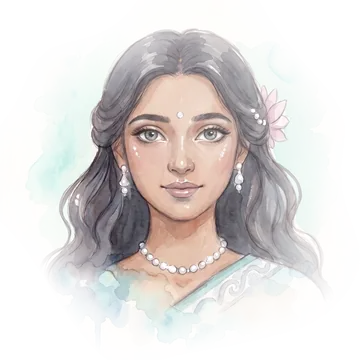
Ganga
GAN-gaa
गङ्गा
Also called Ganges
Meaning: the river Ganges. The old word means "swift-goer."
Girl's name
The river goddess, who married King Shantanu on one condition, that he would never question anything she did. She was Bhishma's mother.
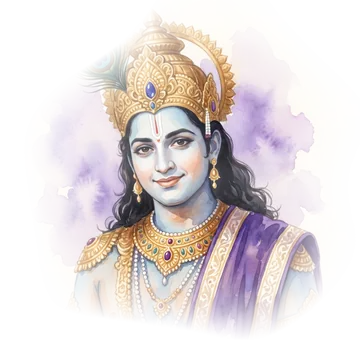
Govinda
go-VIN-da
गोविन्द
Also spelled Govind
Meaning: a chief herdsman. Go is the Sanskrit word for cow.
Boy's name
A name of Krishna, who grew up among cowherds. In the dice hall Draupadi calls out to him by this name. Krishna's story
In Book Two, chapter 2 (Draupadi's Question)
H
Hanuman
HA-nu-maan
हनुमान्
Also spelled Hanumaan
Meaning: having (large) jaws. Hanu is the jaw.
Boy's name
The great monkey hero, son of Vayu the wind and so Bhima's brother. Bhima finds him lying across a mountain path and cannot move his tail, and Hanuman promises to roar from the flagstaff of Arjuna's chariot.
In Book Two, chapter 6 (The Monkey in the Path), and Book Three
K
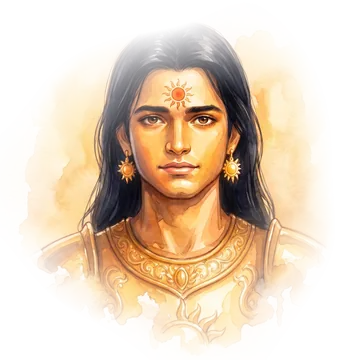
Karna
KAR-na
कर्ण
Also spelled Karan, Karn
Meaning: ear. He was born wearing golden earrings.
Boy's name
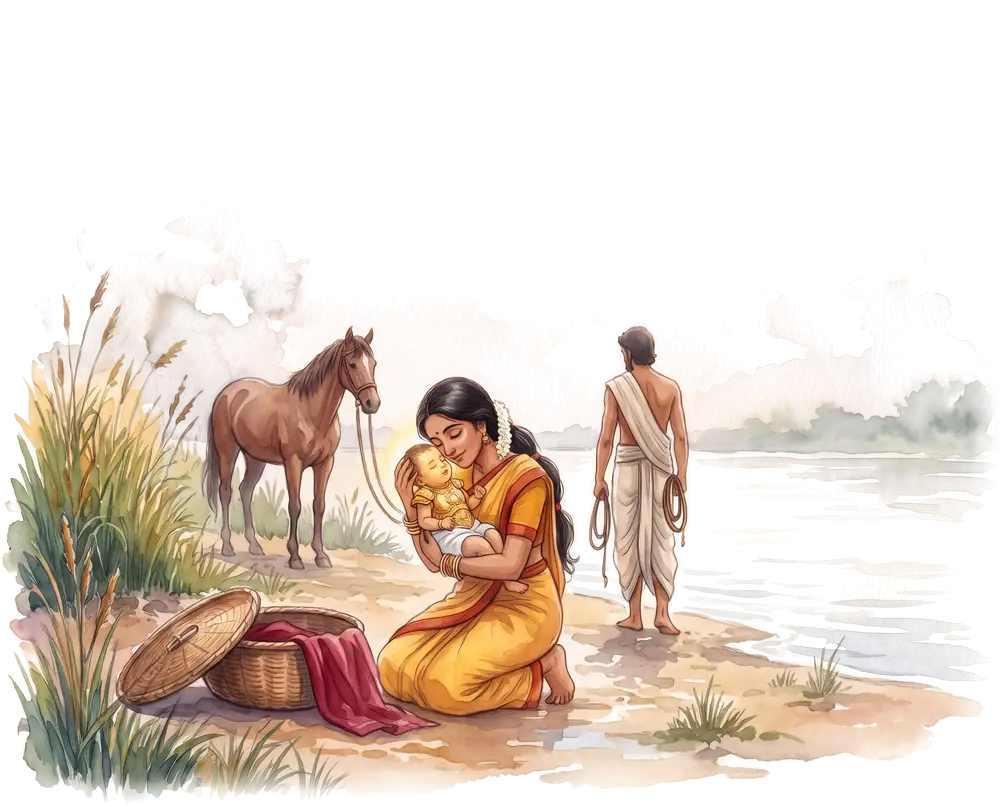
Kunti's first son, born in golden armor by the blessing of Surya, the sun. A charioteer and his wife found him in a basket on the river and named him Vasusena, "born with riches." Karna's story
Kripa
KRI-pa
कृप
Also called Kripacharya
Meaning: pity, compassion. Today Kripa (कृपा) is given mostly to girls.
Girl's or boy's name
Teacher of the young princes of Hastinapura. The epic says King Shantanu found him as a baby and took him home out of pity, kripa, and named him for it.
Krishna
KRISH-na
कृष्ण
Also spelled Krish, Kishan
Meaning: dark, dark blue.
Boy's name
Prince of the Yadavas of Dwaraka, the Pandavas' cousin and Arjuna's dearest friend. In The Vow he is the one who asks readers what they would have done. Krishna's story
Kunti
KUN-tee
कुन्ती
Also called Pritha, her birth name
Meaning: named for King Kuntibhoja of the Kunti people, who raised her as his own daughter.
Girl's name, rarely given
A Yadava princess, given a secret gift by a sage when she was a girl. She married Pandu and was the mother of Yudhishthira, Bhima and Arjuna. Kunti's story
M
Madri
MAA-dree
माद्री
Meaning: princess of Madra.
Girl's name, rarely given
Princess of Madra and Pandu's second wife. Her twin sons, Nakula and Sahadeva, were born by the blessing of the twin gods called the Ashvins.
N
Nakula
NA-ku-la
नकुल
Also spelled Nakul
Meaning: mongoose. In Indian stories the mongoose is the brave little animal that fights snakes.
Boy's name
One of the Pandava twins, Madri's son. He is the handsome one, good with horses and swords.
Nala
NA-la
नल
Also spelled Nal
Meaning: a kind of tall reed.
Boy's name, rarely given
King of the Nishadhas in Brihadashva's tale. He lost everything to his brother at dice and left Damayanti in the forest, then won it all back.
In Book Two, chapter 5 (Arjuna in Heaven)
P
Panchali
paan-CHAA-lee
पाञ्चाली
Meaning: princess of Panchala.
Girl's name
Another name for Draupadi, from her father's kingdom of Panchala. Kings and princes from all over the land came to Panchala for her swayamvara.
Parikshit
pa-RIK-shit
परीक्षित्
Also spelled Pariksit
Meaning: spreading all around. In the oldest hymns the word describes Agni, the fire, and heaven and earth.
Boy's name
The son of Abhimanyu and Uttara, and Arjuna's grandson. He was born after the war, and Krishna gave him life. Yudhishthira crowned him king of Hastinapura.
In Book Three, from chapter 10 (Night of the Owl) to the Epilogue (The Broken Tusk)
Partha
PAAR-tha
पार्थ
Meaning: son of Pritha.
Boy's name
Pritha was Kunti's birth name, so any of her sons can be called Partha. In the epic the name belongs most of all to Arjuna. Arjuna's story
Pradyumna
pra-DYUM-na
प्रद्युम्न
Meaning: the pre-eminently mighty one, mighty above all others.
Boy's name
Krishna's son, one of the four warriors who knew the way into Drona's wheel.
In Book Three, chapter 3 (The Wheel of Death) and chapter 14 (The Fall of the Yadavas)
R
Radha
RAA-dhaa
राधा
Meaning: prosperity, success.
Girl's name
The charioteer Adhiratha's wife. She lifted a baby in golden armor out of a basket on the river and raised him as her own son, Karna. (She is a different Radha from the one in the later songs about Krishna.)
S
Sahadeva
sa-ha-DAY-va
सहदेव
Also spelled Sahadev
Meaning: with the gods.
Boy's name
The youngest Pandava, Nakula's twin. He says little and finds his way by the stars.
Sanjaya
SAN-ja-ya
सञ्जय
Also spelled Sanjay
Meaning: completely victorious, triumphant.
Boy's name
Dhritarashtra's charioteer and counselor. The sage Vyasa gave him the power to see the whole war, so that he could tell the blind king everything.
In Book Two, chapters 13 and 15, and Book Three
Satyaki
SAAT-ya-ki
सात्यकि
Meaning: son of Satyaka. His own name was Yuyudhana.
Boy's name, rarely given
A Yadava warrior and Arjuna's pupil. He rode with Krishna to Hastinapura and saw Duryodhana's plan to seize Krishna in time, and in the war he fought through the whole Kaurava army to find Arjuna.
In Book Two, chapter 13 (The Peace Mission), and Book Three, chapter 5 (The Arm and the Sword)
Satyavan
SAT-ya-vaan
सत्यवान्
Also spelled Satyavaan
Meaning: truthful.
Boy's name, rarely given
A prince living in the forest with his blind father, in the tale the sage Markandeya tells. He had only a year to live when Savitri chose him.
In Book Two, chapter 7 (The King Who Stole a Queen)
Satyavati
SAT-ya-va-tee
सत्यवती
Also spelled Satyawati
Meaning: truthful.
Girl's name
A fisher chief's daughter who ferried travelers across the Yamuna. When King Shantanu wished to marry her, her father's terms led to Bhishma's vow.
Savitri
saa-VIT-ree
सावित्री
Meaning: of Savitr, the sun god. In the old hymns Savitri is the name of the sun's daughter.
Girl's name
A princess of Madra in Markandeya's tale. When Yama, the god of death, came for her husband Satyavan, she followed him until he gave Satyavan's life back.
In Book Two, chapter 7 (The King Who Stole a Queen)
Shantanu
SHAN-ta-nu
शन्तनु
Also spelled Santanu
Meaning: wholesome, good for the body and the person.
Boy's name
King of Hastinapura, who married the river goddess Ganga and, years later, Satyavati. He gave his son Bhishma the power to choose the moment of his own death.
Subhadra
su-BHAD-raa
सुभद्रा
Meaning: very glorious, very fortunate.
Girl's name
Krishna's sister. When Arjuna carried her off, she took the chariot's reins herself, and later she became the mother of Abhimanyu.
Surya
SOOR-ya
सूर्य
Meaning: the sun, and the god of the sun.
Boy's name
When Kunti, still a girl, tried the secret gift a sage had given her, Surya came to her. He gave her a son born in golden armor, Karna.
U
Urvashi
UR-va-shee
उर्वशी
Also spelled Urvasi
Meaning: widely extending. In the oldest hymns Urvashi is the dawn, pictured as an apsara.
Girl's name
The loveliest apsara in Indra's heaven. When Arjuna turned her away, she cursed him to live as a dancer, and the curse became his disguise in the year of hiding.
In Book Two, chapter 5 (Arjuna in Heaven) and chapter 10 (The Year of Disguises)
Uttara
UT-ta-raa
उत्तरा
Meaning: higher, upper, northern.
Girl's name
King Virata's daughter, who learned singing and dancing from Brihannala, Arjuna in disguise. She married Arjuna's son Abhimanyu, and their son Parikshit became king after the Pandavas.
In Book Two, chapter 10 (The Year of Disguises), and Book Three
V
Vidura
VI-du-ra
विदुर
Also spelled Vidur
Meaning: wise, knowing, intelligent.
Boy's name
Brother of Dhritarashtra and Pandu, born to a palace maid, and the wisest man at court. He warned the Pandavas about the house of lac in a language almost no one else could follow.
Vyasa
VYAA-sa
व्यास
Also spelled Vyas, Ved Vyas
Meaning: arranger or compiler. Tradition says he arranged the Vedas.
Boy's name
The great sage who composed the Mahabharata and told it to Ganesha. He is the grandfather of both the Pandavas and the Kauravas.
Y
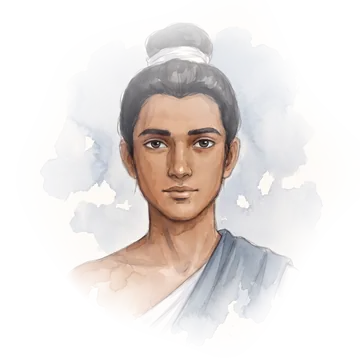
Yudhishthira
yu-DHISH-ti-ra
युधिष्ठिर
Also spelled Yudhishtir
Meaning: firm in battle.
Boy's name, rarely given
The eldest Pandava, born by the blessing of Dharma, the god who judges right and wrong. He does not tell lies, even small ones, and at the Rajasuya he became emperor. Yudhishthira's story
Names few parents choose
Some names in the story are seldom given to children, because of what the people who carry them do. Their meanings are still worth knowing, and they help when your child meets them in the story.
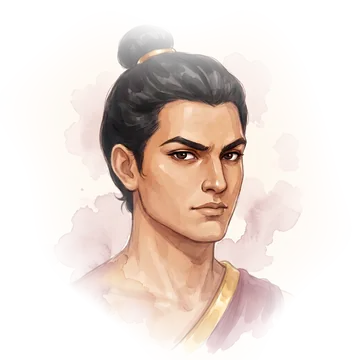
Duryodhana
dur-YO-dha-na
दुर्योधन
Also spelled Duryodhan
Meaning: hard to fight, hard to conquer.
The eldest of Dhritarashtra's hundred sons, sure the throne should be his. He poisoned his cousin Bhima when they were boys. Duryodhana's story
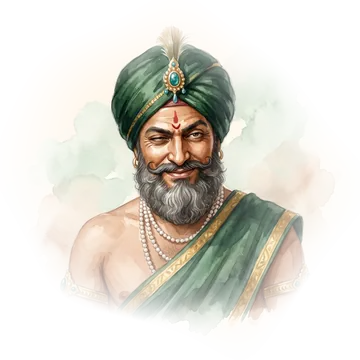
Shakuni
SHA-ku-ni
शकुनि
Also spelled Sakuni
Meaning: bird.
Gandhari's brother and Duryodhana's uncle, clever with words and even cleverer with a pair of dice. Shakuni's story
How the meanings were checked
Each meaning here comes from the Monier-Williams Sanskrit-English Dictionary (1899), the standard dictionary of old Sanskrit. Baby-name lists often give softer or longer meanings, but the dictionary's are plainer: Bhima means "fearsome" and Nakula means "mongoose."
Some names are about family or home. Draupadi means "daughter of Drupada," Gandhari means "princess of Gandhara," and Partha means "son of Pritha." A name the dictionary gives no meaning for is left out. Vikarna is out too, because the dictionary gives it two meanings that disagree, “having large ears” and “earless.”
Questions about Mahabharata names
What does the name Arjun mean?
Arjun is the modern spelling of Arjuna, a Sanskrit word for white, bright and clear, the color of daylight. In old hymns it is also used for silver, and it names a tall tree with pale bark. In the Mahabharata, Arjuna is the third Pandava brother, the archer who sees only the bird's eye.
Which Mahabharata names are used for girls?
Subhadra, Radha, Ganga, Satyavati, Ambika and Amba are the girls' names from Book One you are most likely to meet today. Savitri, Damayanti, Uttara and Urvashi come from Book Two. Panchali, Draupadi and Kunti are given less often. Kripa, a teacher's name in the epic, is now given mostly to girls, because the word means compassion.
Is it Arjun or Arjuna, Karan or Karna?
Both spellings are right. Arjuna and Karna are the Sanskrit forms. In Hindi and many other Indian languages the short a at the end is dropped, so families write Arjun, Bhim, Nakul and Sahadev. Karan is the everyday form of Karna.
Why is Abhimanyu not on this list?
Abhimanyu, the son of Arjuna and Subhadra, is a popular name, but the Sanskrit dictionaries list it only as his name and give no meaning for it. Baby-name websites offer several meanings, and they do not agree, so it is left out, and Ekalavya too, for the same reason.
Where this comes from: the meanings follow the Monier-Williams Sanskrit-English Dictionary (1899), read in the Cologne Digital Sanskrit Dictionaries. The stories follow K. M. Ganguli's English translation, as retold in The Vow, The Dice and The War. The name Vasusena is from Adi Parva §111, and how Drona and Kripa got their names is from Adi Parva §130 and §131. Pronunciations and Devanagari match the guide to saying the names, and Dhananjaya and Govinda follow its rule.