Stories from the Mahabharata
Mahabharata Stories for Kids
The Mahabharata (महाभारत, often spelled Mahabharat) tells one main story, the quarrel between the Pandavas and their cousins that ends in a great war at Kurukshetra, and hundreds of short stories and tales along the way. Four of the best-known moments of the main story are the dice game, the yaksha's questions, the Bhagavad Gita and Abhimanyu in the chakravyuha. The side stories are about ancestors, gods, sages and kings, and twelve of the best-known tales from the Mahabharata are retold for readers aged 10 to 16, each with new watercolor paintings.
From the main story
The main story, from Bhishma's vow to the great war and the road to heaven, is told across three books, The Vow, The Dice and The War. Four of its best-known moments are told as the books tell them, in the books' own words and paintings. The whole story, short, is in the Mahabharata in five minutes.
Book Two · chapters 1–3
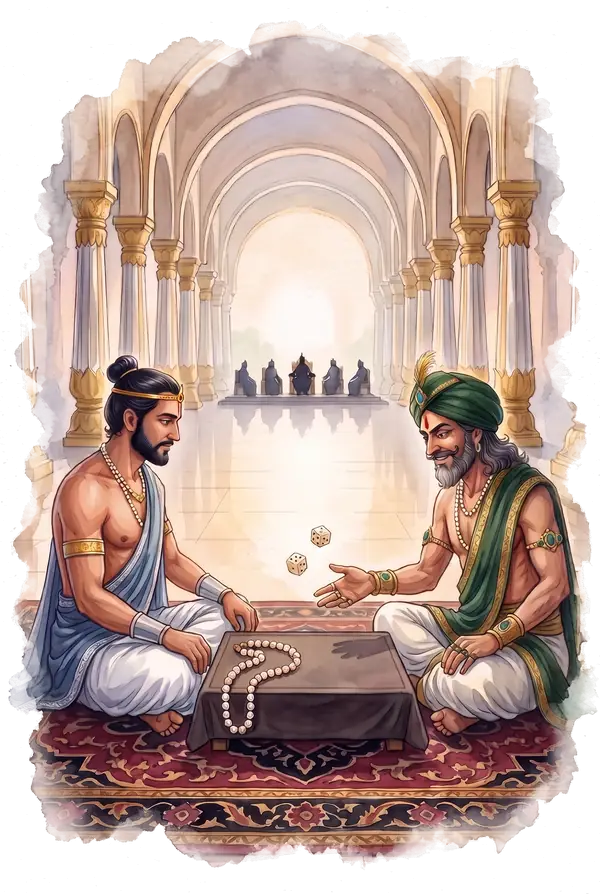
The Dice Game and Draupadi's Question
Yudhishthira stakes everything on Shakuni's dice, and Draupadi asks the hall a question none of the kings will answer.
Read the story
Book Two · chapter 9
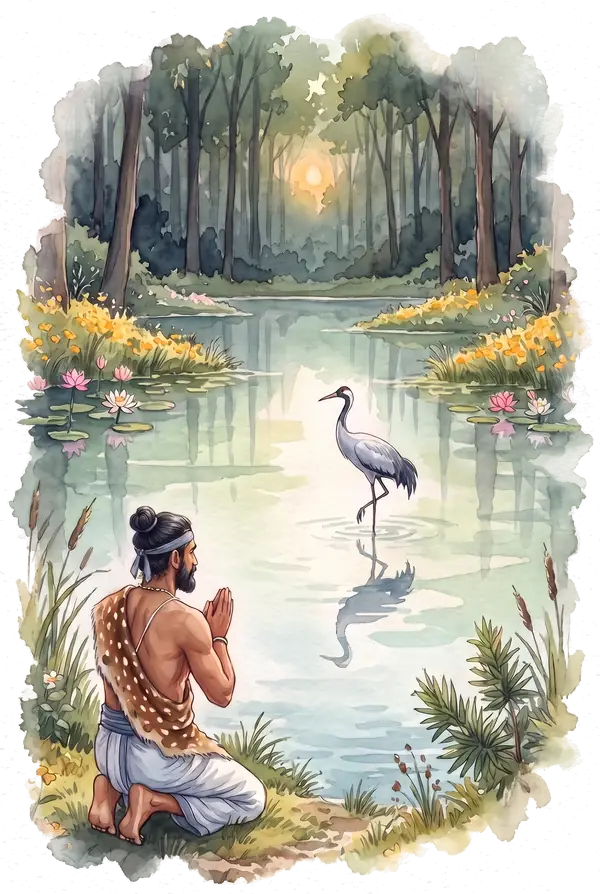
The Yaksha's Questions
At a lake in the forest, Yudhishthira answers a spirit's questions to bring his four brothers back to life.
Read the story
Book Three · chapter 1
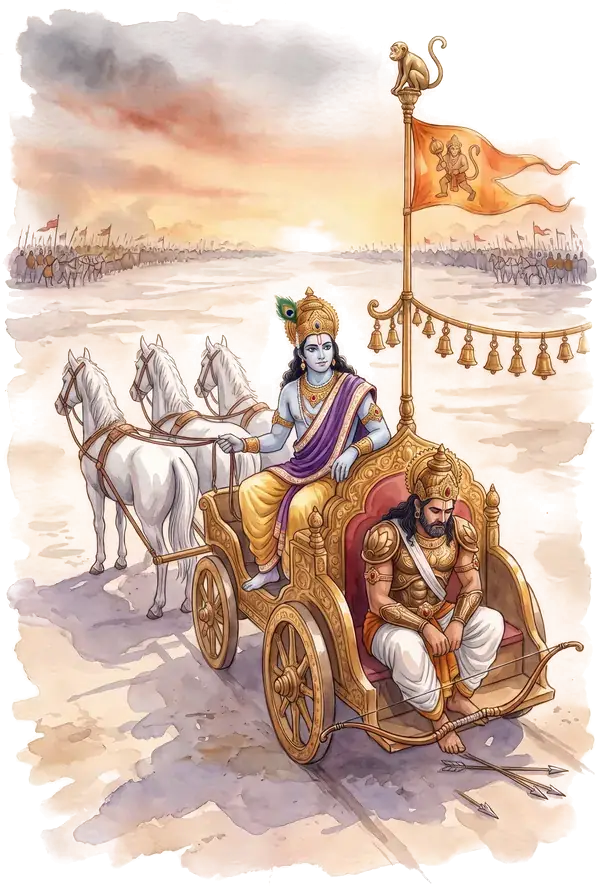
The Bhagavad Gita
Between the two armies, Arjuna puts down his bow, and Krishna tells him what he needs to hear.
Read the story
Book Three · chapter 3
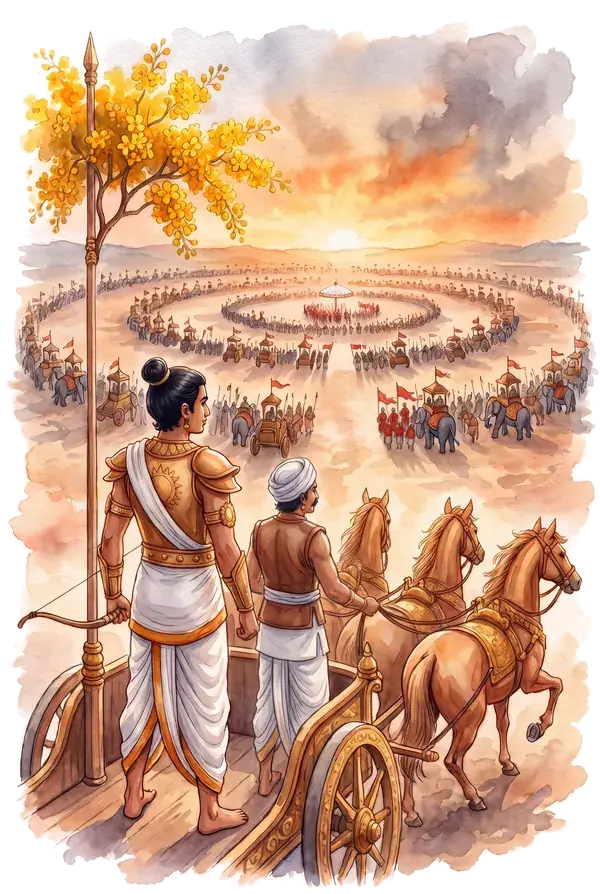
Abhimanyu and the Chakravyuha
Arjuna's sixteen-year-old son breaks alone into Drona's wheel, knowing the way in and not the way out.
Read the story
What Krishna told Arjuna between the armies, one teaching at a time and with the Sanskrit verses, is in 18 teachings from the Bhagavad Gita.
Similar Indian epics and stories
Readers who love the Mahabharata often come to it from India's other great story books, and each of them meets the Mahabharata along the way.
The other great epic
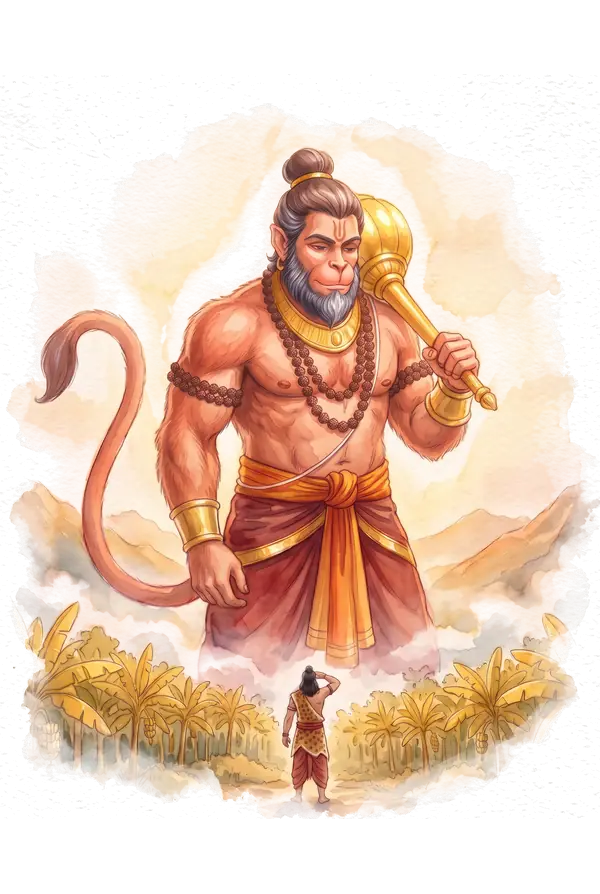
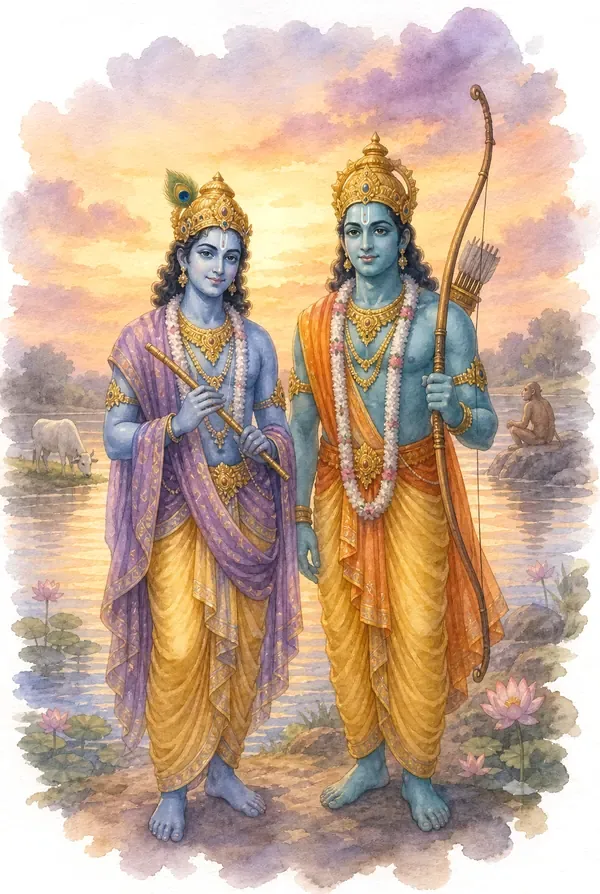
The Ramayana
Rama and Sita, the golden deer and Hanuman's leap to Lanka, and where Hanuman meets Bhima in the Mahabharata.
Read the summary
For parents
Ramayana and Mahabharata
India's two great epics side by side: who is in each, where they meet, and which to read first.
Compare them
Animal fables
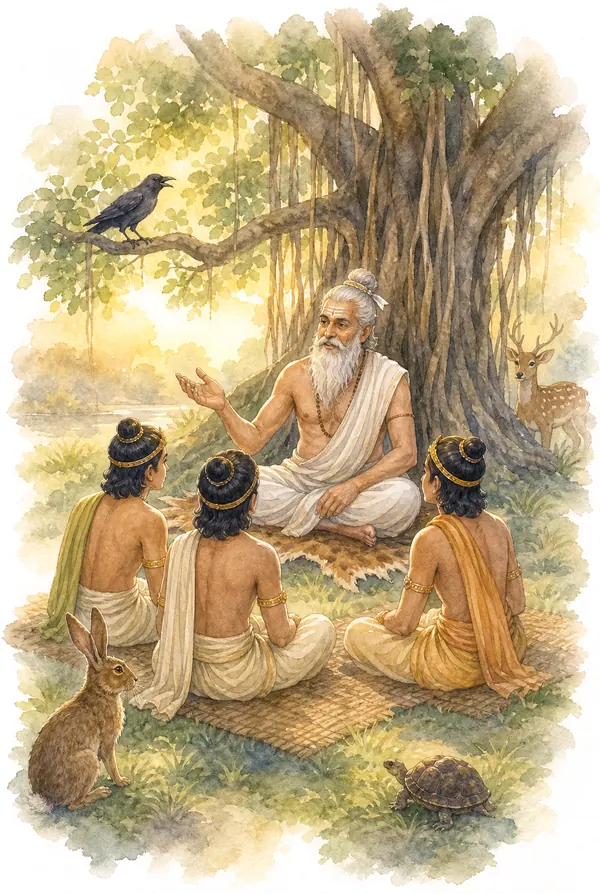
The Panchatantra
The lion and the hare at the well, the talkative tortoise and more of Vishnusharma's fables, each with its lesson.
Read the fables
Krishna's childhood
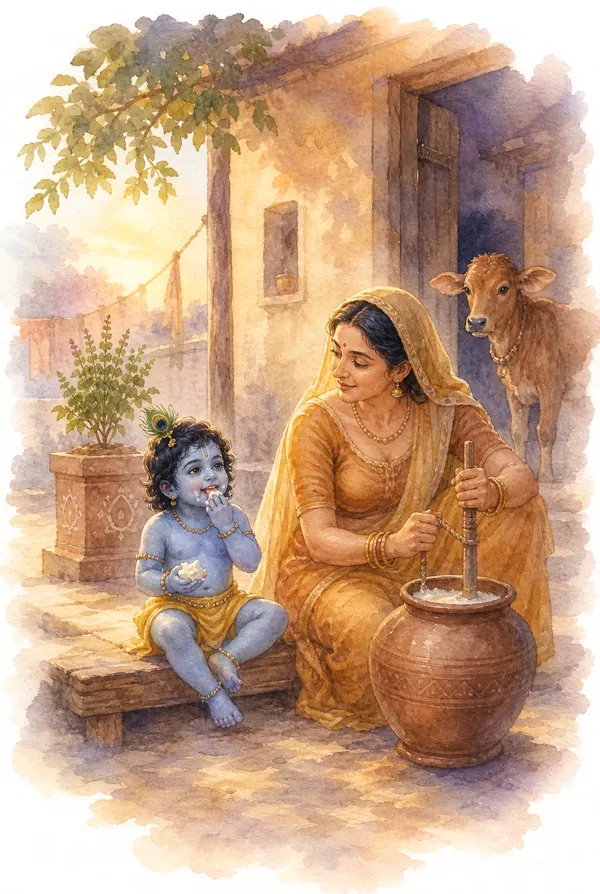
Krishna Stories
His birth in Kamsa's prison, the butter thief, the serpent Kaliya and Govardhan hill, the best-loved tales of Krishna growing up.
Read the stories
Side stories
These twelve side stories are told apart from the books, though Astika also appears briefly in the Epilogue of The War. Most of them are told inside the epic by one character to another, often a sage passing the time with the Pandavas in the forest or a storyteller explaining where a family began. Each one stands on its own, so start wherever you like.
Ancestors and the beginning of things
The epic tells these near its start, long before the Pandavas are born.
Side story
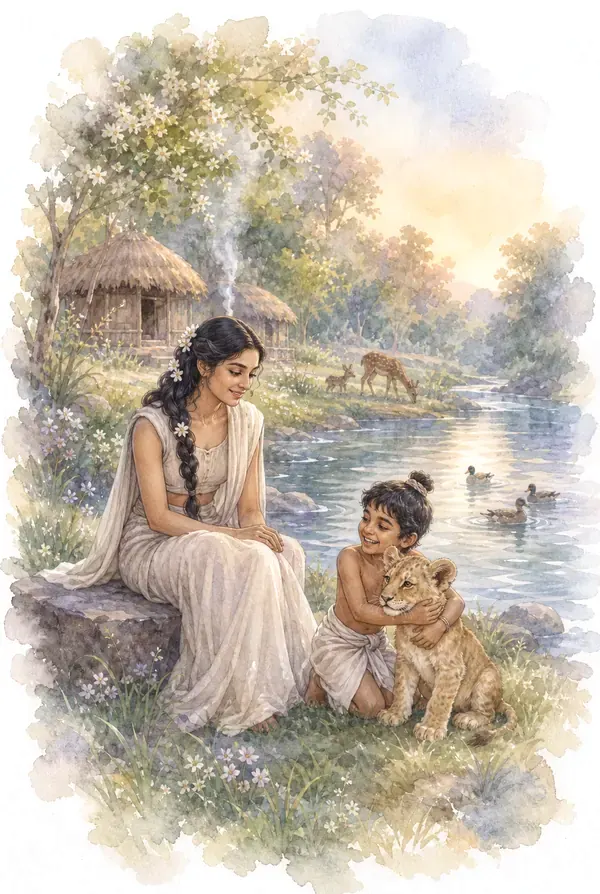
Shakuntala and Dushyanta
A king meets a girl raised by a sage in the forest, then says he doesn't know her when she brings their son to his court.
Read the story
Side story
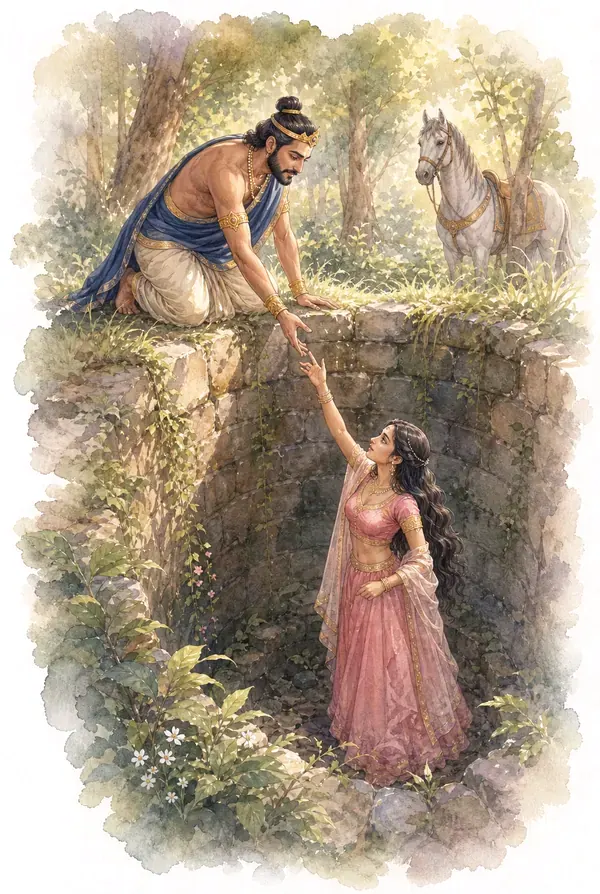
King Yayati
A king cursed with old age asks each of his sons to trade their youth for it.
Read the story
Side story
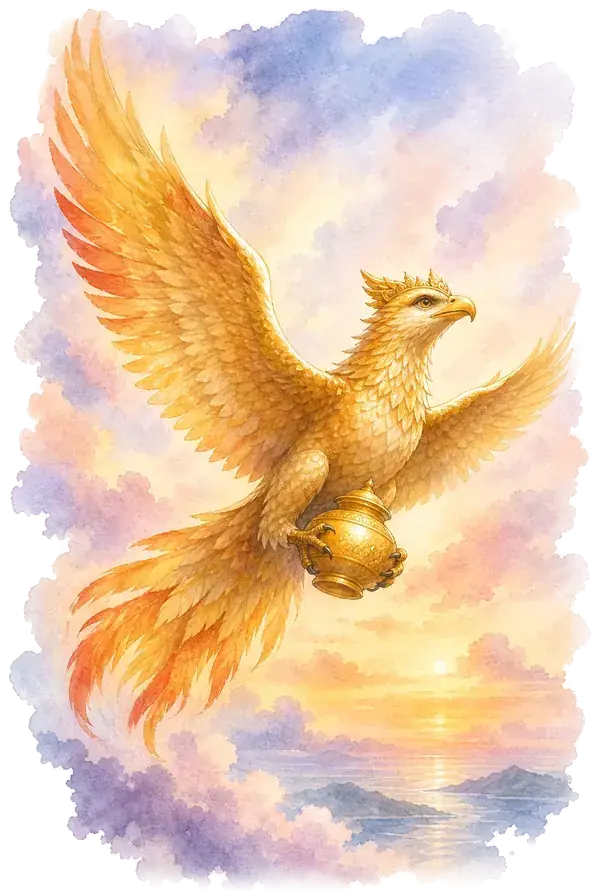
Garuda Steals the Nectar
A giant bird sets out to free his mother by bringing the serpents the nectar of the gods.
Read the story
Side story
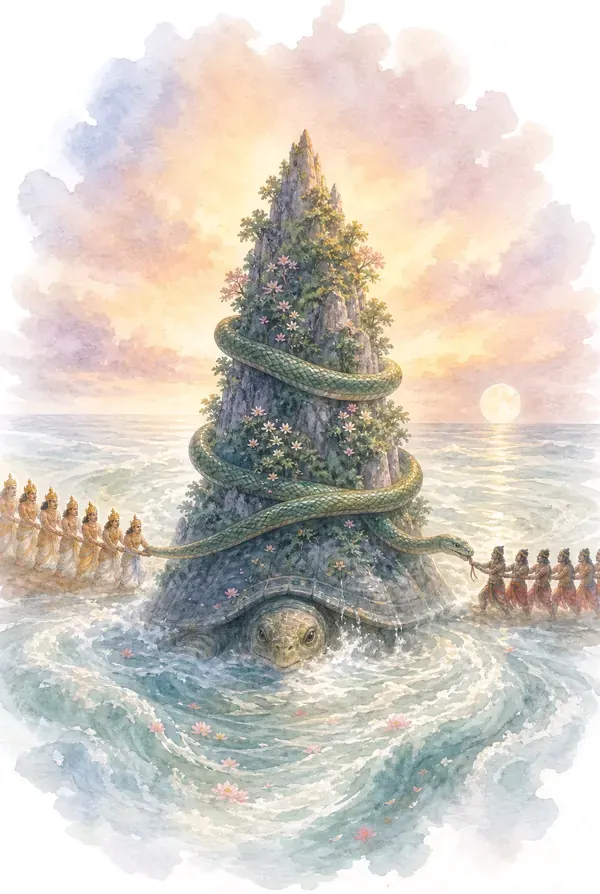
The Churning of the Ocean
Gods and asuras churn the ocean with a mountain and a serpent to win the nectar of immortality.
Read the story
Tales from the forest years
Sages tell these to the Pandavas while they wander in exile.
Side story
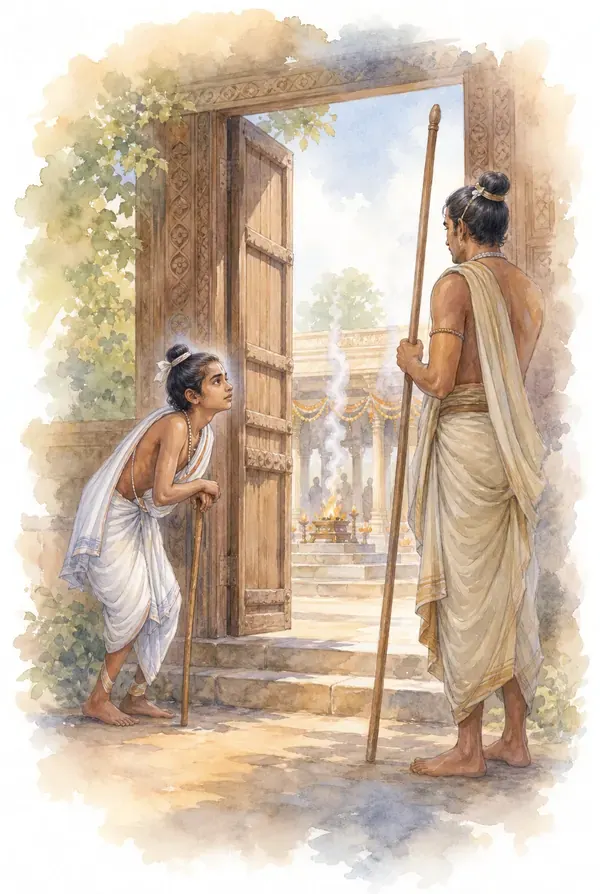
Ashtavakra
A boy born with eight bends in his body takes on the court debater who beat his father.
Read the story
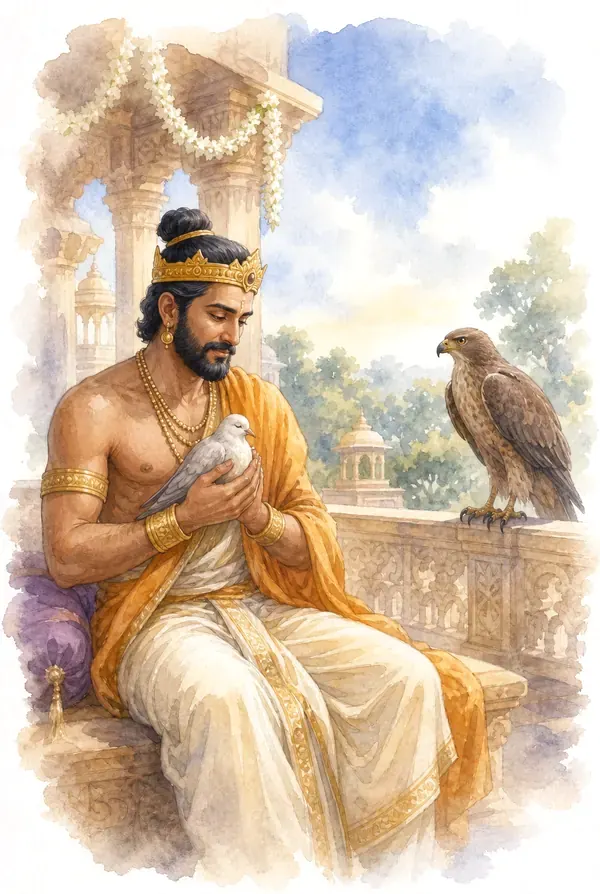
Side story
King Shibi and the Dove
A dove flies to a king for shelter, and the hawk chasing it asks for its dinner back.
Read the story
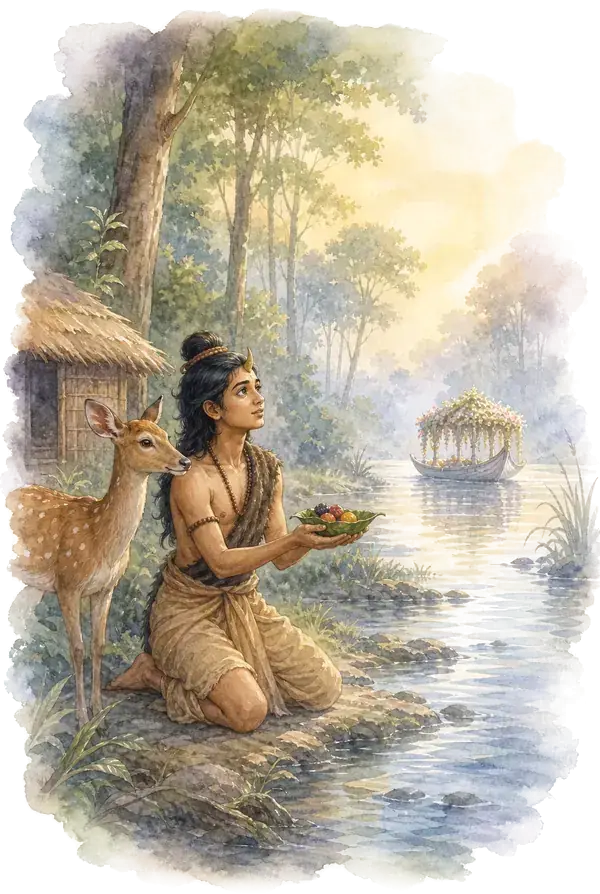
Side story
Rishyashringa
A boy who has never met anyone but his father is the only one who can end a kingdom's drought.
Read the story
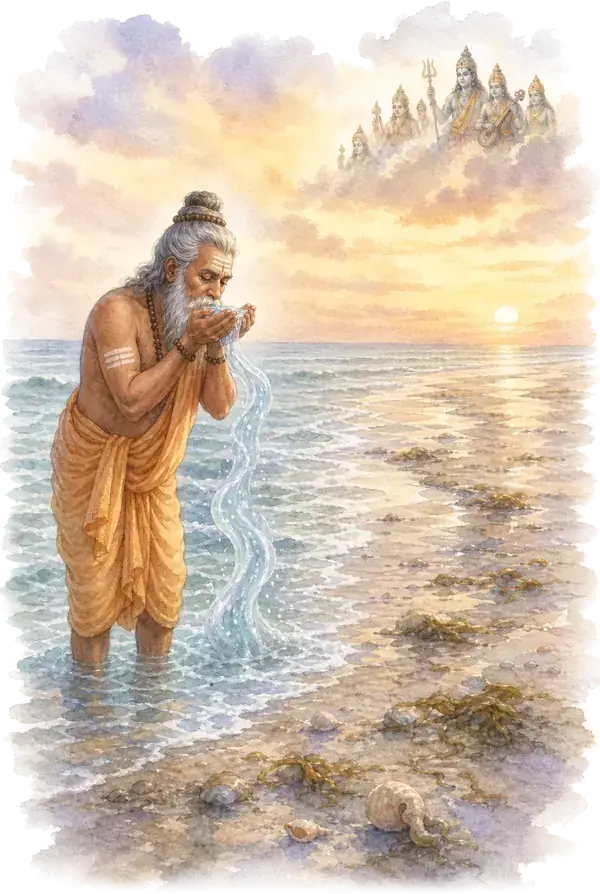
Side story
Agastya Drinks the Ocean
A sage stops a mountain from growing and drinks up the sea so the gods can find their enemies.
Read the story
Wisdom tales
Short stories about what goodness really looks like, and who can teach it.
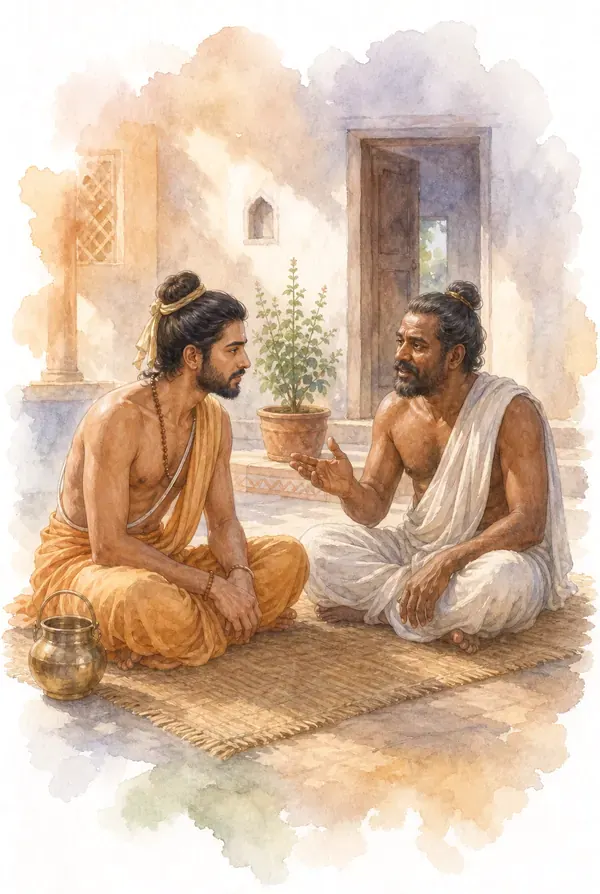
Side story
The Butcher Who Taught a Sage
A proud sage is sent to learn about duty from a butcher in the market of Mithila.
Read the story
Side story
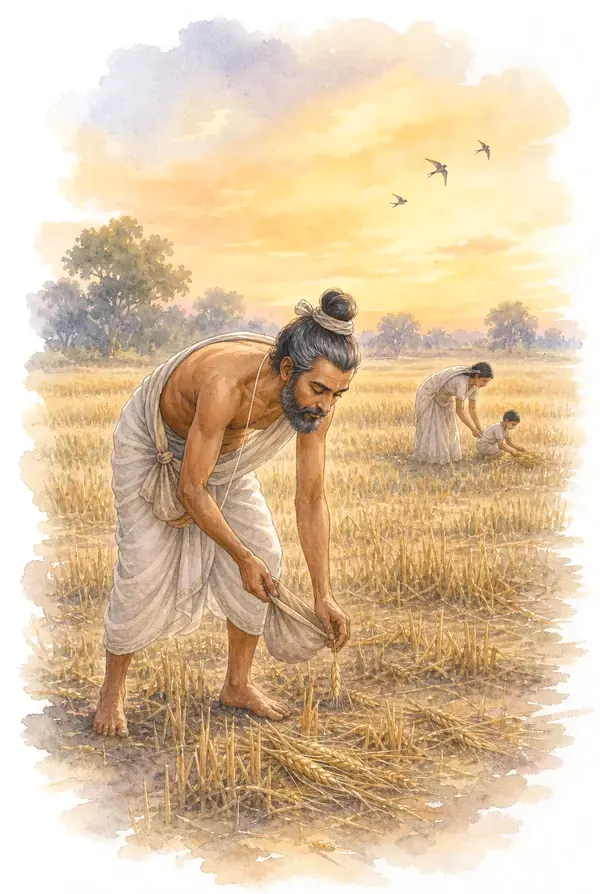
Mudgala and the Gleaned Grain
A poor man who lives on gleaned grain is tested again and again by the short-tempered sage Durvasa.
Read the story
Side story
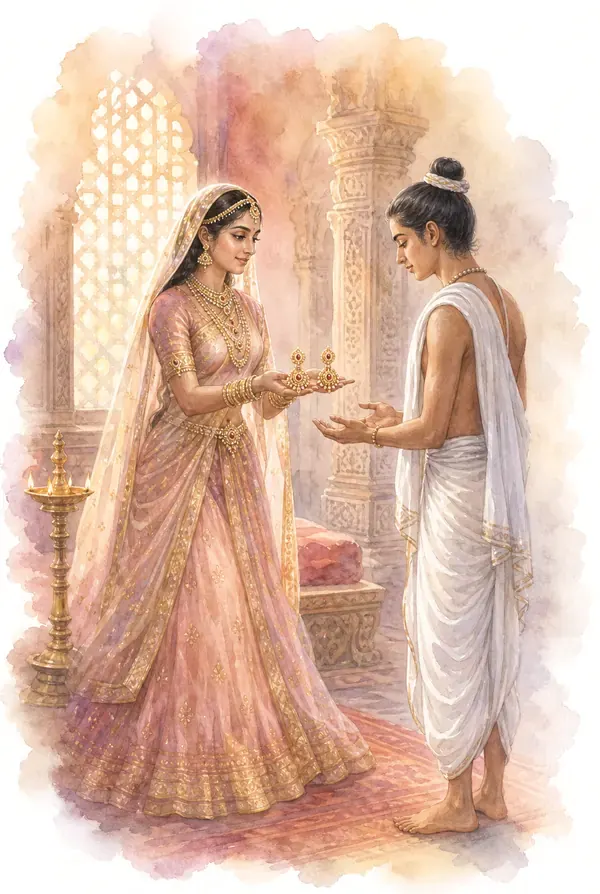
Uttanka and the Stolen Earrings
A student goes to fetch a queen's earrings for his teacher's wife, and a serpent king steals them.
Read the story
Side story
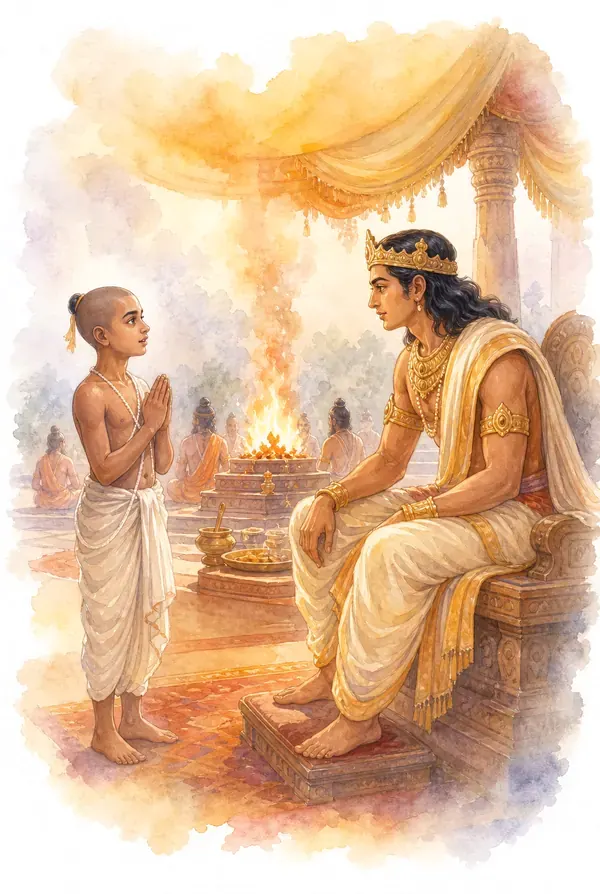
Astika and the Snake Sacrifice
A young brahmin asks a king for one gift: stop the sacrifice that is burning the serpents.
Read the story
Tales Within the Tale in the three books
The books stop the main story now and then for a tale of their own, a curse or a past life or an old story someone tells, under the heading A Tale Within the Tale.
In Book One: The Vow
- The Eight Who Stole a Cow (chapter 1). Eight gods steal a sage's cow, and are cursed to be born on earth as Ganga's sons.
- The Sage on the Stake (chapter 4). The story behind Vidura's birth, which begins with a holy man under a vow of silence.
- The Girl Who Asked Five Times (chapter 16). A girl prays to Shiva for a husband and asks five times.
- Two Brothers and One Wish (chapter 16). Two demon brothers who share everything, until they both want the same woman.
- Nara and Narayana (chapter 17). Two sages in the Himalayas who know each other so well that nobody can tell where one ends and the other begins.
- A Hundred Pardons (chapter 18). Why Krishna promised to forgive King Shishupala a hundred times.
In Book Two: The Dice
- A Handful of Rice (chapter 1). A later telling of why Shakuni never loses at dice.
- Prahlada's Answer (chapter 2). Vidura tells the silent kings about a king who told the truth against his own son.
- Nala and Damayanti (chapter 5). A king who gambles away everything, and the princess who chose him.
- Savitri and Satyavan (chapter 7). A princess who marries a man with a year to live, and follows Death when he comes.
- Karna's Curses (chapter 8). The curses laid on Karna when he was young, and why his chariot wheel will one day sink.
- Urvashi's Curse (chapter 10). Why Arjuna spends a year in disguise as a dancer.
In Book Three: The War
- Amba Born Again (chapter 2). How the princess who walked into the fire came back as Shikhandi.
- Son of the Moon and Half a Lesson (chapter 3). Why Abhimanyu had only sixteen years, and how he learned the way into the wheel before he was born, but not the way out.
- The Old Quarrel (chapter 5). An old fight between Satyaki's grandfather and Bhurishravas's father, handed down to their sons.
- The Crow Who Raced the Swans (chapter 8). The fable King Shalya tells Karna on the way to battle.
- The Discus He Could Not Lift (chapter 10). Ashwatthama asks Krishna for his discus.
- The Ocean and the Rivers (chapter 12). Why the rivers never bring the ocean a reed, as Bhishma's mother, Ganga, once told it.
- The Iron Pestle (chapter 14). A prank on three sages, and the curse that follows.
- Parikshit and the Serpent (Epilogue). How Abhimanyu's son died, and how the whole story came to be told aloud.
Who these stories are for
They are written for readers aged 10 to 16 and for the grown-ups reading with them. Each one follows the Ganguli translation of the Mahabharata, and where the best-known version comes from somewhere else, such as Kalidasa's play about Shakuntala, the note at the end of the story says so. Hard moments are told gently and without gore. For the main story, the Mahabharata in five minutes covers it from beginning to end, and where the stories come from explains the translation.