For parents · Choosing a book
The Best Mahabharata Books for Kids, Compared
The best one depends on your child's age and how much they like to read. For about 8 to 12, Shubha Vilas's Illustrated Mahabharata has color pictures on every page and questions after each story. Older readers who like longer books can choose Samhita Arni's or Arshia Sattar's prose retellings, or Sanjay Patel's big illustrated volume, which tells the whole epic in one book.
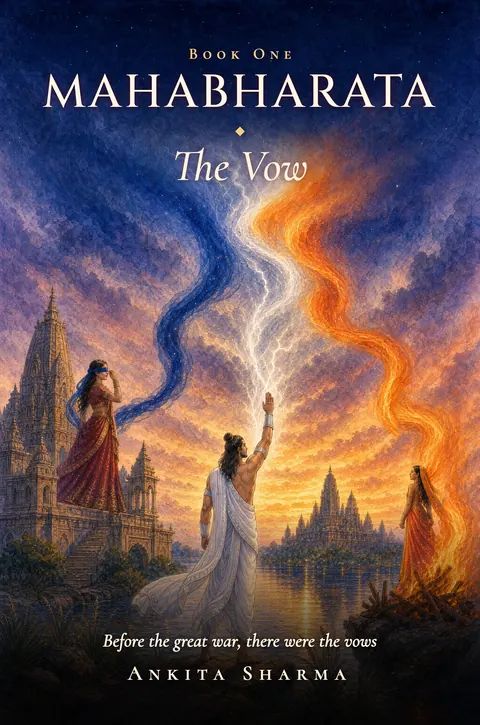
A note before you read on: this comparison is by Ankita Sharma, the author of The Vow, Book One of the illustrated Mahabharata, which is one of the eight books in it. Each of the others brings something of its own, and the facts about each one come from its publisher's own listing.
The books at a glance
These eight Mahabharata books for children are easy to find in the US. Ages and lengths are the publishers' own. "Not stated" means the publisher gives no age range.
| Book | Ages | Length | Pictures | Suits a reader who |
|---|---|---|---|---|
| The Vow (Book One of three), Ankita Sharma. Sharma Ink, November 2026 | 10 to 16 | 197 pages, paperback | A full-color painting on every page | wants the story told slowly, with time to stop and think |
| Illustrated Mahabharata: Timeless Tales for Children, Shubha Vilas. Wonder House Books, 2024 | 8 to 12 | 248 pages, hardcover | Color illustrations on every page | likes short tales and talking them over |
| Mahabharata: Illustrated Book for Children, Anupa Lal, illustrated by Ishan Trivedi. Wonder House Books, 2022 | 7 and up | 160 pages, paperback | Illustrated | wants the whole story quickly, in simple words |
| Mahabharata: Designs of Dharma, Sanjay Patel. Mandala Publishing, 2025 | Middle grade and up | 432 pages, large hardcover | Illustrated throughout by the author | loves art and animation, and wants the whole epic in one book |
| The Puffin Mahabharata, Namita Gokhale, illustrated by Suddhasattwa Basu. Puffin India, 2020 edition | Not stated | 196 pages, paperback | Illustrations by a painter and animator | wants a clear, modern telling of the whole story |
| The Mahabharatha: A Child's View, Samhita Arni. Tara Books | 10 and up | 288 pages, paperback | Black-and-white line drawings | likes to question the story, especially the war |
| Mahabharata for Children, Arshia Sattar, illustrated by Sonali Zohra. Juggernaut, 2020 (paperback 2024) | Not stated | 272 pages, paperback | Illustrated | is ready for a rich, longer read, alone or aloud |
| Mahabharata, 42 comics in 3 volumes. Amar Chitra Katha | Not stated; "for kids and adults alike" | 1,328 pages in 3 hardbound volumes | Comic-book art throughout | loves comics and wants every episode |
Book by book: what each does well
Every retelling for children has to choose what to keep. These short notes say what each book is known for, and who it is likely to suit.
Illustrated Mahabharata: Timeless Tales for Children, by Shubha Vilas
This hardcover tells the epic as a series of tales, with color illustrations on every page by Anshuman Pandey and Suresh Kumar. Discussion questions follow each story, which makes it easy to use at bedtime or in a class. Wonder House lists it for ages 8 to 12. Choose it for a younger reader, or for a family that wants to talk about right and wrong after each tale.
Mahabharata: Illustrated Book for Children, by Anupa Lal
At 160 pages, this is the shortest full retelling on the list. It runs from the Kuru family to the battle of Kurukshetra in simple language, with pictures by Ishan Trivedi. Wonder House's description says it is for children of 7 and up. This makes a good first book for a child who wants the shape of the whole story before reading a longer version.
Mahabharata: Designs of Dharma, by Sanjay Patel
Sanjay Patel worked at Pixar as an animator for twenty years, and his Mahabharata is a large hardcover illustrated throughout in his own style. The publisher says he condensed the whole epic into one volume, written to be accessible to middle-grade readers. It comes with a cast list and a family chart, plus a map of the main places and pages from his sketchbooks. Readers who love art will linger over it, and a family gets the whole story in one book to share.
The Puffin Mahabharata, by Namita Gokhale
Penguin describes this retelling as clear and contemporary, told the way a modern storyteller would tell it. It covers the family quarrel and the great war in 196 pages, with illustrations by the painter and animator Suddhasattwa Basu. Penguin gives no age range. For a confident reader, this is a complete telling that is quick to finish.
The Mahabharatha: A Child's View, by Samhita Arni
Samhita Arni wrote this retelling when she was twelve, and it has a child's sharp eye. Tara Books calls it bold and unorthodox about the characters, and openly critical of the war at the story's heart. It has black-and-white line drawings and fills 288 pages in one volume, though it was first published as two. Tara lists it for 10 and up. Thoughtful readers who like to argue with the story will find a lot to argue with here.
Mahabharata for Children, by Arshia Sattar
Arshia Sattar works with the Sanskrit epics, and her abridged translation of Valmiki's Ramayana is a Penguin Classic. Juggernaut says she went deep into the original for this retelling. It is illustrated by Sonali Zohra and runs to 272 pages in the 2024 paperback. Juggernaut gives no age range and pitches it to parents and children together. It rewards a strong reader, or a family reading aloud over many evenings.
Amar Chitra Katha's Mahabharata
This set is 42 comics bound in three hardcover volumes, 1,328 pages in all. It follows the Kuru princes through the exile to the eighteen-day war. Its publisher says it is for kids and adults alike. Pick it for a child who loves comics. It also makes a shelf of stories the whole family can dip into.
How to choose a Mahabharata book for your child
Start with your child's age and reading habits, then decide how much of the story you want in one go.
Under 10. Short books with a picture on every page are the easiest way in. Shubha Vilas's tales are listed for 8 to 12, and Anupa Lal's retelling is for 7 and up.
Ten to twelve. Most of the books here will work. A child who reads a lot can take Samhita Arni's or Arshia Sattar's longer prose. Children who read less may get further with Sanjay Patel's pictures or the Amar Chitra Katha comics.
Thirteen and up. Teenagers often want the hard questions in the story. Was the war worth it? What do you owe your family when it is wrong? Arni's book takes those questions on directly, and the longer retellings give them room.
The whole story, or part of it. Patel tells the whole epic in one book, as do Lal and Gokhale. Amar Chitra Katha does it in three volumes. My own series takes three books: The Vow comes out on November 30, 2026, The Dice on December 7 and The War on December 14.
Closeness to the old text. Every children's version cuts and chooses. If this matters to you, look for a book that says where its stories come from.
If your child already knows the main story, Sudha Murty's The Serpent's Revenge (Puffin India, 2016, 200 pages) collects lesser-known tales from the Mahabharata.
For grown-ups: the Mahabharata in English
Many parents want a version of their own to read alongside their child's. These are the best-known English ones.
C. Rajagopalachari, Mahabharata. A short prose retelling, first published by Bharatiya Vidya Bhavan in 1951 and still in print. It reads in a few evenings.
Devdutt Pattanaik, Jaya: An Illustrated Retelling of the Mahabharata. Penguin, 2010. Short chapters with the author's own line drawings, and notes on how the story is told differently across India.
Ami Ganatra, Mahabharata Unravelled. Not a retelling. It takes the questions people ask about the epic and checks popular beliefs against the text.
Bibek Debroy, The Mahabharata. The complete text in ten volumes from Penguin, translated from the Sanskrit Critical Edition, for a reader who wants every word.
Kisari Mohan Ganguli, The Mahabharata of Krishna-Dwaipayana Vyasa. The first complete English translation, published from 1883 to 1896 and free to read online. My books follow it.
Where The Vow fits
My book is Book One of three, for readers aged 10 to 16. It tells the first part of the story in 197 pages, from the river goddess Ganga to the Pandavas' Palace of Illusions. Book Two, The Dice, follows on December 7, 2026, with the dice game, the exile and the road to war in 205 pages. Book Three, The War, follows on December 14, 2026, with the Bhagavad Gita, the eighteen days at Kurukshetra and the years after, to the end of the story, in 236 pages. If your child wants the whole epic in one volume, choose one of the others.
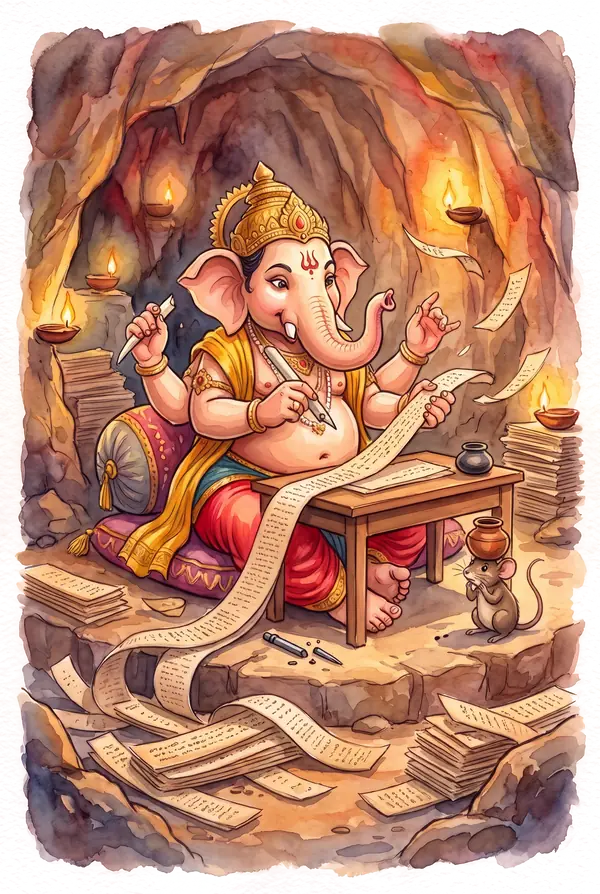
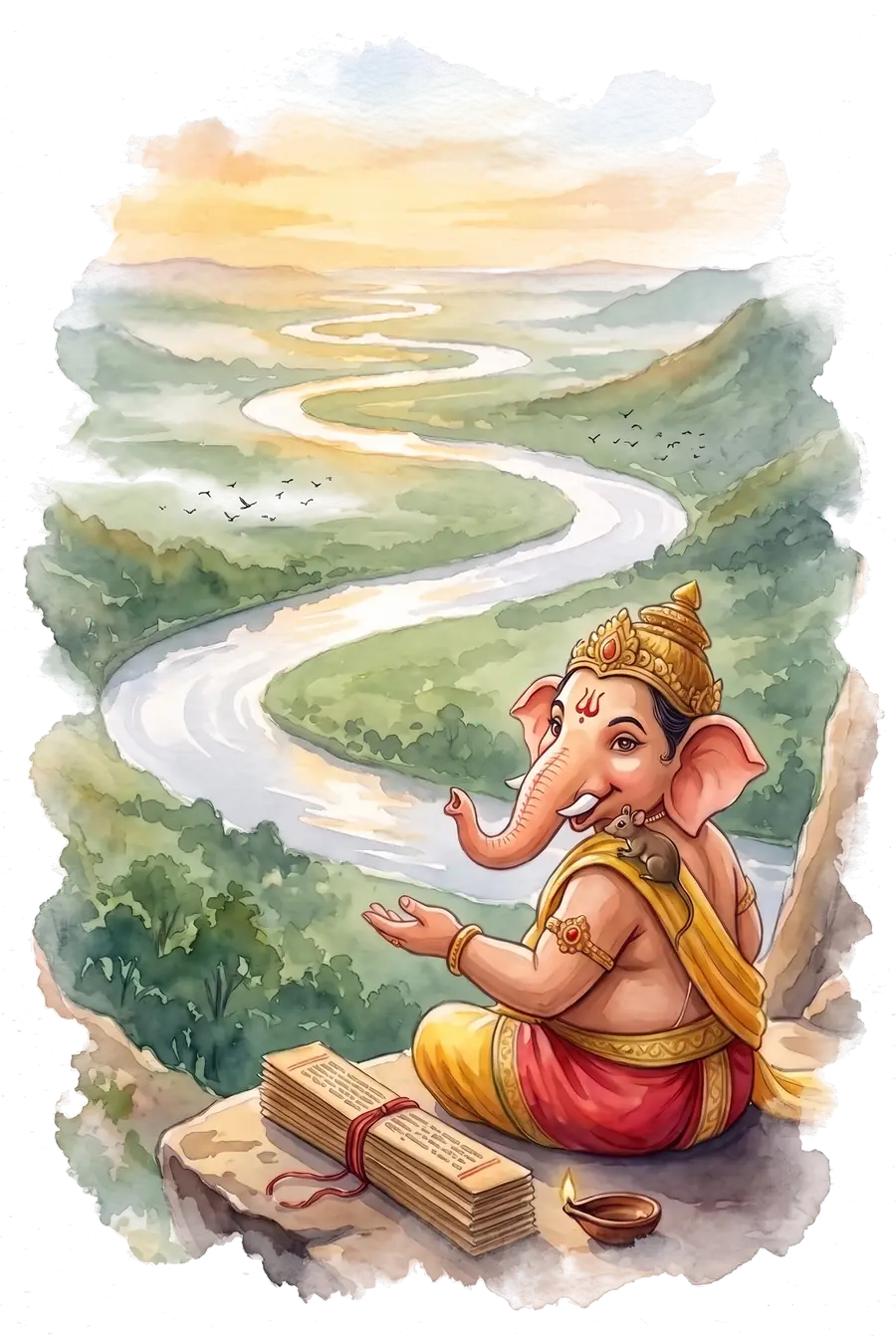
What the slower pace buys is room. Ganesha tells the story, as he does in the old legend where he writes the epic down. Every page has a full-color watercolor painting. After key scenes, Krishna asks the reader what they would have done, and there is no model answer.
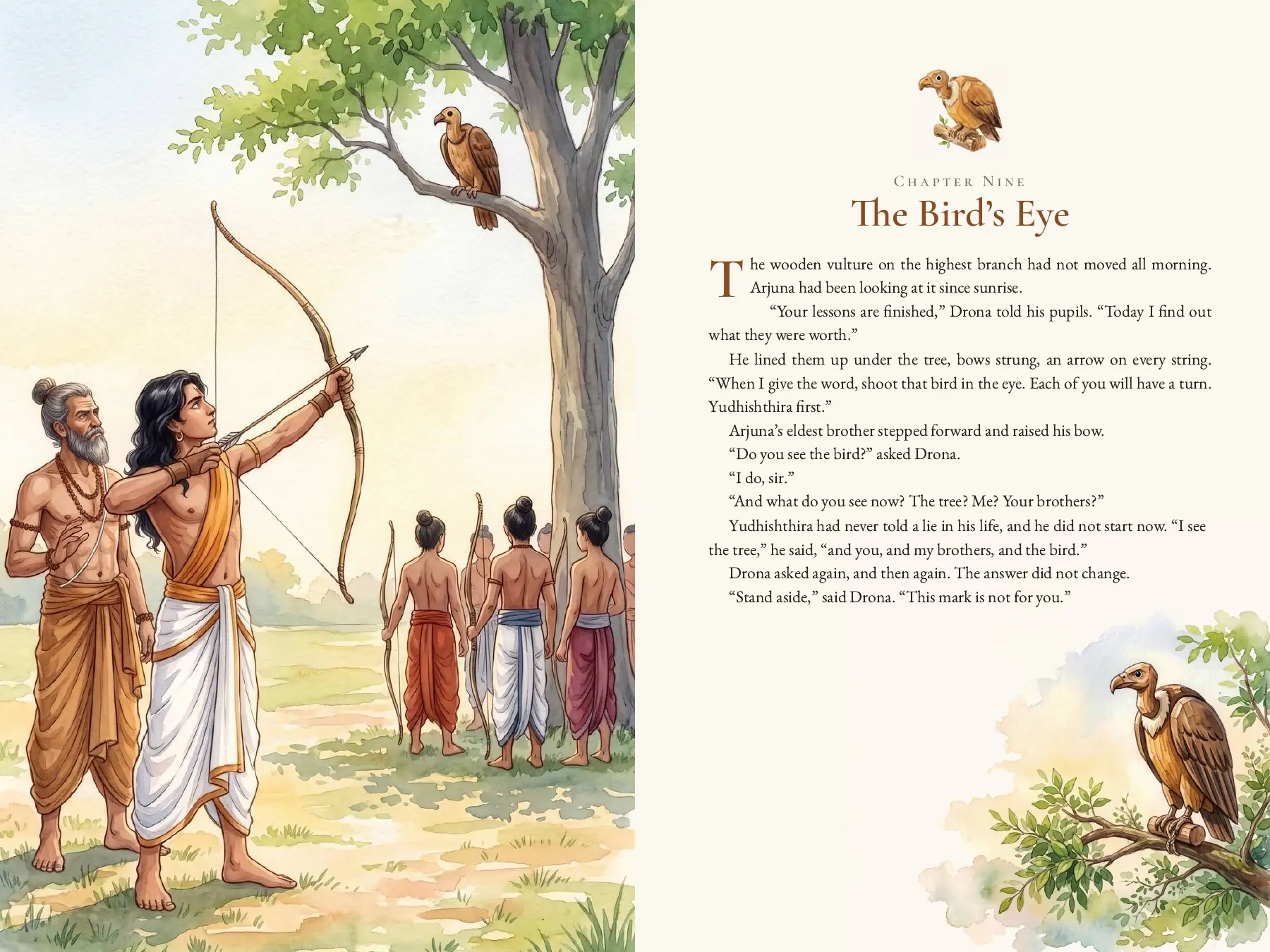
The books follow the English translation by Kisari Mohan Ganguli. Where they choose a popular telling instead, the sources page says so, chapter by chapter. If your child is sensitive to battles and deaths, the age guide lists each hard moment in all three books and how it is told.
Questions parents ask
What is the best Mahabharata book for a 10-year-old?
It depends on how much your child likes to read. A 10-year-old who wants pictures and short tales may like Shubha Vilas's Illustrated Mahabharata, listed for ages 8 to 12. A keen reader can take Samhita Arni's A Child's View, listed for 10 and up. The Vow is for ages 10 to 16 and has a painting on every page.
Which Mahabharata book for kids has the most pictures?
Of the books here, The Vow has a full-color painting on every one of its 197 pages, and Shubha Vilas's Illustrated Mahabharata has color pictures on every page. Sanjay Patel's Mahabharata is illustrated throughout its 432 pages. Amar Chitra Katha tells the whole epic as comics, in three volumes.
Is there a children's Mahabharata that tells the whole story in one book?
Yes. Sanjay Patel's Mahabharata: Designs of Dharma fits the whole epic into one large volume of 432 pages. Anupa Lal's 160-page retelling and Namita Gokhale's Puffin Mahabharata also carry the story from the family quarrel to the war at Kurukshetra. My own series takes three books, so The Vow ends before the game of dice, and The Dice and The War follow in December 2026.
Are Amar Chitra Katha comics a good way to learn the Mahabharata?
For a child who loves comics, they are an easy way in. The Mahabharata set is 42 comics in three hardbound volumes, 1,328 pages in all, and the publisher says it is for kids and adults alike. A prose retelling read alongside gives more room for what the characters think and feel.
Which children's Mahabharata is closest to the original?
Every children's version cuts and chooses, so none of them tells it all. If closeness matters to you, look for one that names its sources. The series follows the Kisari Mohan Ganguli translation and lists the sections behind each chapter. Juggernaut says Arshia Sattar, a translator of the Ramayana, went deep into the original for her retelling.
Why are there three books?
The Mahabharata is long, and one children's book has to leave a great deal out. Telling it in three books lets each chapter take its time. Book One, The Vow, runs from the river goddess Ganga to the Pandavas' Palace of Illusions. Book Two, The Dice, covers the dice game, the exile and the road to war, and comes out on December 7, 2026. Book Three, The War, carries the story to its end and follows on December 14, 2026.
Where these facts come from: The details for each book are from its publisher's own listing, checked on November 18, 2026. For the two Wonder House books that is Penguin Random House's US listing, and for Mandala Publishing it is Insight Editions. The others are from the publishers' own sites. Page counts are for the edition named. Prices and stock change, so check before you buy. What each book does well is drawn from its publisher's description. The notes on who each one suits are my own. The books for grown-ups are given in their best-known editions.