Question cards · Book Three
Question Cards for The War
28 printable question cards for The War, Book Three of an illustrated Mahabharata for readers 10 to 16. Eleven are Krishna's own questions from the book, and 17 are talking points, one for each chapter, the Prologue and the Epilogue. Every card tells its scene in one line before it asks, so it works whether or not everyone has read the chapter.
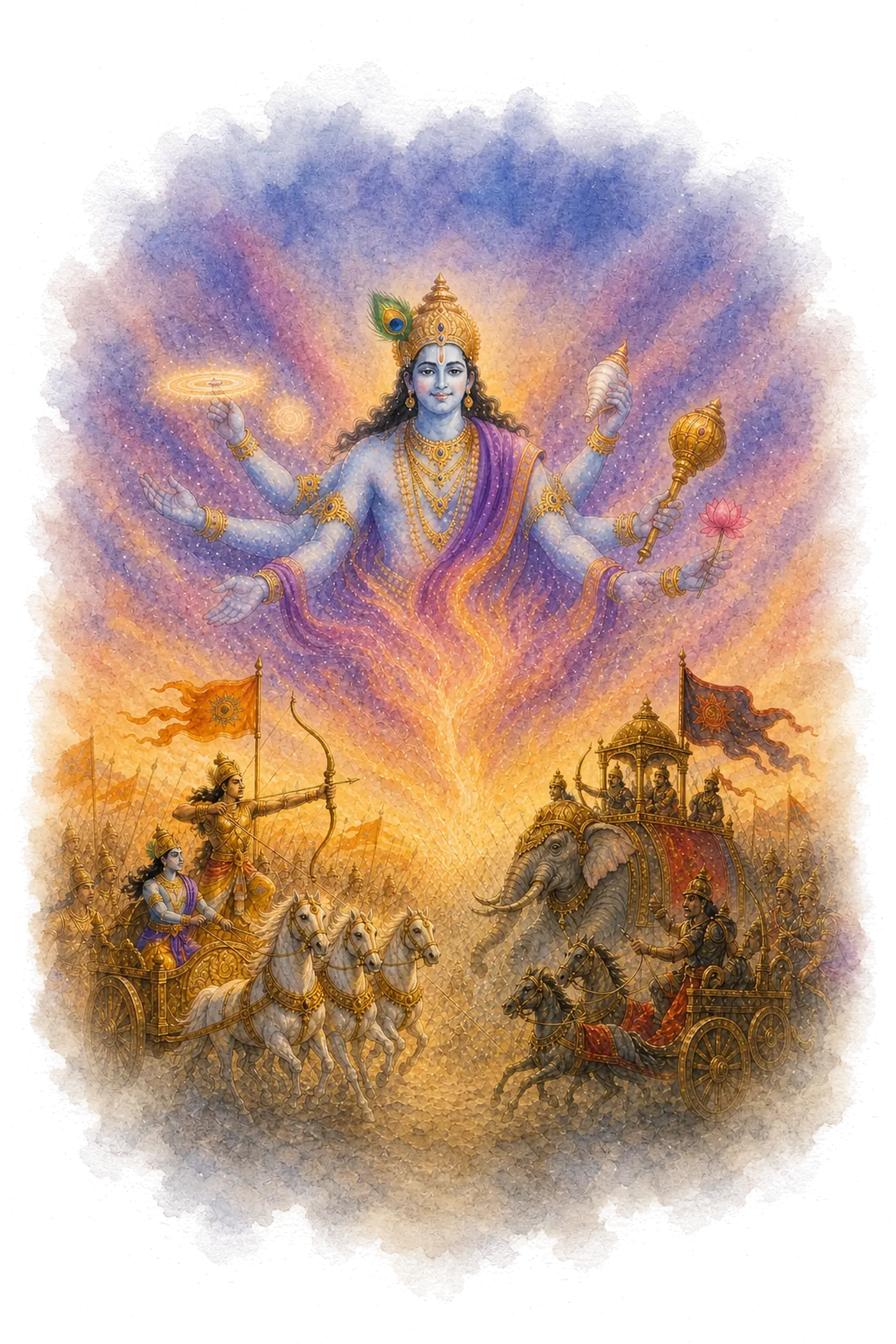
The 28 cards
Cards with a gold edge are Krishna's questions.
Pick the card for the chapter you just read, read the scene aloud, then the question. Everyone answers with one reason from the story. More ways to play, at home and in class, are on the question cards page.
Mahabharata question cards
How to play
- Pick the card for the chapter you just read, or draw one.
- Read the scene aloud, then the question.
- Everyone answers with one reason from the story. You may pass once.
- If someone changes your mind, say what did it.
There are no model answers. Ages 10 to 16, about ten minutes a card.
mahabharatastories.com/question-cards/the-war · from The War by Ankita Sharma
Talk about it
Prologue · The Story So Far
Ganesha retells Books One and Two, from Bhishma's vow to the armies facing each other at Kurukshetra.
Even after Krishna told Karna who his mother was, “the charioteer's son would not leave Duryodhana.” What kept him there?
Krishna asks
Chapter 1 · The Bhagavad Gita
On the first morning at Kurukshetra, Arjuna sees his grandsire and his teachers across the field and lowers his bow.
Can you stand against someone and still honor them?
Talk about it
Chapter 1 · The Bhagavad Gita
Arjuna asks Krishna how anyone can hold his mind still in a war.
Arjuna says the mind is “as hard to hold as the wind,” and Krishna answers, “But with practice it can be held.” What helps you hold your mind still?
Krishna asks
Chapter 2 · The Grandsire's Ten Days
Krishna promised not to fight. Twice he jumps down from Arjuna's chariot and runs at Bhishma, and twice Arjuna stops him.
Was I right to break my promise, or should I have stayed with the reins?
Talk about it
Chapter 2 · The Grandsire's Ten Days
Bhishma leads the Kauravas, though he loves the five brothers he is fighting.
Bhishma tells the five how to beat him: “So bring me down, and soon.” Why would he help the side he is fighting?
Krishna asks
Chapter 3 · The Wheel of Death
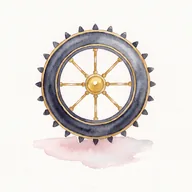
Abhimanyu knows how to break into the wheel-shaped army, and he is the only one who does.
If you are the only one who can do something dangerous, do you have to do it?
Talk about it
Chapter 3 · The Wheel of Death
Young Abhimanyu breaks into Drona's wheel-shaped army alone.
Drona says of Abhimanyu, “It does my heart good to watch him,” and a moment later tells Karna to take the boy's bow first. How can someone admire a person and still help bring him down?

Krishna asks
Chapter 4 · Before Sunset
Arjuna has sworn to kill Jayadratha before sunset, and six warriors guard him. Krishna hides the sun.
I hid the sun so a man would step out into the open. Was that fair, when six warriors stood around him so he could never be reached?
Talk about it
Chapter 4 · Before Sunset
Arjuna comes back to camp at the end of the day and learns what happened to his son.
Arjuna sends Krishna to Subhadra: “Tell her something true. I can't, not yet.” Why can't he go himself?
Krishna asks
Chapter 5 · The Arm and the Sword
Satyaki and Bhurishravas come from two families that have been enemies since before they were born.
When a quarrel is handed down from one generation to the next, can anyone ever end it?
Talk about it
Chapter 5 · The Arm and the Sword
Satyaki fights his way through to Arjuna, and an old quarrel ends on the field.
When Satyaki had killed Bhurishravas, “nobody cheered. Not one man on either side.” Why not, even on his own side?
Krishna asks
Chapter 6 · “Ashwatthama Is Dead”
Drona will not stop fighting while his son lives. Yudhishthira says, “Ashwatthama is dead,” and whispers, “the elephant.”
When Yudhishthira whispered “the elephant,” were his words a lie?
Talk about it
Chapter 6 · “Ashwatthama Is Dead”
The fighting goes on into the night, by lamplight, until both armies can hardly stand.
At midnight Arjuna told both armies to lie down and sleep, and the Kauravas blessed him for it. Why would soldiers bless the man they had been fighting all day?
Krishna asks
Chapter 7 · Give Away Your Bow
Angry and hurt, Yudhishthira tells Arjuna to give his bow to someone else.
Why are the people we love most so often the ones we hurt with words?
Talk about it
Chapter 7 · Give Away Your Bow
When Arjuna was young and proud, he vowed to kill anyone who told him to give away his bow.
Krishna tells him, “A promise that makes you kill a good man has stopped being dharma.” Is there a promise you would be right to break?
Krishna asks
Chapter 8 · The Sinking Wheel
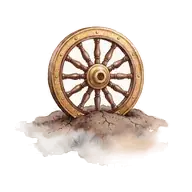
Karna's chariot wheel sinks into the earth, and he asks Arjuna to wait while he frees it.
Should Arjuna have waited for Karna to free his wheel?
Talk about it
Chapter 8 · The Sinking Wheel
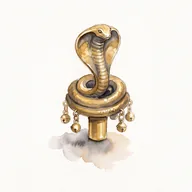
Shalya drives Karna's chariot, on his own terms.
With his wheel stuck fast, Karna shouts, “They say right protects the people who keep it.” Does it?
Talk about it
Chapter 9 · The Lake and the Mace
Duryodhana's army is gone, and Kripa begs him to make peace.
Duryodhana answers Kripa, “My friends died for me. Karna died for me. I owe them.” What does he owe them?
Krishna asks
Chapter 10 · Night of the Owl
After Duryodhana falls, Ashwatthama goes into the Pandava camp at night, while it sleeps.
When the other side has broken the rules, does that free you to break them too?
Talk about it
Chapter 10 · Night of the Owl
Draupadi swears to eat nothing until Ashwatthama pays for the night raid.
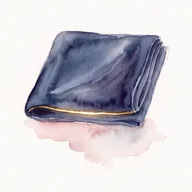
When the jewel came, Draupadi said, “I only wanted the debt paid.” Is that the same as wanting revenge?
Krishna asks
Chapter 11 · The Mothers' Grief
After the war, Kunti tells her sons that Karna was their eldest brother.
Is there ever a secret that should be kept from the person it belongs to?
Talk about it
Chapter 11 · The Mothers' Grief
The war is over, and the blind king meets the Pandavas.
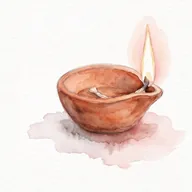
After he crushed the iron Bhima in his arms, Dhritarashtra said, “I loved my son too much.” Can you love someone too much?
Talk about it
Chapter 12 · Lessons from a Bed of Arrows
Bhishma, on his bed of arrows, teaches Yudhishthira how to rule.
In “The Ocean and the Rivers,” the reed bends and stays where it grows. In Book 2, Duryodhana would rather “snap at the knot like bamboo than bend.” Which would you rather be?
Talk about it
Chapter 13 · The Last Walk into the Forest
Kunti leaves the kingdom her sons won and walks into the forest.
Kunti's words sent her sons to war, and now she walks away from the kingdom: “I didn't do it to sit on a throne.” Bhima asks her, “Why did you make us fight, then?” How would you answer him?
Talk about it
Chapter 14 · The Fall of the Yadavas
Thirty-six years after the war, Arjuna can barely string the Gandiva.
Vyasa tells him, “Time gives a man his strength, and Time takes it back.” What would it be like to lose the thing you were best at?
Krishna asks
Chapter 15 · The Road to Heaven
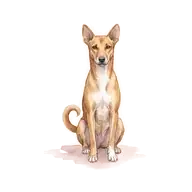
A dog follows Yudhishthira all the way up the mountain to the gate of heaven.
What do we owe to someone who has followed us all the way?
Talk about it
Chapter 15 · The Road to Heaven
In heaven, Yudhishthira finds Duryodhana on a high seat in a hall full of light.
Yudhishthira turns his back on Duryodhana, and Narada tells him, “Greet him as one king greets another.” Could you have done it?
Talk about it
Epilogue · The Broken Tusk
Ganesha finishes writing and tells how the story was first heard.
Get out your list of heroes and villains. Which names have moved since Book 1? Ganesha says to leave the crossings-out in. Why might they matter?
How to print the cards
Print from your browser's print menu. Only the cards come out, six to a US Letter sheet, with dashed lines to cut along, plus a card with the rules. Each printed card carries the web address of its deck. Color looks best, though black and white works too.
Book details for ordering
| Title | The War |
|---|---|
| Series | Mahabharata, Book Three of three |
| Author | Ankita Sharma |
| Pages | 236 |
| Format | Paperback, 6 × 9 in, full color |
| ISBN | 979-8-9828468-2-2 |
| Publisher | Sharma Ink |
| Ages | 10 to 16 (about grades 5 to 10) |
| Release | December 14, 2026 |
Where this comes from: The questions are the book's own, from The War by Ankita Sharma (Sharma Ink, 2026): Krishna's questions as they appear after each chapter, and the discussion questions the book gives for parents and teachers (where a chapter has more than one, the card takes one). The events follow Kisari Mohan Ganguli's English translation of the Mahabharata (Bhishma Parva through the Svargarohana Parva). Krishna's questions belong to this retelling. Our sources page has each chapter's sections.