For teachers · A free classroom kit
Mahabharata Mock Trial: Put a Character on Trial
A free mock-trial lesson for grades 5 to 10 (ages 10 to 16) that takes one or two class periods. Students hold a courtroom trial of a character from an illustrated Mahabharata over one hard choice, and every argument has to come from the story. The kit has the roles, a step-by-step plan, a worked case, a rubric and a verdict sheet, and each book has its own ready cases and debate topics.
What's inside this mock trial kit
- The roles. Who does what in the courtroom, and how many students each role needs.
- A step-by-step plan for one 45-minute period, and a longer version for two.
- A worked case, Drona and Ekalavya's thumb, and ready cases from each book. Each has a charge, the evidence from the book with chapter numbers, the witnesses either side can call, and questions for each team.
- Debate topics for each book, for a quicker lesson or a warm-up.
- A simple rubric and a verdict sheet for the jury.
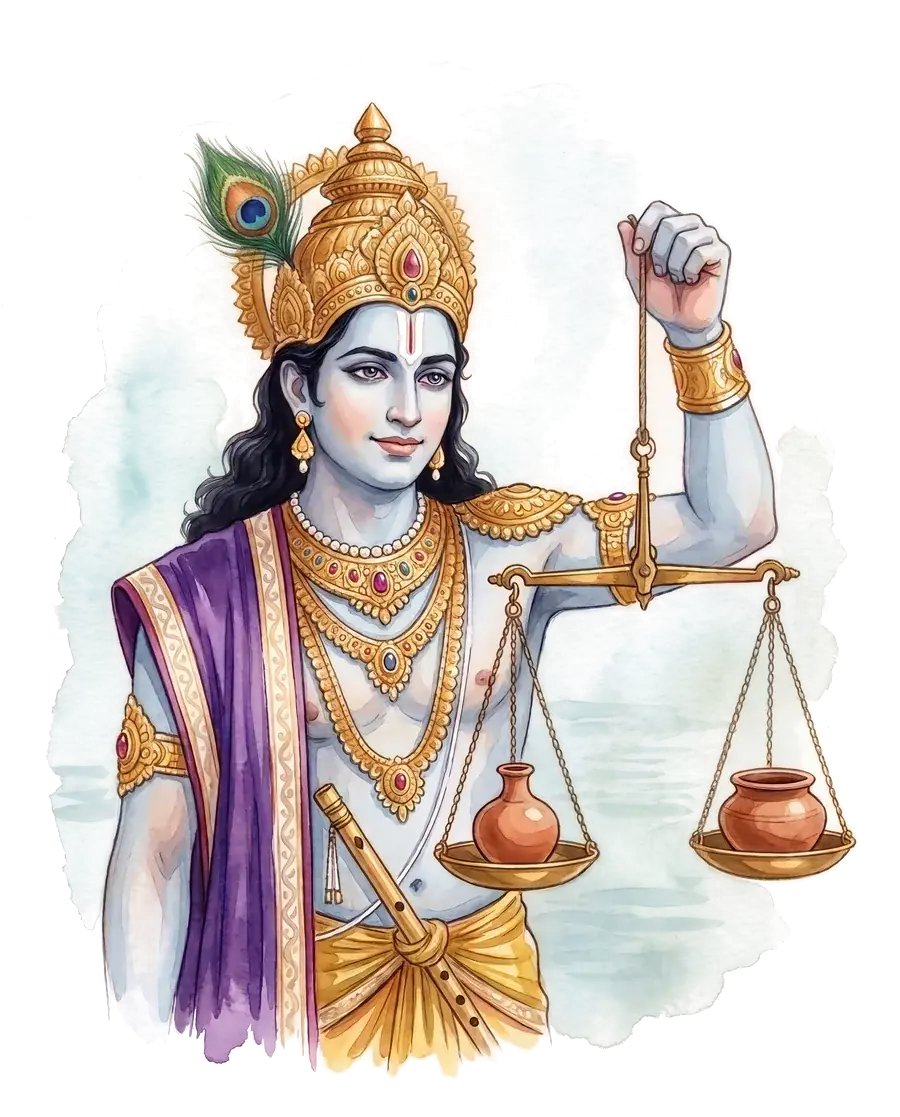
Nobody in these books is simply a hero or a villain. Drona keeps a promise to one pupil and costs another his thumb. Duryodhana does terrible things, and the book shows where his anger comes from. After key scenes Krishna says what he thinks and asks readers to decide. A trial gives that question rules. Students have to find the evidence and answer the other side's best point before they vote.
Three rules that keep the trial fair
- Evidence comes from the book. If it isn't in the chapter, it isn't evidence. A student who knows another telling can say so, and the judge decides whether it counts.
- Every character gets a real defense. The book is fair to all of them, and the court must be too. A defense team that only says "he's the villain" hasn't done its job.
- Respect the story. The Mahabharata is sacred to many families. The class is judging one choice in one scene. At the end, everyone steps out of role and says what they really think.
Who does what: the roles in the trial
A class of 25 fills every role. In a small group or at home, one person can play several witnesses, and the family can be the jury.
| Role | How many | What they do |
|---|---|---|
| Judge | 1 (you, or a confident student) | Opens the court and reads the charge. Keeps time, decides whether a piece of evidence counts, and makes sure both sides are heard. |
| Prosecution | 2 to 4 | Argue that the charge is true. Give the opening statement, question their own witnesses, cross-examine the defense's witnesses, and close. |
| Defense | 2 to 4 | Speak for the character on trial. They don't have to prove the character did nothing wrong. They can argue that the charge is unfair, or that the whole story changes how it looks. |
| Defendant | 1 | Plays the character on trial and answers questions in role, using what the character knows in the book. |
| Witnesses | 2 or 3 for each side | Each plays someone who saw part of the story. They stay in role and answer only what their character would know. |
| Clerk | 1 (optional) | Reads the evidence aloud when a team asks, and keeps the clock. |
| Jury | Everyone else | Listens, takes notes on the verdict sheet, talks it over in small groups, and votes. |
How to run the trial, step by step
The night before, students read the chapter (or its story page), and you hand out the roles. Then, in one 45-minute period:
- Prepare (10 minutes). Teams go through the evidence list and the chapter and mark the moments that help them. Each team writes three questions for the witnesses. Witnesses reread their own scenes.
- Open the court (5 minutes). The judge reads the charge. Each side gives a one-minute opening statement that says what it will show.
- Call the witnesses (15 minutes). The prosecution calls its witnesses first, and the defense may question each one after. Then the defense calls its own. Allow about two minutes a witness. The defendant may choose to speak or stay silent.
- Close (5 minutes). One minute for each side. The prosecution goes first and the defense has the last word.
- The jury decides (7 minutes). Jurors talk in groups of four or five and fill in the verdict sheet. Each group reads out its verdict and its strongest reason.
- Step out of the court (3 minutes). Everyone, the defendant included, says in a sentence what they really think. Then read Krishna's question for that chapter aloud and leave it unanswered.
Over two class periods
On the first day, read the chapter together, hand out the roles, and give the teams the whole period to build their case. Witnesses can write a short statement in their character's voice. On the second day, run the trial and the jury. For homework, each student writes a paragraph on the verdict they would have given and the piece of evidence that decided it.
Tips from the classroom
- Let students argue the side they disagree with. They usually learn the most.
- Give the jury three verdicts to choose from. Guilty, not guilty, or guilty with reasons the court should weigh. Krishna's own questions often allow "both."
- A jury that can't agree is fine. Ask each side what evidence would have won the others over.
- Keep the names easy. Say each one aloud together before you start, using how to say the names.
A worked case: Drona and Ekalavya's thumb
This case comes from The Vow, Book One. Chapter numbers are the book's own.
The case: Drona and Ekalavya's thumb
The charge. Drona, teacher of the princes of Hastinapura, is charged with taking an unfair fee. He asked Ekalavya, a boy he had refused to teach, for the thumb of his right hand.
Evidence from the book
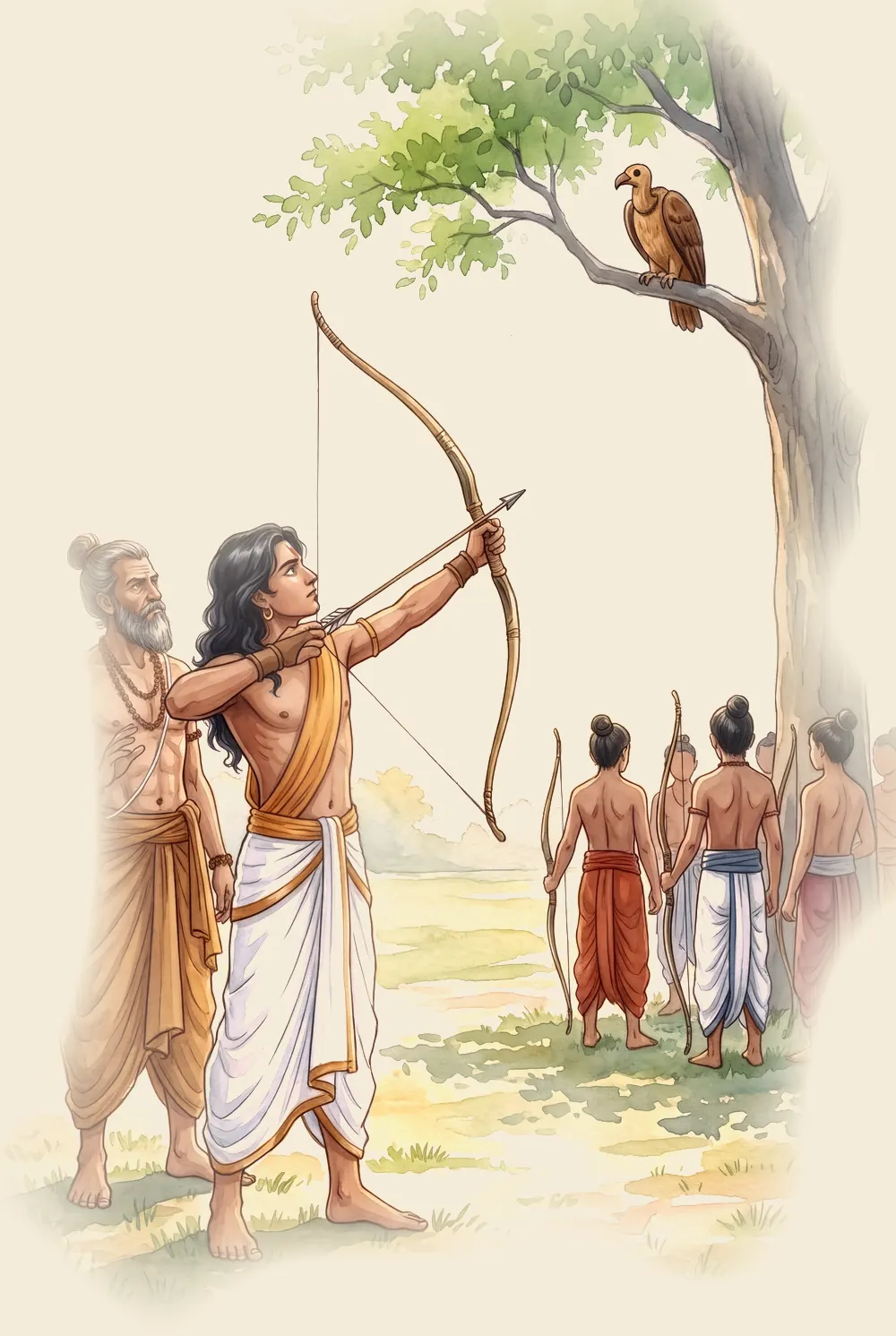
- When Ekalavya, son of the Nishada king, came to Hastinapura to learn archery, Drona told him, "I do not teach Nishadas. Stand aside." (Chapter 10)
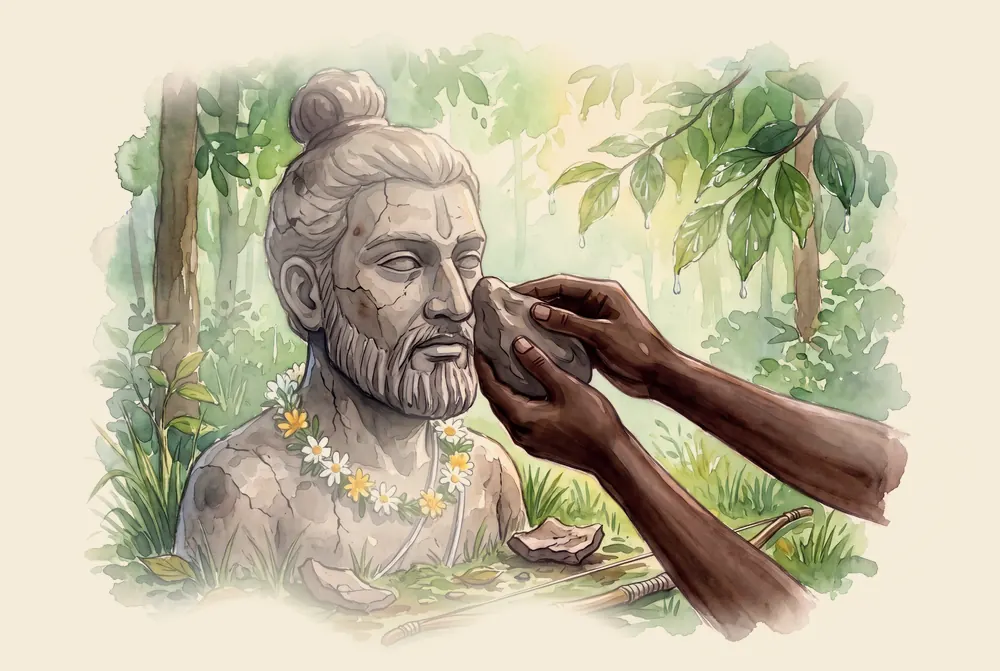
- Ekalavya went home, made a Drona of his own out of clay, and practiced in front of it every day until his arrows stopped going wide. (Chapter 10)
- When the princes found him in the forest, he told them he was a pupil of Drona. (Chapter 10)
- Arjuna went to Drona alone and reminded him of a promise: Drona had said he would make Arjuna an archer with no equal in the world. (Chapters 9 and 10)
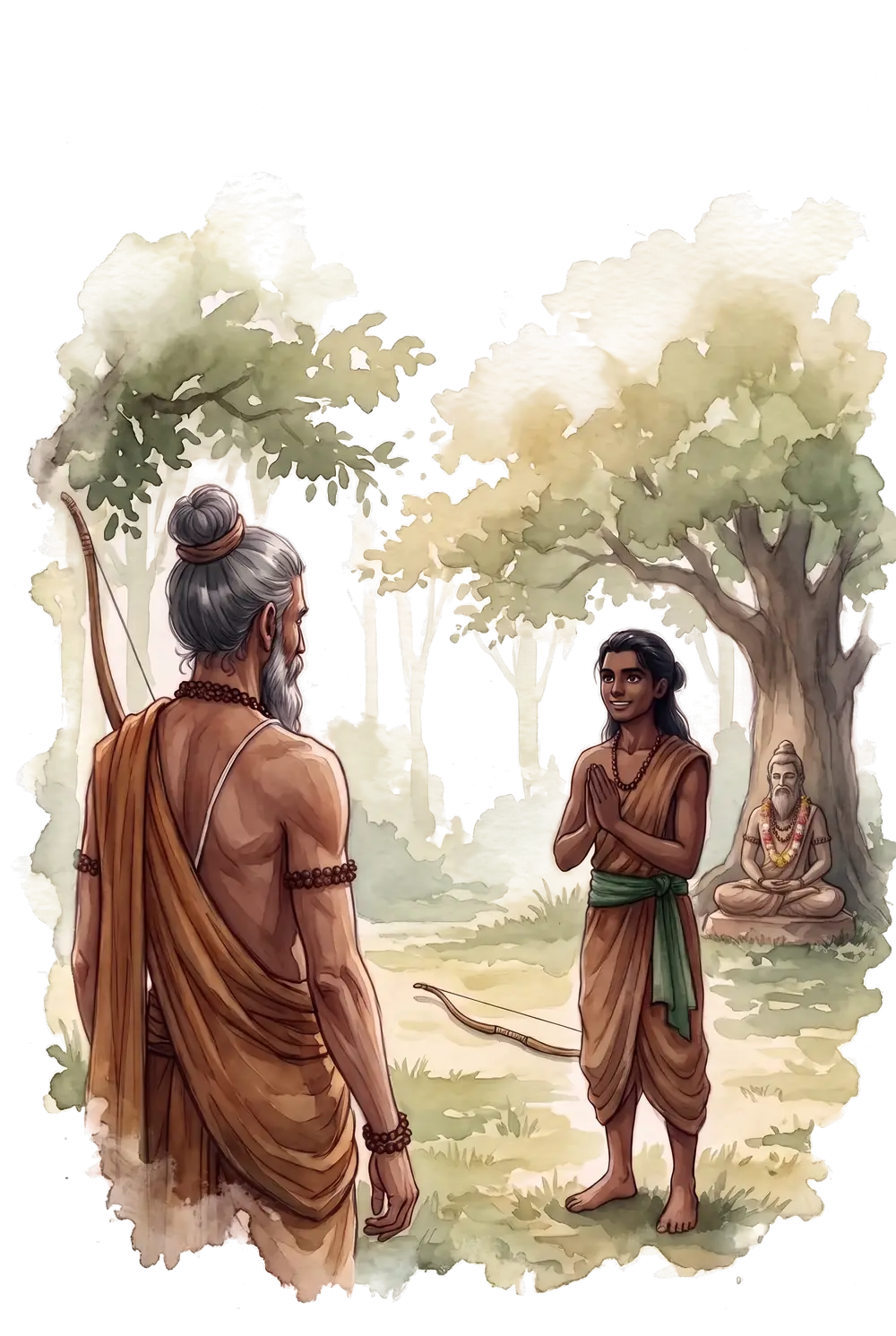
- In the forest Drona said, "If you are really my pupil, then give me my fee." Ekalavya answered that there was nothing he would not give. (Chapter 10)
- Ekalavya gave the thumb smiling. Afterward, his first arrow dropped into the grass short of the mark. (Chapter 10)
Witnesses
Ekalavya, who was turned away and then asked for the fee. Arjuna, who complained to his teacher and walked home beside him. Yudhishthira, the eldest prince, who asked Ekalavya who he was.
Questions for the prosecution
- Drona never gave Ekalavya a single lesson. What right did he have to a teacher's fee?
- Why did Drona go into the forest only after Arjuna came to him?
- Who gained from the fee, and who paid for it?
Questions for the defense
- Ekalavya called himself Drona's pupil and offered anything at all. Did Drona take only what was offered?
- Drona had made a promise to Arjuna first. Should a teacher keep his word to one pupil even when it costs another?
- The old text says Drona knew the rules of right conduct. What rules might he have believed he was keeping?
Ready cases from each book
Each book has its own cases, built the same way, with debate topics from that book for a shorter lesson.
- Cases from The Vow: Bhishma's terrible vow, Kunti and the basket on the river, Duryodhana and the house of lac, and the laugh in the palace.
- Cases from The Dice: Shakuni's dice, Yudhishthira's last stake, the blind king who let the game go on, Indra's disguise, and the five villages.
- Cases from The War: Arjuna and the Grandsire, six against one boy, "Ashwatthama is dead", the sinking wheel, and the blow below the waist.
A simple rubric for the trial
Score each student from 1 to 3 on each line. The same rubric works for each book's debate topics.
| Skill | 1 · Getting started | 2 · On the way | 3 · Strong |
|---|---|---|---|
| Evidence | Gives opinions with little from the book | Uses one or two moments from the chapter | Uses several moments and names the chapter or quotes a line |
| Fairness | Sees only one side | Mentions the other side | Answers the other side's best point |
| Questions | Questions wander from the case | Questions stay on the case | Questions bring out something new |
| Speaking | Hard to follow, or slips out of role | Clear and mostly in role | Clear, in role, and true to the character in the book |
| Teamwork | Works alone | Shares the work | Builds on teammates' points |
Verdict sheet for the jury
Print one for each group of jurors. They fill it in while they listen and finish it together before they vote.
| The case | |
|---|---|
| The charge | |
| The prosecution's strongest evidence | |
| The defense's strongest evidence | |
| Our verdict (circle one) | Guilty · Not guilty · Guilty, with reasons the court should weigh |
| Why we decided | |
| What would have changed our minds |
Questions teachers ask
What is a Mahabharata mock trial?
It is a classroom game played by the rules of a courtroom. One character from the Mahabharata is charged over one hard choice, such as Drona asking Ekalavya for his thumb. A prosecution team and a defense team call witnesses and argue from the book, and a jury of classmates decides. Students practice using evidence and hearing the other side, on a story they want to argue about anyway.
Do students need to read the whole book?
No. Each case comes from one or two short chapters of The Vow, and the evidence lists give the chapter for every point. If your class doesn't have the book, each case links to a free retelling of the chapter. Reading the chapter itself gives the teams much more to work with, since trials are often won on small details.
Is it respectful to put figures from a sacred text on trial?
The Mahabharata invites it. Its characters argue about right and wrong all the time, and in the book Krishna says what he thinks and then asks readers to judge for themselves. The class judges one choice in one scene, and nobody's faith is on trial. Every character gets a real defense, and the lesson ends with everyone stepping out of role to say what they truly think.
Which grades is it for?
It is written for grades 5 to 10, ages 10 to 16, the same readers as the book. With grades 5 and 6, the teacher plays the judge and a debate topic makes a good warm-up. Older students can run the court themselves and take on the harder cases, such as putting the Pandavas on trial for the family left asleep in the house of lac.
Is there a printable version?
A printable PDF is coming soon. Until then, print from your browser's print menu. Each case starts on a new sheet, and the rubric and verdict sheet print as plain tables you can copy for the class.
Where this comes from: The cases follow the books, which follow the English translation of the Mahabharata by Kisari Mohan Ganguli (1883 to 1896). Ekalavya is Adi Parva §134. Each book's cases page gives the sections for its own cases. Krishna's questions were written for the books. The mock trial and its questions were written for these lessons.