A story of Krishna's childhood
Kaliya the Serpent: How Krishna Danced on His Hoods
A favorite story of Krishna's childhood, told in the Bhagavata Purana and the Harivamsa. A many-hooded serpent named Kaliya poisons a pool in the Yamuna river, so young Krishna jumps in and dances on his hoods until the serpent agrees to leave for the sea.
- KrishnaKRISH-naकृष्णalso called Kanha, Kanhaiya
- KaliyaKAA-li-yaकालियalso Kalia, Kaliya Naag
- Balaramaba-la-RAA-maबलरामalso Balram, Baldev
- Yashodaya-SHO-daaयशोदा
- GarudaGA-ru-daगरुडalso Garud
The cowherd boys of Vrindavan took the calves down to the Yamuna river every day. One hot morning Krishna went with them, though his elder brother Balarama had stayed at home. The boys and the calves were thirsty, and they drank from a deep, quiet pool along the bank.
At once they fell down on the grass and lay still. Krishna looked at them with great love, and one by one they sat up and rubbed their eyes, as if they had only been asleep.
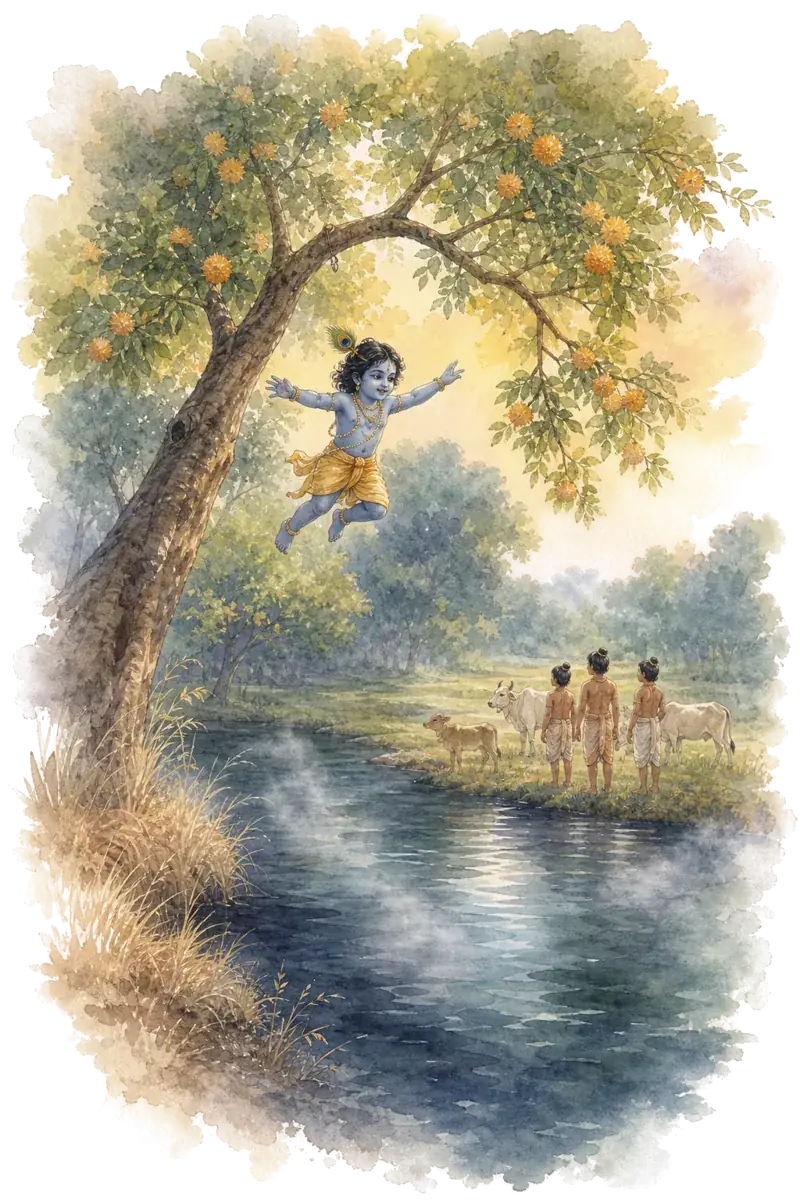
Krishna looked at the pool. The water steamed and bubbled. Birds flying over it dropped out of the sky, and the grass along its edge had dried to straw. Only one kadamba tree still grew on the bank. Deep at the bottom of the pool lived Kaliya, a serpent king with a great many hoods, and his poison had filled the water.
Krishna tied his cloth tight around his waist and climbed the kadamba tree. Then he jumped. He hit the pool with such a splash that the poisoned water spilled over the bank, and he swam and splashed and slapped the surface like a young elephant at play.
Kaliya rose up from the bottom, furious that anyone dared. He wound his coils around the boy and held him fast, and Krishna lay still in the coils and let him.
On the bank the cowherd boys fainted. The cows stood bellowing. In Vrindavan the ground shook, and everyone knew something was wrong. Nanda and Yashoda and the whole village ran down to the river, and there they saw Krishna wrapped in the serpent's coils. Yashoda would have walked straight into the water after him.
Only Balarama was calm. He smiled, because he knew who his little brother was, and he held the others back.
Krishna saw how they were crying for him. He made himself bigger and bigger until Kaliya had to let go. Then he slipped free and circled the serpent, round and round. Kaliya swayed after him with his hoods spread wide, waiting for his chance, until he grew dizzy.
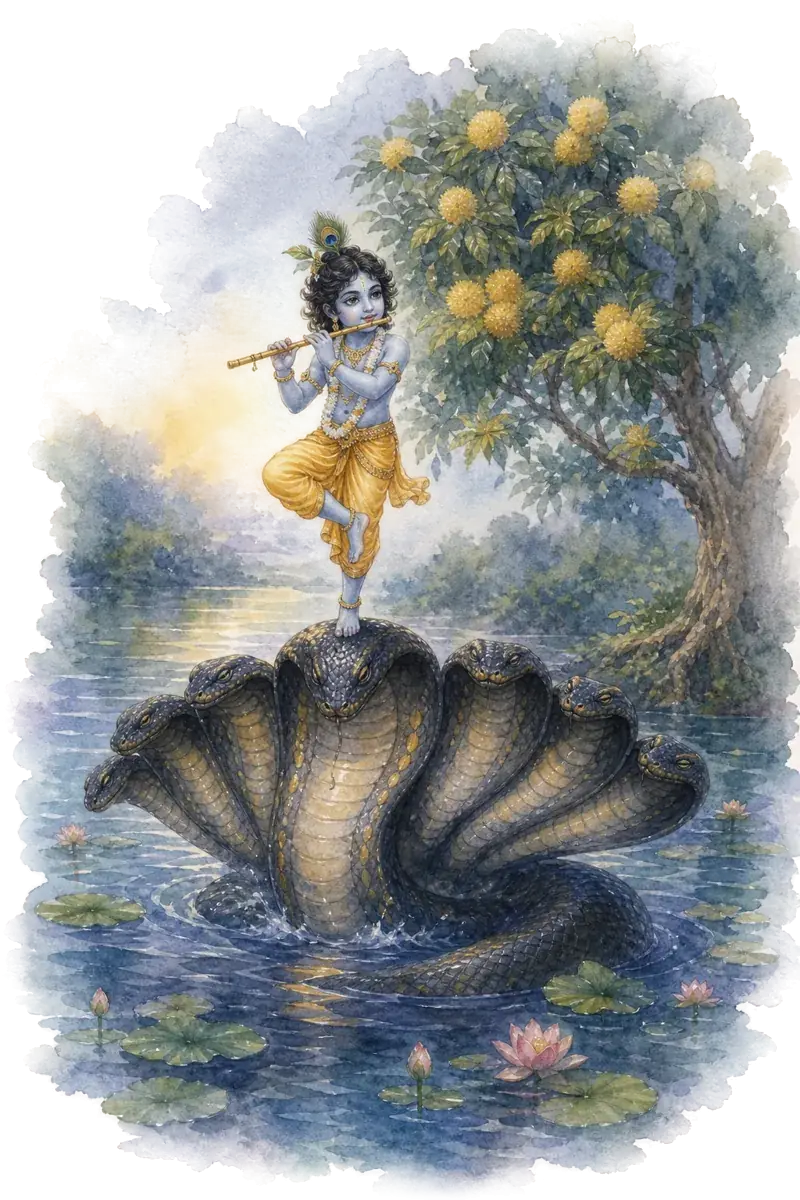
Krishna pressed down one hood, sprang up onto the others and began to dance. Whenever a hood tried to rise, he stamped it down in time to the music. Up in the sky the gods played drums and flutes and showered him with flowers. The more he danced, the lower the hoods sank, until Kaliya could hardly lift a single one.
Then Kaliya's wives rose out of the pool with their children in front of them. They bowed to the little boy on their husband's head and joined their palms.
"He has earned this," they said. "But he didn't know who you were. Spare him. Give us back our husband."
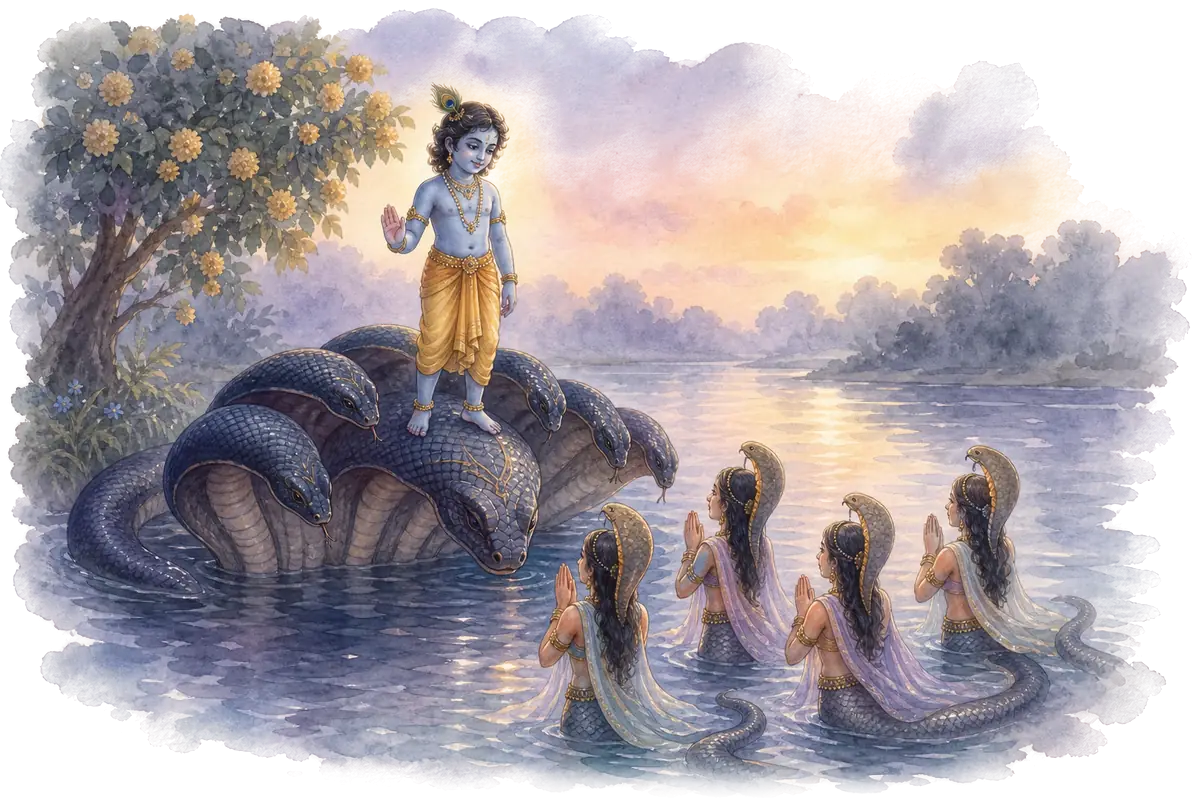
Krishna stepped down. Slowly Kaliya lifted his hoods and bowed them all before him.
"I was born a serpent," he said, "and I've behaved the way serpents do. Tell me what to do."
"Leave this river," said Krishna. "Take your family and go back to your island in the sea, so that the cowherds and the cows can drink here again."
Kaliya trembled. He had come to the pool to get away from that island. All the serpents there gave Garuda, the king of birds, a share of their food on certain days, so that he would leave them in peace. Kaliya had been too proud to give anything, and he had even eaten the others' gifts. Garuda had come after him, and Kaliya had lost the fight and fled. He chose this pool because, long ago, a sage named Saubhari had lived beside it. Garuda had caught a fish there in front of the sage, and Saubhari had cursed him to die if he ever came back. It was the one place in the world where Garuda could not follow.
"Garuda won't touch you now," Krishna said. "He will see my footprints on your hoods."
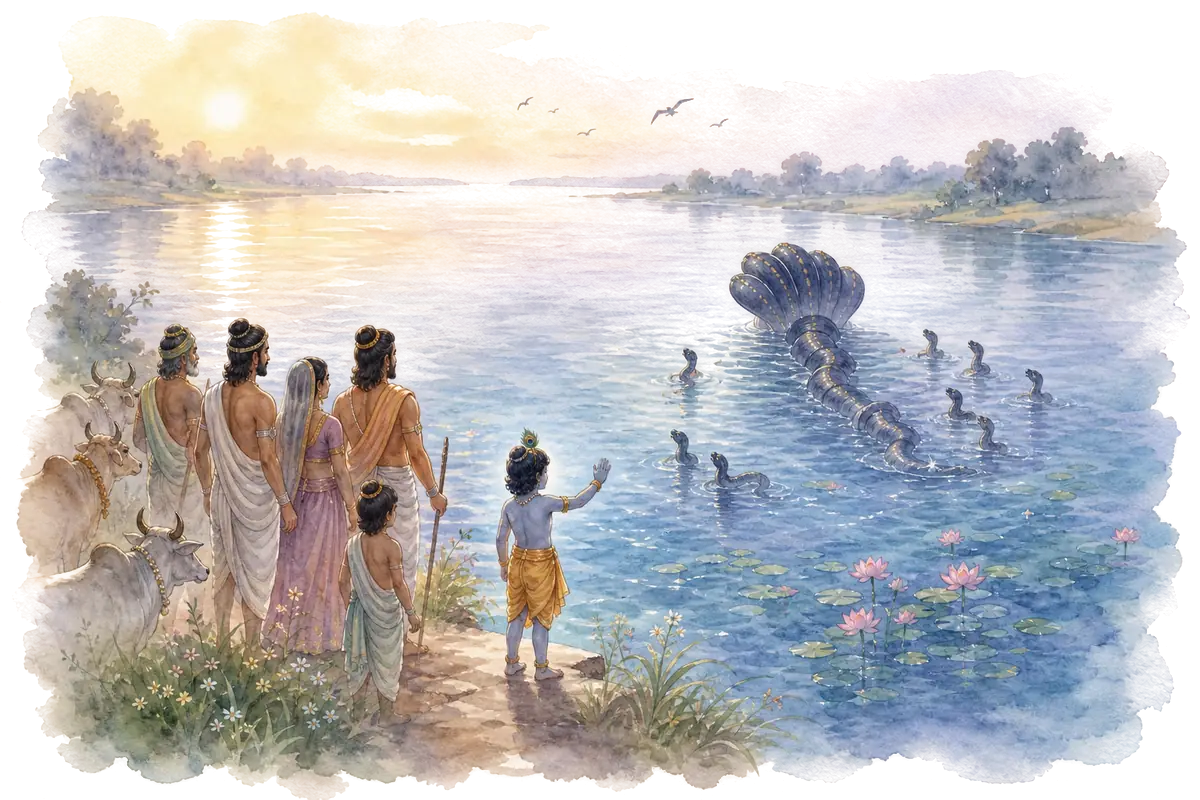
So Kaliya went down the river toward the sea with his wives and his children. The people of Vrindavan stood on the bank and watched the Yamuna turn clear behind him.
Why it matters
The dance on Kaliya's hoods is one of the best-loved pictures of Krishna in temple paintings, and dancers still perform it on stage. It is often called Kaliya Mardan, the taming of Kaliya. In Vrindavan a bathing place on the Yamuna is still named Kaliya Ghat. The story also picks up an old quarrel from the Mahabharata, the feud between Garuda and the serpents.
Where this comes from: The Bhagavata Purana, Book 10, chapters 15 to 17 (the poisoned water at the end of chapter 15, the dance and the wives' plea in chapter 16, Kaliya's story in chapter 17), as rendered in English in Purnendu Narayana Sinha's A Study of the Bhagavata Purana (1901). The Harivamsa tells it in the Vishnu Parva, chapters 11 and 12 (M. N. Dutt's translation, 1897). There Kaliya has five hoods, and his son and the other serpents fight beside him. Balarama calls out to Krishna to remember who he is, and Kaliya himself begs for his family. The wives' plea comes from the Bhagavata. More about the sources.
Keep reading
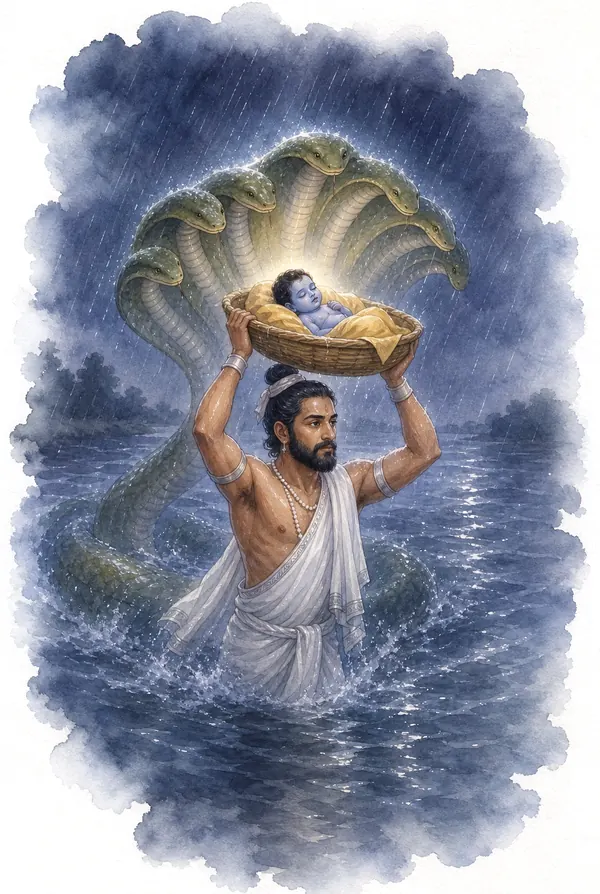 The Night Krishna Was BornKrishna is born at midnight in King Kamsa's prison, and his father carries him through a storm to Gokul.
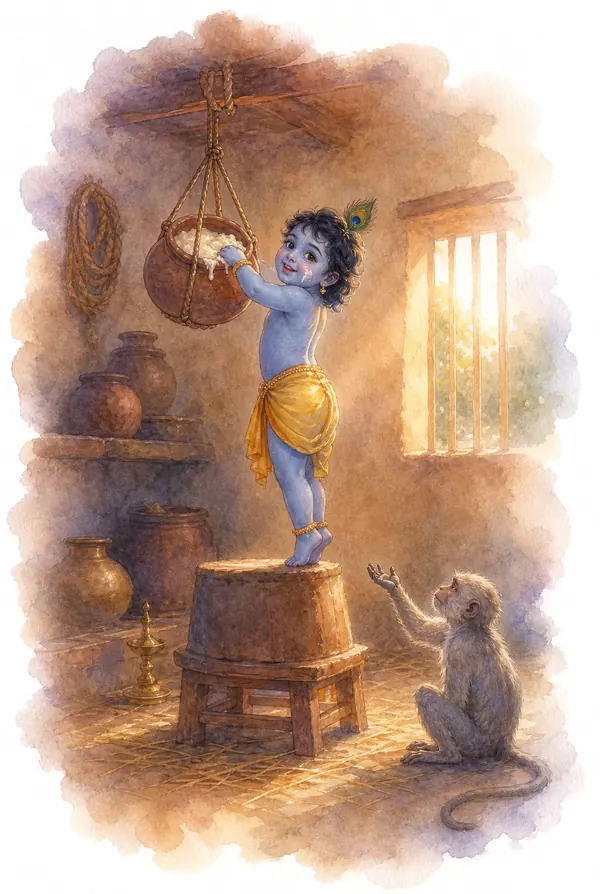 The Butter ThiefLittle Krishna raids the butter pots of Gokul, and his mother's rope keeps coming up two fingers short.
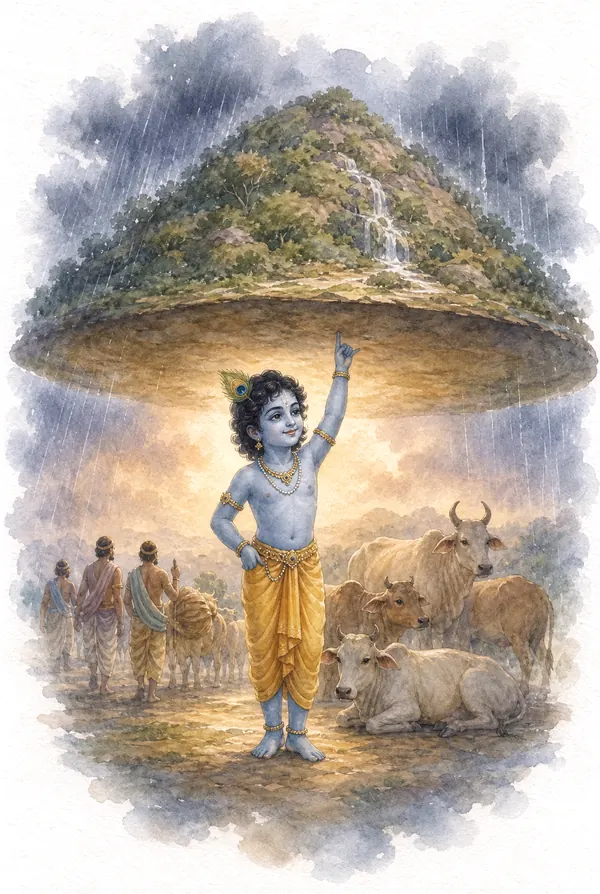 Lifting Govardhan HillIndra sends a week of storms on the cowherds, and seven-year-old Krishna holds a hill over their heads.
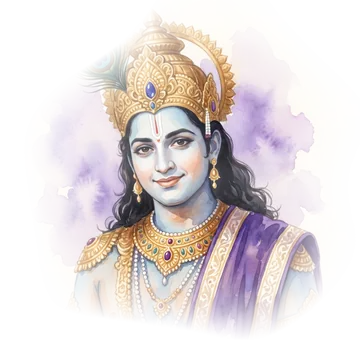 Krishna in the MahabharataThe grown-up Krishna, Arjuna's friend and charioteer, in all three books.